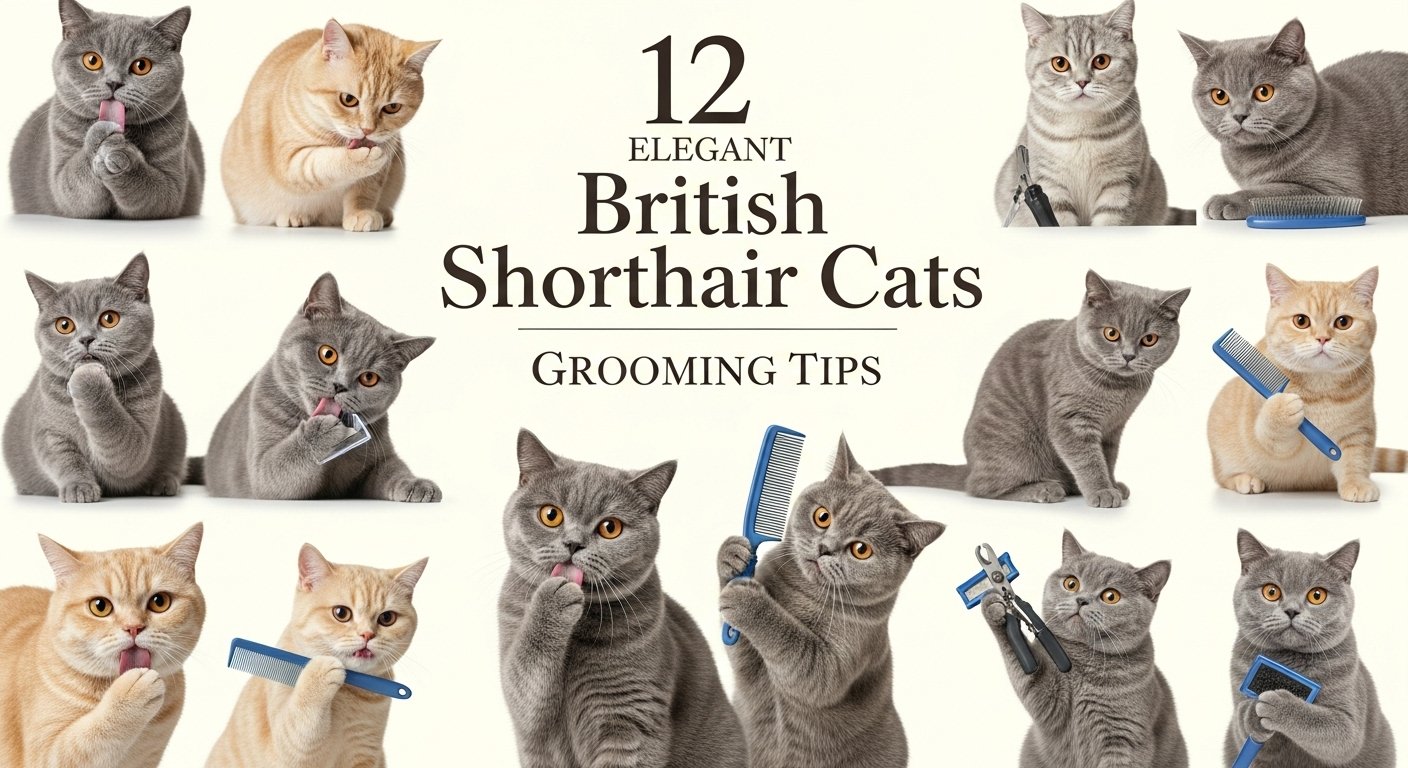
The British Shorthair, with its plush, dense coat and charming teddy-bear-like appearance, is a breed that exudes elegance and poise. Known for their sturdy build and serene demeanor, these cats have been beloved companions since Roman times. However, maintaining that signature glossy fur and overall refined look requires thoughtful grooming. Regular care not only keeps your British Shorthair looking impeccable but also promotes their health, preventing issues like matting, skin irritations, and dental problems. In this detailed guide, we’ll explore 12 essential grooming tips tailored to this majestic breed, helping you keep your feline friend as sophisticated as ever.
1. Establish a Regular Brushing Routine
British Shorthairs boast a thick double coat that sheds moderately year-round, with heavier shedding during spring and fall. To keep their fur sleek and free of loose hairs, brush your cat 2-3 times a week, increasing to daily sessions during moulting seasons. Use gentle, long strokes in the direction of hair growth, covering the entire body including the belly, but pause if your cat shows discomfort. This routine not only reduces hairballs but also strengthens your bond through relaxing massages.
2. Select the Perfect Grooming Tools
Invest in high-quality tools suited to short-haired breeds like the British Shorthair. A rubber curry brush or soft-bristle brush is ideal for removing loose fur and stimulating the skin’s natural oils. For deeper grooming, consider a slicker brush or comb to tackle undercoat tangles, especially around the armpits and belly. Avoid harsh metal tools that could irritate their sensitive skin. Experiment with options like a Zoom Groom for a massage-like experience that your cat will adore.
3. Manage Shedding with Seasonal Adjustments
During peak shedding periods, dampen your hands before brushing to easily collect loose hairs and check for parasites or skin issues. Incorporate a rubber brush for effective de-shedding without pulling. Feeding a balanced diet rich in omega-3 fatty acids can also minimize excessive shedding, keeping your home fur-free and your cat’s coat lustrous.
4. Master the Art of Occasional Bathing
British Shorthairs don’t require frequent baths—aim for once every 1-6 months, or as needed if they get dirty. Use lukewarm water and a mild, cat-specific shampoo diluted 1:5 with water. Gently massage from head to tail, avoiding the eyes, ears, and nose, then rinse thoroughly. Pat dry with a towel or use a low-heat dryer if tolerated. Starting this routine early helps acclimate them to water for a stress-free experience.
5. Trim Nails Safely and Regularly
Keep claws neat by trimming every 2-3 weeks using sharp, pet-safe clippers or a grinder. Gently press the paw to extend the nails, clipping only the transparent tip to avoid the quick (pink area in light nails). For dark nails, trim conservatively. Smooth edges with a file if needed, and reward your cat with treats to make it a positive ritual.
6. Clean Ears Gently to Prevent Infections
Inspect ears weekly for wax or debris. Use a vet-approved cleaning solution on gauze or a cotton ball to wipe the outer ear, avoiding deep insertion. Drip a few drops into the ear, massage circularly, and wipe away loosened dirt. This simple step keeps ears healthy and free from mites or infections.
7. Maintain Sparkling Eyes with Daily Wipes
British Shorthairs can develop tear stains, so wipe the eye corners daily with a damp cotton ball or hydrogen peroxide solution. Gently remove any discharge to prevent buildup and keep their expressive eyes clear and bright.
8. Prioritize Dental Care for Fresh Breath
This breed is prone to dental issues, so brush teeth 2-3 times weekly with cat-safe toothpaste and a soft brush or gauze-wrapped finger. Offer dental treats or kibble to scrape away plaque. Monitor for signs like bad breath or inflamed gums, and consult a vet for professional cleanings if necessary.
9. Address Matted Fur Promptly
If mats form, especially under the tail or in hard-to-reach areas, carefully snip them away with scissors. Regular brushing prevents this, but check for irritation or parasites during sessions. For stubborn mats, seek professional help to avoid skin injury.
10. Support Coat Health Through Nutrition
A diet high in quality proteins, fats, and nutrients like biotin and omega oils enhances coat shine and reduces shedding. Consider wet food for hydration and occasional dry kibble for dental benefits. Always consult your vet for breed-specific recommendations to keep your British Shorthair’s fur elegantly plush.
11. Introduce Grooming Early for Kittens
Start grooming habits from kittenhood to build tolerance. Use soft brushes for gentle sessions, and gradually introduce nail trims and baths. Positive reinforcement with play or treats turns grooming into a cherished routine, ensuring a lifetime of elegance.
12. Know When to Consult Professionals
While home grooming suffices for most, schedule vet check-ups for dental screenings and weight monitoring, as obesity can affect coat health. For show cats or complex issues, professional groomers can provide expert baths and trims, keeping your British Shorthair in top form.
By incorporating these tips into your routine, your British Shorthair will not only look elegantly groomed but also enjoy better health and happiness. Remember, patience and consistency are key—your regal companion deserves nothing less! Share your grooming stories in the comments, and pin these tips for fellow cat lovers.