
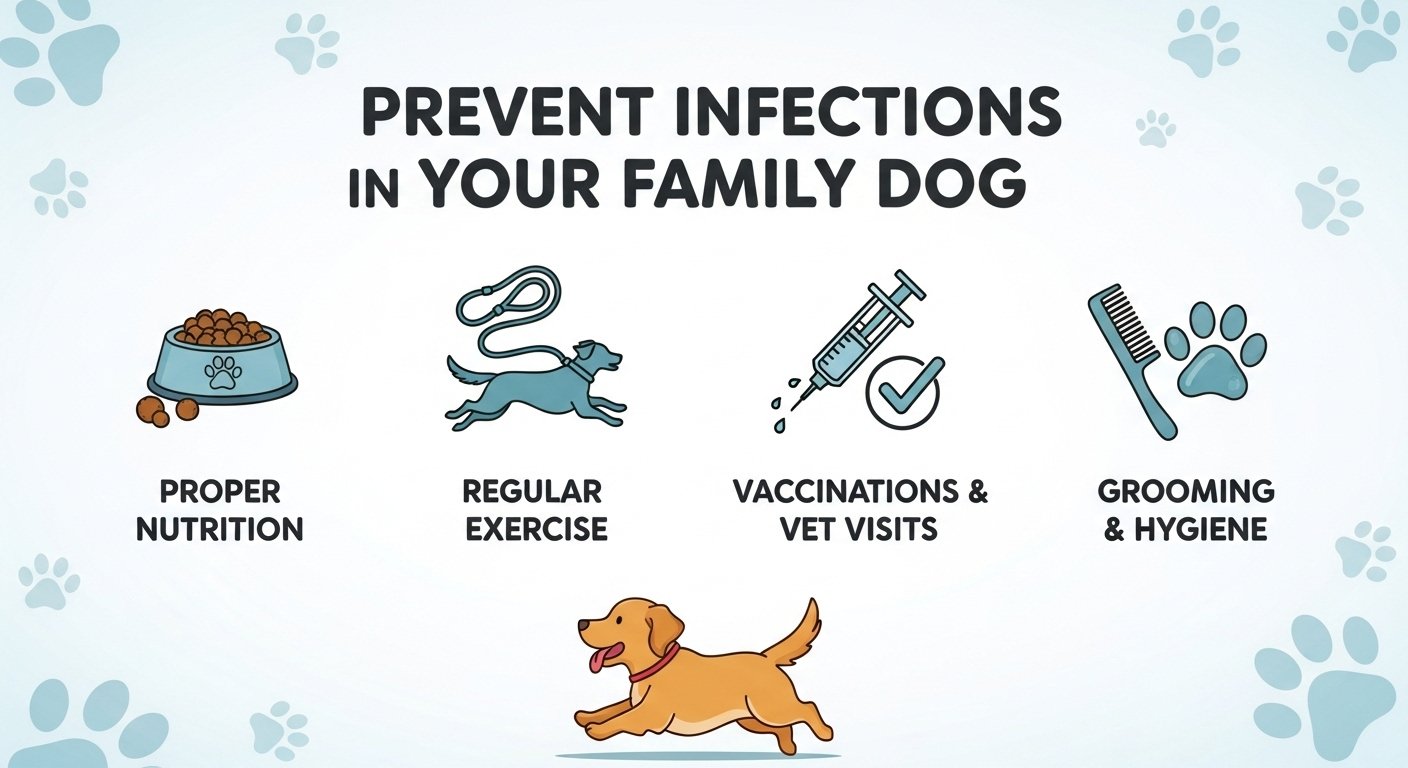
Our furry family members bring so much joy into our homes, but just like us, they can be susceptible to infections that can affect their health and happiness. Preventing infections in your family dog isn’t just about avoiding vet bills—it’s about ensuring your pup lives a long, vibrant life full of tail wags and playtime. In this detailed guide, we’ll explore practical tips, from vaccinations to daily hygiene, to keep your dog healthy and infection-free. Let’s dive in!
Understanding Common Infections in Dogs
Dogs can encounter various infections, including bacterial, viral, fungal, and parasitic ones. Common types include ear infections (otitis), skin infections (dermatitis), urinary tract infections, and respiratory issues like kennel cough. These often stem from poor hygiene, exposure to other animals, or weakened immune systems. By recognizing potential risks, you can take proactive steps to protect your pet.
The Power of Vaccinations
One of the most effective ways to prevent infections is through proper vaccination. Vaccinate your dog based on their lifestyle and environment—core vaccines like those for distemper, parvovirus, and rabies are essential, while non-core ones like Bordetella may be needed for dogs in social settings. Keep vaccinations up to date to ward off common diseases, and consult your vet for a tailored schedule.
For puppies, start vaccinations early: core shots like DHPP (distemper, hepatitis, parvo, parainfluenza) begin at 6-8 weeks, with boosters every few weeks until 16 weeks, and rabies around 12-16 weeks.
Maintain Excellent Hygiene and Grooming
Hygiene is key to preventing infections. Regular grooming helps remove dirt, debris, and potential pathogens from your dog’s coat and skin.
- Bathing: Bathe your dog every 4-6 weeks or as needed, using a gentle, dog-specific shampoo to avoid stripping natural oils that protect against infections.
- Ear Cleaning: Dogs with floppy ears are prone to infections, so clean ears weekly with a vet-approved solution. Gently massage the base, let them shake, and wipe with cotton or gauze—avoid Q-tips to prevent injury.
- Nail Trimming and Paw Care: Keep nails short and check paws for cuts or debris after walks to prevent bacterial entry.
- Dental Hygiene: Brush teeth daily or use dental chews to reduce plaque buildup, which can lead to gum infections.
Boost Immunity with a Balanced Diet
A strong immune system fights off infections naturally. Feed your dog high-quality, balanced food rich in proteins, vitamins, and antioxidants. Include fresh ingredients like lean meats, veggies, and omega-3s from fish oil to support overall health. Avoid overfeeding to prevent obesity, which can weaken immunity.
Ensure fresh water is always available, as dehydration can make dogs more susceptible to urinary infections.
Parasite Prevention: Don’t Let Bugs Bite
Parasites like fleas, ticks, and worms can transmit infections. Use veterinary-recommended preventatives year-round, including flea/tick collars, topicals, or oral meds. Deworm regularly and have annual fecal tests. Pick up after your dog promptly to avoid environmental contamination.
Keep Their Environment Clean
A tidy living space reduces infection risks. Wash bedding weekly, vacuum regularly to remove allergens and parasites, and disinfect food/water bowls daily. Avoid letting your dog interact with sick animals at parks or daycares. If you have multiple pets, isolate any ill ones to prevent spread.
Regular Vet Checkups and Early Detection
Schedule annual wellness exams to catch issues early. Your vet can detect subtle signs of infection and recommend preventive measures. Watch for symptoms like lethargy, excessive scratching, foul odors, or changes in appetite—if spotted, seek vet care immediately.
Protecting the Whole Family: Zoonotic Considerations
Some infections can spread from dogs to humans (zoonotic diseases). Wash hands after handling your pet, especially after cleaning up waste or touching their mouth. Avoid kissing your dog’s face and keep their living area clean to minimize risks.
By following these tips, you’ll not only prevent infections in your family dog but also foster a healthier, happier bond with your furry companion. Remember, every dog is unique, so tailor these strategies with your vet’s advice. Here’s to many more adventures with your healthy pup!