Dogs are incredible communicators, but they don’t use words like we do. Instead, they rely on subtle (and sometimes not-so-subtle) body language to express their feelings, needs, and intentions. Learning to read these signals can strengthen your bond with your furry friend, prevent misunderstandings, and even keep everyone safe. Whether you’re a new dog owner or a seasoned pup parent, understanding dog body language is essential for better interactions.
In this guide, we’ll break down 10 essential signs of dog body language. Each one comes with explanations, real-life examples, and tips on how to respond. Plus, we’ve included visuals to make it easier to spot these cues in action. Let’s dive in!
1. Tail Wagging: Not Always a Sign of Happiness
Contrary to popular belief, a wagging tail doesn’t always mean your dog is overjoyed. The speed, height, and direction of the wag provide crucial context. A fast, loose wag at mid-height often indicates excitement or friendliness, while a slow, stiff wag held high might signal alertness or even aggression. A low wag could mean insecurity.
What to do: Observe the whole body. If the wag is accompanied by a relaxed posture, it’s likely positive. If the body is tense, give your dog space.
2. Ears Pinned Back: Fear or Submission
When a dog’s ears are flattened against their head, it’s often a sign of fear, anxiety, or submission. This is especially common in stressful situations like meeting new people or hearing loud noises. Pricked-forward ears, on the other hand, show interest or alertness.
What to do: If you see pinned ears, remove your dog from the stressor and offer comfort without forcing interaction. Building confidence through positive reinforcement can help over time.
3. The Play Bow: An Invitation to Fun
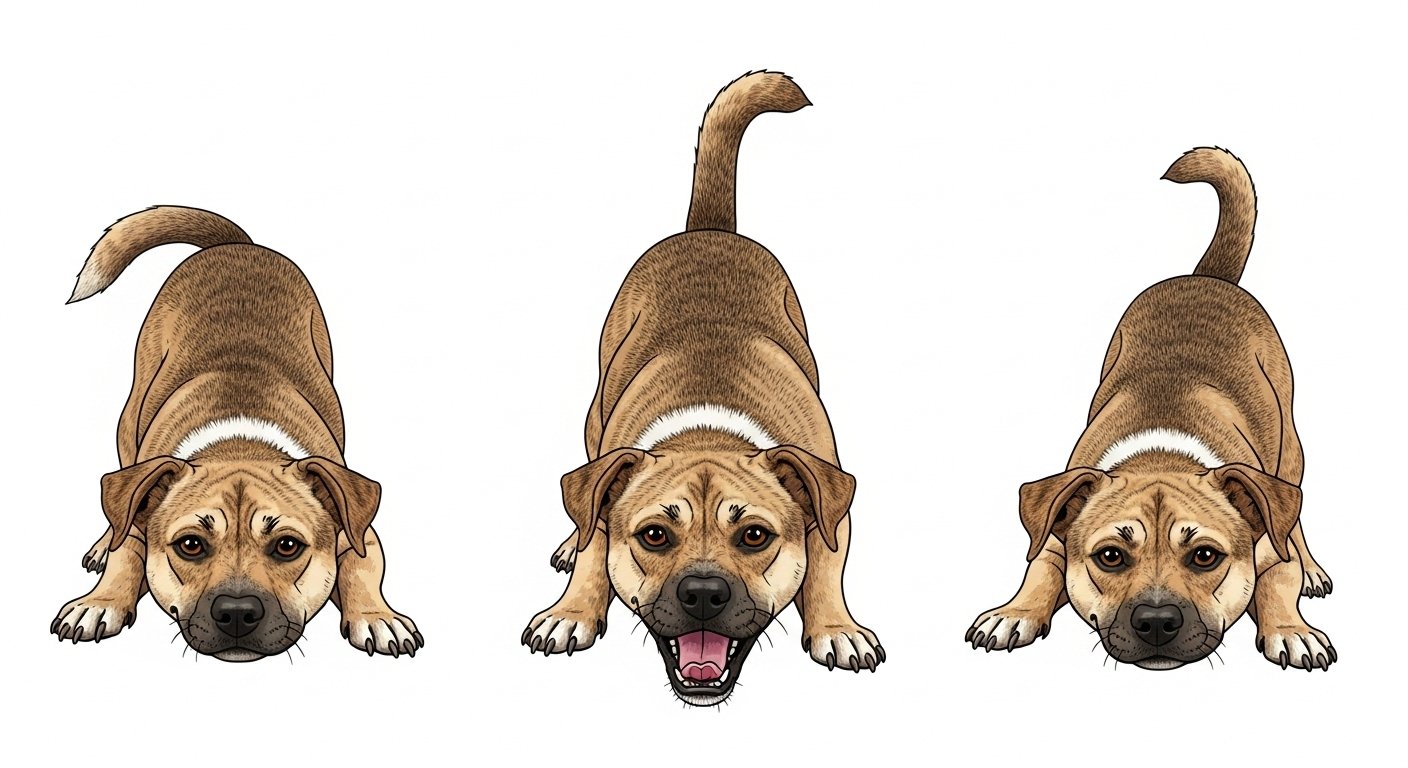
One of the most adorable signals is the “play bow,” where your dog lowers their front end while keeping their rear up, often with a wagging tail. This is a clear invitation to play, whether with you, another dog, or a toy.
What to do: Join in! Mimic the energy with toys or gentle roughhousing, but watch for signs that play is escalating into something more serious.
4. Yawning: More Than Just Tiredness
Dogs yawn when they’re sleepy, but frequent yawning can also be a calming signal indicating stress or discomfort. It’s a way for them to self-soothe in tense situations, like vet visits or crowded areas.
What to do: Note the context. If it’s not nap time, create a calmer environment or use treats to redirect attention positively.
5. Whale Eye: Discomfort or Warning
“Whale eye” occurs when a dog shows the whites of their eyes while turning their head away. This often signals unease, like when they’re guarding a toy or feeling cornered.
What to do: Back off immediately to avoid escalation. Respect their space and work on desensitization training if it’s a recurring issue.
6. Stiff Body Posture: Tension or Aggression
A rigid, frozen stance with weight shifted forward can indicate aggression, fear, or high arousal. The dog might be assessing a threat or preparing to react.
What to do: Don’t approach. Use a calm voice to de-escalate and remove the trigger. Professional training may be needed for aggressive tendencies.
7. Lip Licking: Anxiety or Appeasement
Quick lip licks (not after eating) are often a sign of nervousness or an attempt to appease. It’s a subtle stress indicator, sometimes paired with yawning.
What to do: Identify and mitigate the source of anxiety. Offer reassurance through gentle petting or a quiet space.
8. Tail Tucked Between Legs: Fear or Insecurity
A tail tucked under the body is a classic sign of fear, submission, or pain. The dog might also cower or avoid eye contact.
What to do: Provide comfort and safety. Avoid punishment, as it can worsen fear. Consult a vet if pain is suspected.
9. Relaxed Posture: Contentment and Trust
A loose, wiggly body with soft eyes, open mouth, and neutral ears means your dog is relaxed and happy. They’re engaged but not stressed.
What to do: Enjoy the moment! This is prime time for bonding activities like walks or cuddles.
10. Raised Hackles: Arousal or Alertness
When the fur along a dog’s back and shoulders stands up (piloerection), it signals emotional arousal—could be excitement, fear, or aggression. It’s not always negative but warrants attention.
What to do: Assess the situation. If it’s playful, no worries; if tense, intervene calmly to prevent escalation.
Understanding these signs takes practice, but it’s worth it for a happier, healthier relationship with your dog. Remember, always consider the full context—combine multiple signals for the best interpretation. If your dog’s behavior changes suddenly, consult a vet or behaviorist. Share this post if it helped you, and pin your favorite tips for quick reference! What’s the most surprising body language cue you’ve noticed in your pup? Let us know in the comments. 🐶