
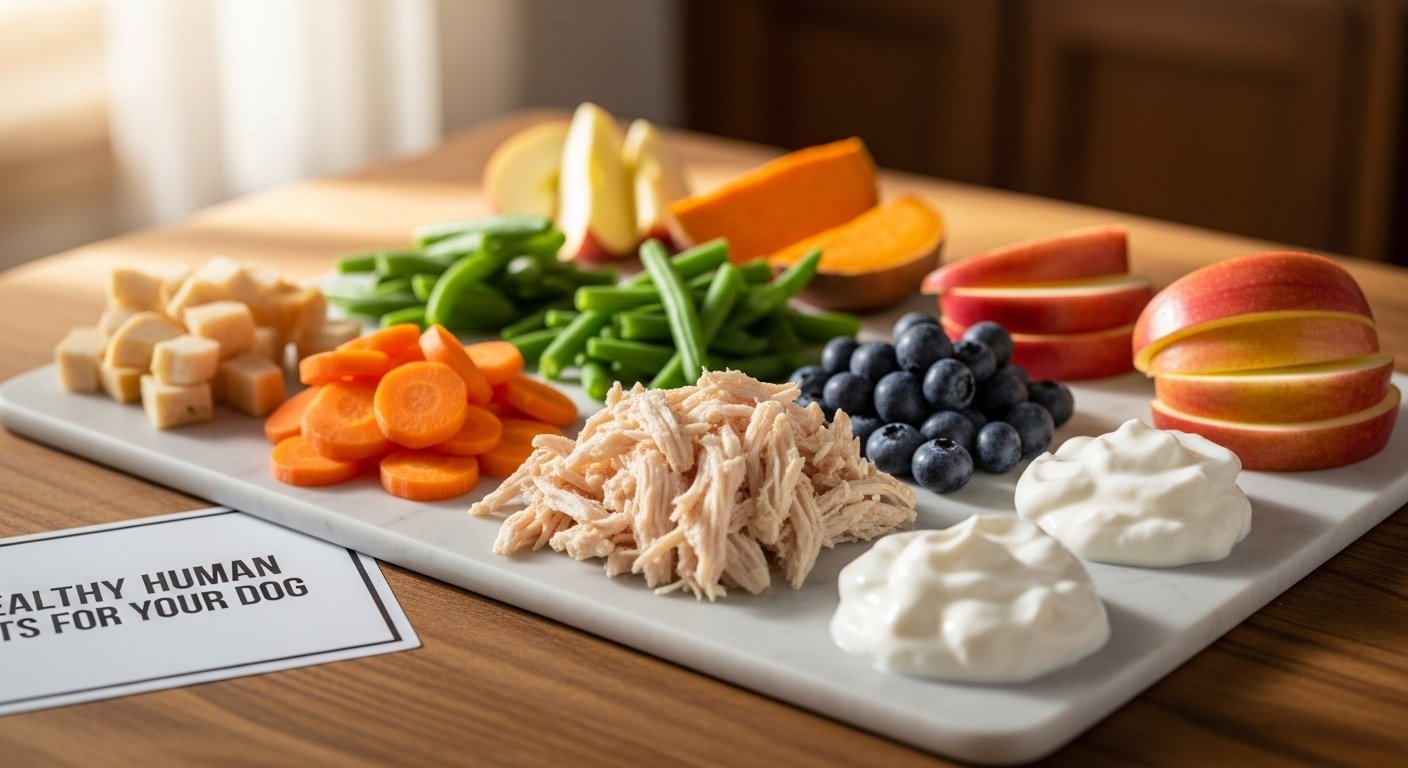
- Apples: Research suggests apples can be a healthy treat for dogs when seeds and core are removed, providing vitamins and fiber, though moderation is key to avoid digestive upset.
- Bananas: It seems likely that bananas offer potassium and vitamins beneficial for dogs’ energy and heart health, but their high sugar content means they should be given sparingly.
- Blueberries: Evidence leans toward blueberries being antioxidant-rich superfoods that support dogs’ immune systems and cognitive health, safe in small portions as treats.
- Carrots: Carrots appear to promote dental health and provide vitamin A for vision and skin, suitable raw or cooked, but chopped to prevent choking.
- Chicken: Cooked, unseasoned chicken is generally a good protein source for dogs, aiding muscle maintenance, though bones must be avoided to prevent injury.
- Eggs: Fully cooked eggs can supply high-quality protein and nutrients like biotin for coat health, but raw eggs carry risks of bacterial contamination.
- Peanut Butter: Unsalted, xylitol-free peanut butter may provide healthy fats and protein as an occasional reward, but overfeeding could lead to weight gain.
- Pumpkin: Plain pumpkin is often recommended for digestive issues due to its fiber content, helping with both diarrhea and constipation in moderate amounts.
- Salmon: Cooked salmon offers omega-3 fatty acids that support skin, coat, and joint health in dogs, but must be fully cooked to eliminate parasites.
- Yogurt: Plain, low-fat yogurt with live cultures can aid gut health through probiotics, though some dogs may experience lactose intolerance, so start small.
Why Share Human Foods with Your Dog?
Sharing safe human foods can add variety to your dog’s diet, provide nutritional boosts, and strengthen your bond through treats. However, always prioritize a balanced commercial dog food as the main nutrition source, and consult your vet for personalized advice, especially for dogs with health conditions.
General Tips for Feeding Human Foods
- Introduce new foods gradually to monitor for allergies or upset stomachs.
- Portion control is essential—treats should not exceed 10% of daily calories.
- Avoid seasonings, oils, or additives that could harm your dog.
- For more details, check resources like the American Kennel Club (https://www.akc.org/expert-advice/nutrition/human-foods-dogs-can-and-cant-eat/) or your veterinarian.
As dog owners, we often wonder if our furry friends can enjoy the same snacks we do. While many human foods are off-limits due to toxicity risks—like chocolate, grapes, or onions—there are plenty of safe options that can even benefit your dog’s health. In this detailed guide, we’ll explore 10 safe human foods for dogs, backed by expert insights from veterinarians and pet health organizations. We’ll cover nutritional benefits, preparation tips, potential precautions, and fun ways to incorporate them into your pup’s routine. Remember, moderation is crucial, and these should complement, not replace, a complete dog food diet. Always consult your vet before introducing new foods, particularly if your dog has dietary restrictions or health issues.
The Benefits of Human Foods in a Dog’s Diet
Incorporating safe human foods can provide variety, essential nutrients, and even help with specific health concerns. For instance, fruits and vegetables offer vitamins and fiber for digestion, while proteins support muscle repair. According to pet health experts, these treats can make up to 10% of your dog’s daily intake without disrupting nutritional balance. However, individual tolerances vary—some dogs may have sensitivities, so start small and observe reactions.
Summary Table of 10 Safe Foods
| Food | Key Benefits | Preparation Tips | Precautions |
|---|---|---|---|
| Apples | Vitamins A and C, fiber for digestion | Remove seeds/core, slice thinly | Avoid rotting apples; limit to prevent upset stomach |
| Bananas | Potassium for heart health, fiber | Peel and mash or slice | High sugar; occasional treats only |
| Blueberries | Antioxidants for immunity and brain | Fresh or frozen, whole or mashed | None major, but wash thoroughly |
| Carrots | Vitamin A for vision, dental cleaning | Raw, chopped, or steamed | Chop to avoid choking; moderation for calorie control |
| Chicken | Lean protein for muscles | Cooked, boneless, unseasoned | No bones or skin; avoid raw |
| Eggs | Protein, biotin for coat health | Fully cooked (boiled or scrambled) | No raw due to salmonella risk |
| Peanut Butter | Healthy fats, protein | Unsalted, no xylitol | Moderation to prevent obesity |
| Pumpkin | Fiber for digestion | Plain canned or cooked puree | No spiced pie filling |
| Salmon | Omega-3s for skin and joints | Fully cooked, deboned | No raw; limit to twice weekly |
| Yogurt | Probiotics for gut health | Plain, low-fat, live cultures | Check for lactose intolerance |
This table draws from recommendations by sources like the American Kennel Club and Medical News Today, emphasizing safety and nutrition.
1. Apples: A Crunchy, Vitamin-Packed Treat
Apples are a popular choice for dogs, offering vitamins A and C that support immune function, skin health, and vision. The fiber aids digestion and can help regulate bowel movements. According to CareCredit, apples provide a low-calorie snack ideal for overweight pups.
How to Prepare: Wash thoroughly, remove the core and seeds (which contain cyanide in small amounts), and slice into bite-sized pieces. You can freeze slices for a cooling treat on hot days.
Fun Idea: Make apple “pupsicles” by blending apple slices with plain yogurt and freezing in ice cube trays.
Precautions: While generally safe, too many can cause diarrhea due to fiber. Avoid giving whole apples to small dogs to prevent choking.
2. Bananas: Sweet Energy Boosters
Bananas contain potassium, which helps with fluid balance and muscle function, along with vitamins B6 and C for energy and immunity. Medical News Today notes they can be a magnesium source for bone health.
How to Prepare: Peel and offer small slices or mash into dog food. Frozen banana chunks make great chew toys.
Fun Idea: Create a “banana split” treat by topping banana slices with peanut butter and a sprinkle of blueberries.
Precautions: Due to natural sugars, limit to occasional treats to avoid weight gain or blood sugar spikes, especially in diabetic dogs.
3. Blueberries: Antioxidant Superstars
Packed with antioxidants, blueberries combat oxidative stress, potentially reducing risks of chronic diseases and supporting brain health in aging dogs. CareCredit highlights their role in fighting age-related decline.
How to Prepare: Serve fresh, washed, or frozen as a low-calorie popsicle alternative.
Fun Idea: Mix into homemade dog biscuits or scatter for a foraging game to stimulate mental activity.
Precautions: Safe for most, but introduce slowly; large quantities might cause mild stomach upset.
4. Carrots: Natural Teeth Cleaners
Carrots provide beta-carotene (converted to vitamin A) for eye and immune health, and their crunch helps scrape plaque from teeth. The AKC recommends them for dental benefits.
How to Prepare: Offer raw for chewing or steamed for easier digestion; grate into meals.
Fun Idea: Freeze carrot sticks for teething puppies or as a low-fat reward.
Precautions: Cut into appropriate sizes to avoid choking; too many can tint urine orange harmlessly.
5. Chicken: Lean Protein Powerhouse
Cooked chicken offers high-quality protein essential for muscle maintenance and energy. It’s often used in bland diets for upset stomachs, as per Medical News Today.
How to Prepare: Boil or bake without skin, bones, or seasonings; shred for easy eating.
Fun Idea: Mix with rice and veggies for a homemade meal topper.
Precautions: Never raw (salmonella risk) or with bones (splintering hazard); avoid fried versions.
6. Eggs: Nutrient-Dense Delights
Eggs are a complete protein source with vitamins like B12 for nerve health and selenium for antioxidants. The AKC notes they can soothe stomach issues when cooked.
How to Prepare: Hard-boil, scramble, or poach without additives.
Fun Idea: Add a chopped boiled egg to kibble for a protein boost.
Precautions: Cook fully to avoid biotin deficiency from raw whites; limit to one per day for medium dogs.
7. Peanut Butter: Sticky, Satisfying Reward
Rich in healthy fats, protein, and vitamins E and B, peanut butter is a favorite for stuffing toys. Ensure it’s xylitol-free, as warned by the AKC.
How to Prepare: Choose natural, unsalted varieties; spread thinly.
Fun Idea: Fill a Kong toy for mental stimulation and longer-lasting fun.
Precautions: High calories can lead to obesity; avoid if allergic (rare in dogs).
8. Pumpkin: Digestive Aid Extraordinaire
Pumpkin’s soluble fiber helps regulate digestion, making it ideal for diarrhea or constipation. CareCredit praises its use in weight management due to low calories.
How to Prepare: Use plain canned pumpkin (not pie mix) or cook fresh.
Fun Idea: Bake pumpkin dog treats by mixing with oats and baking into cookies.
Precautions: Start with small amounts; excess fiber can cause loose stools.
9. Salmon: Omega-Rich for Shiny Coats
Salmon provides omega-3 fatty acids that reduce inflammation, support joints, and promote healthy skin. The AKC recommends it for overall vitality, limited to twice weekly.
How to Prepare: Bake or poach without bones or skin; ensure fully cooked.
Fun Idea: Flake over dog food or make salmon jerky by dehydrating thin slices.
Precautions: Raw salmon can contain parasites; avoid smoked versions high in salt.
10. Yogurt: Probiotic Power for Gut Health
Plain yogurt with active cultures supports beneficial gut bacteria, aiding digestion and immunity. Medical News Today suggests low-fat options for lactose-sensitive dogs.
How to Prepare: Spoon plain, unsweetened yogurt; freeze into drops for treats.
Fun Idea: Mix with fruits like blueberries for a “doggy parfait.”
Precautions: Some dogs are lactose intolerant—watch for gas or diarrhea; avoid flavored varieties with sugars.
Final Thoughts on Safe Feeding Practices
While these foods are generally safe, every dog is unique. Factors like age, breed, and health status influence suitability. For example, puppies may need softer preparations, while seniors benefit from joint-supporting options like salmon. If in doubt, your vet can provide tailored guidance. By choosing these human foods wisely, you can enhance your dog’s diet deliciously and nutritiously.
Key Citations:
- People Foods Dogs Can and Can’t Eat – American Kennel Club
- Which people foods are safe for dogs? – Medical News Today
- 19 Healthy and Safe Foods You Can Feed Your Dog – CareCredit
- Human Foods Cats and Dogs Can Eat and Foods to Avoid – MedVet
- 23 Human Foods Dogs Can Eat, From Apples to Zucchinis – Chewy
- Top 10 Healthiest Human Foods That Dogs Can Eat [Vet-Approved]