
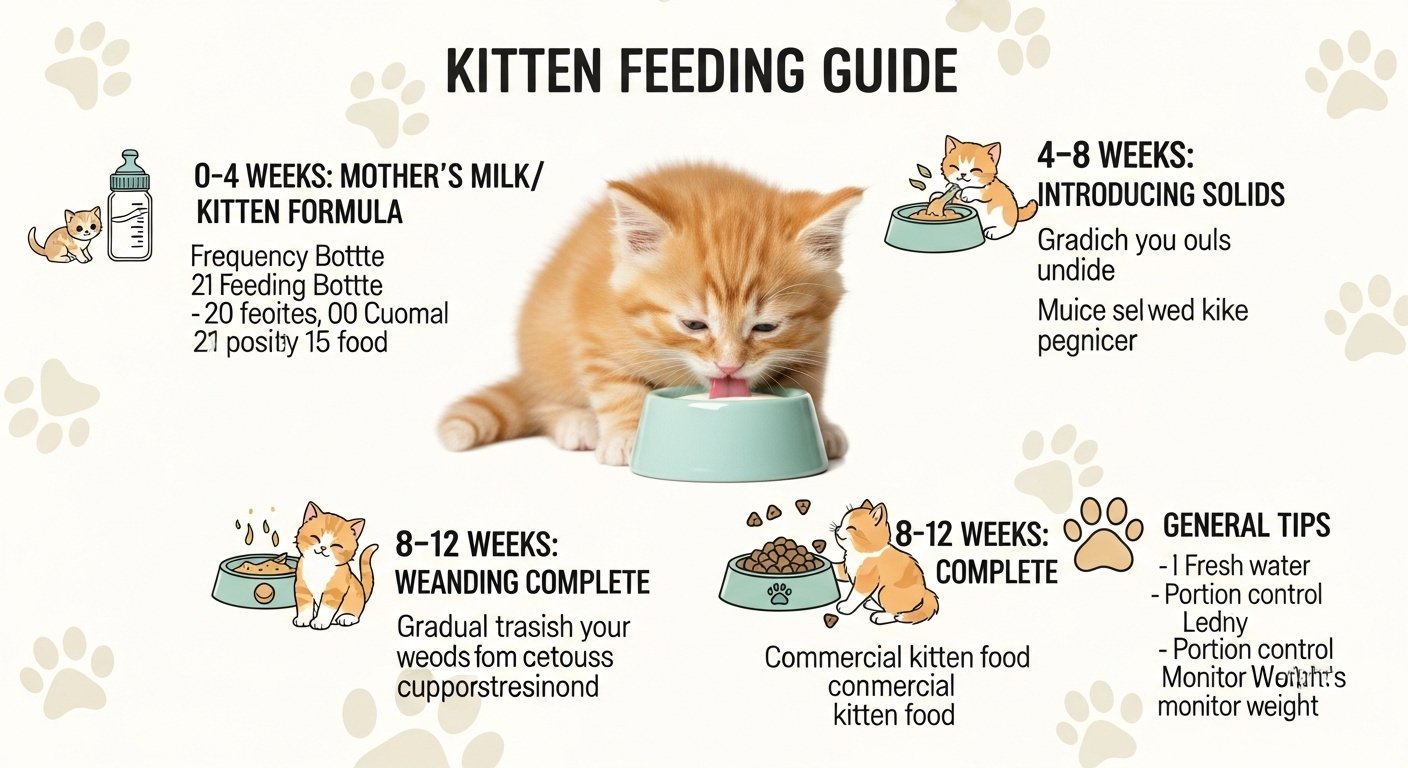
Raising a kitten can be a rewarding experience, and proper nutrition plays a key role in their development. Research suggests that following a structured feeding timeline supports healthy growth, though individual needs may vary based on breed, health, and activity level. It’s generally recommended to consult a veterinarian for personalized advice, as factors like weaning and neutering can influence dietary requirements.
Key Points
- Birth to 4 Weeks: Kittens rely on mother’s milk or formula for complete nutrition; no solids yet.
- 4 to 8 Weeks: Begin weaning with soft foods; introduce kitten-specific wet or dry food gradually.
- 8 Weeks to 6 Months: Feed high-calorie kitten food 3-4 times daily to support rapid growth.
- 6 to 12 Months: Reduce meals to 2-3 per day; monitor weight to prevent overfeeding.
- Around 12 Months: Transition to adult food, but some breeds may need kitten food longer.
Evidence leans toward using AAFCO-approved kitten foods rich in protein, fats, and essential nutrients like DHA for brain development. While most sources agree on these stages, variations exist for orphaned or special-needs kittens, emphasizing the importance of veterinary guidance.
Essential Nutrients for Kittens
Kittens need higher levels of protein for muscle growth, fats for energy, and calcium for bones compared to adult cats. Omega-3 fatty acids support eye and brain health, and antioxidants boost immunity during vulnerable periods.
Feeding Frequency and Portions
Start with frequent small meals and adjust as they grow. For example, a 2-month-old kitten might need about 150-200 calories daily, increasing to 500+ by 10 months. Always provide fresh water and avoid free-feeding after 4-6 months to prevent obesity.
Tips for Success
- Choose wet food for hydration or dry for dental benefits; a mix often works best.
- Weigh kittens regularly and use growth charts to track progress.
- Transition foods slowly over 5-7 days to avoid digestive issues.
Bringing home a fluffy kitten is one of life’s greatest joys, but ensuring they get the right nutrition from day one is crucial for their journey to becoming a healthy, happy cat. This comprehensive guide breaks down the kitten feeding timeline, drawing from expert veterinary sources, to help you navigate each stage with confidence. We’ll cover what to feed, how much, and when, along with practical tips, potential pitfalls, and even a handy chart to keep things simple. Remember, while general guidelines apply, every kitten is unique—consult your vet for tailored advice, especially if your furball has special needs.
Understanding Kitten Nutritional Needs
Kittens grow at an astonishing rate—up to 15 times faster than human babies in their first year! This rapid development demands a diet packed with high-quality proteins for building muscles and tissues, fats for concentrated energy and essential fatty acids, and balanced minerals like calcium for strong bones. Unlike adult cats, kittens require more calories per pound of body weight, with needs peaking in the first six months. Key nutrients include:
- Protein: Essential for growth; sources like chicken, fish, or turkey provide amino acids kittens can’t produce on their own.
- Fats: Including omega-3s (e.g., DHA and EPA) for brain, eye, and immune system development.
- Vitamins and Minerals: Such as vitamin E, C, and calcium, but avoid excesses that could lead to skeletal issues.
- Antioxidants: To support waning maternal immunity around 4-12 weeks.
Always opt for foods labeled with an AAFCO statement for “growth” or “all life stages” to ensure completeness. Supplements are rarely needed unless recommended by a vet—over-supplementing can cause imbalances.
The Nutrition Timeline: Stage by Stage
Let’s dive into the timeline, from tiny newborns to energetic adolescents. Each phase builds on the last, supporting physical, cognitive, and immune development for that “happy growth” we all want.
Birth to 4 Weeks: The Milk-Only Phase
In these early days, kittens get all their nutrition from mom’s milk, starting with colostrum for immune-boosting antibodies. They nurse every 1-2 hours, gaining about 15-20 grams daily. If orphaned or mom can’t nurse, use a kitten milk replacer (KMR) like PetAg KMR—never cow’s milk, as it can cause diarrhea.
- What to Feed: Mother’s milk or formula only; no solids.
- How Often: On demand, about 8-12 times daily.
- How Much: Formula-fed kittens need 2-4 ml per feeding initially, increasing as they grow. Weigh daily to monitor progress—if weight stalls, see a vet immediately.
- Tips: Keep the nesting area quiet and warm (around 85°F). Bottle-feed orphaned kittens every 2-3 hours, burping after each meal.
4 to 8 Weeks: Weaning and Introduction to Solids
Around 3-4 weeks, kittens start showing interest in solid food—this is weaning time! Maternal immunity begins to fade, so nutrient-rich foods help build their own defenses. Start with a gruel: mix kitten formula or water with wet kitten food to a mushy consistency.
- What to Feed: Rehydrated dry kibble or wet kitten food (e.g., Royal Canin Mother & Babycat). Avoid adult cat food—it’s not calorie-dense enough.
- How Often: 4-6 small meals daily, alongside nursing.
- How Much: Start with 1-2 tablespoons of gruel per meal; by 8 weeks, aim for 100-160 kcal/day for a 1-2 lb kitten.
- Tips: Encourage exploration by placing food near mom. Transition gradually to avoid tummy upsets; introduce water in a shallow dish.
8 Weeks to 6 Months: Rapid Growth Period
This is when kittens hit their growth spurt, reaching 80% of adult size by 6 months. They need energy-dense food to fuel play and development, but portion control prevents obesity, especially post-neutering (which can increase appetite by 26%).
- What to Feed: Kitten-specific wet or dry food (e.g., Hill’s Science Diet or Purina Pro Plan). Mix textures for variety and benefits—wet for hydration, dry for teeth.
- How Often: 3-4 meals per day; cats prefer multiple small portions mimicking natural hunting.
- How Much: 200-400 kcal/day, depending on weight (e.g., 3 lbs: 225 kcal). Use body condition scoring to adjust.
- Tips: Feed in a calm spot to reduce stress. For indoor kittens, opt for lower-energy formulas; outdoor ones may need more calories.
6 to 12 Months: Maturing into Adulthood
Growth slows, but kittens still need extra nutrients until fully mature. By 10-12 months, most can switch to adult food, though large breeds like Maine Coons may take longer.
- What to Feed: Continue kitten food, switching to sterilized formulas if neutered. Gradually introduce adult varieties.
- How Often: 2-3 meals daily, or leave dry food out for self-regulation.
- How Much: 400-540 kcal/day for 6-10 lb kittens. Monitor for weight gain—energy needs drop post-neutering.
- Tips: Use puzzle feeders for mental stimulation. Transition foods over 5-7 days: start with 25% new, increasing gradually.
Kitten Feeding Chart
Here’s a compiled average feeding guide based on expert recommendations. Adjust based on your kitten’s activity and vet advice.
| Age | Approximate Weight | Daily Calories | Meals Per Day | Wet Food Example (cans/day) | Dry Food Example (cups/day) |
|---|---|---|---|---|---|
| Newborn | 0.1-0.2 kg | 30-50 | On demand | Formula only | N/A |
| 4 Weeks | 0.3 kg | 88 | 4-6 | Gruel/formula | N/A |
| 2 Months | 0.9 kg | 162 | 3-4 | 1.5 | 1/4 |
| 3 Months | 1.4 kg | 225 | 3-4 | 2 | 1/3 |
| 4 Months | 1.8 kg | 272 | 3 | 2.5 | 1/2 |
| 6 Months | 2.7 kg | 369 | 2-3 | 3.5 | 2/3 |
| 9 Months | 4.1 kg | 504 | 2 | 4.5 | 3/4-1 |
| 12 Months | 4.5 kg | 541 | 2 | Transition to adult | 1 |
Common Mistakes and How to Avoid Them
- Overfeeding: Leads to obesity; use measuring cups and regular weigh-ins.
- Sudden Changes: Can cause diarrhea; always transition slowly.
- Ignoring Hydration: Cats are poor drinkers—wet food helps, or add water fountains.
- Human Foods: Avoid milk, chocolate, onions, etc., as they’re toxic.
- Post-Neutering Pitfalls: Appetite spikes; switch to lower-calorie food if needed.
Additional Tips for Happy, Healthy Growth
- Monitor Progress: Use tools like Waltham Kitten Growth Charts for percentile tracking.
- Variety is Key: Expose to different flavors early to prevent picky eating later.
- Health Check-Ins: Regular vet visits for deworming, vaccines, and diet tweaks.
- Fun Fact: Kittens sleep up to 20 hours a day—use mealtimes for bonding and play!
- Breed Considerations: Larger breeds may need extended kitten diets; small ones switch earlier.
By following this guide, you’ll set your kitten up for a lifetime of vitality. Proper nutrition isn’t just about filling the bowl—it’s about nurturing their potential. If issues arise, like poor appetite or weight loss, seek professional help promptly.
Key Citations: