Training your kitten to sit isn’t just a cute trick—it fosters mental stimulation, strengthens your bond, and makes everyday tasks like grooming or vet visits easier. It encourages calm behavior and can reduce unwanted actions like jumping or meowing excessively. Plus, it’s a great way to keep indoor cats engaged and happy. For more on keeping pets busy, check out ASPCA tips.
Materials You’ll Need
- High-value treats (small, soft, and tasty like freeze-dried chicken or tuna).
- Optional: A clicker for precise marking of behavior.
- A quiet space and patience—sessions should be short (1-5 minutes).
Quick Step-by-Step Overview
- Lure with a treat over the kitten’s head to induce a natural sit.
- Reward immediately with praise or a click.
- Add a verbal cue like “sit” once consistent.
- Practice briefly and often, fading treats over time.
Bringing a fluffy kitten into your home is an adventure filled with playful pounces, curious explorations, and those heart-melting purrs. But amidst the fun, teaching your little furball basic commands like “sit” can transform chaotic moments into harmonious ones. This step-by-step tutorial draws from expert veterinary and behavioral advice to guide you through the process gently and effectively. Whether you’re a first-time cat parent or looking to bond deeper with your pet, training offers mental enrichment, reduces stress during routines like feeding or grooming, and even helps prevent issues like door-dashing or excessive meowing. Remember, every kitten is unique—some may pick it up in days, while others need weeks. The key? Positive reinforcement, consistency, and heaps of patience. Let’s dive in!
Why Teach Your Kitten to Sit? The Perks and Science Behind It
Contrary to the myth that cats can’t be trained, research and veterinary experts affirm that felines, especially kittens, thrive on learning through positive methods. Training stimulates their brains, mimicking the hunting and problem-solving they’d do in the wild, which keeps indoor cats content and less prone to boredom-induced mischief. Specifically for “sit,” it promotes calm deference, making tasks like nail clipping, harness fitting, or vet exams smoother. It also builds trust: by rewarding good behavior, you’re communicating in a way your kitten understands, strengthening your bond without force. Studies from organizations like the British Psychological Society highlight how such training reduces anxiety, even for trips to the vet. Plus, it’s fun—imagine snapping adorable photos of your sitting kitten!
If your kitten is under 8 weeks or shows signs of discomfort (like limping), consult a vet first, as physical issues could hinder training. Start young for best results, but older cats can learn too with adjusted expectations.
Preparation: Setting the Stage for Success
Before jumping into steps, prep like a pro. Choose a quiet, distraction-free room—away from noisy siblings, other pets, or windows with tempting birds. Time sessions when your kitten is alert but slightly hungry (not right after meals) to boost treat motivation. Keep them short: 1-3 minutes for beginners, up to 5 as they progress, with 2-3 sessions daily.
Essential Tools and Treats Table
| Item | Description | Why It Works | Examples |
|---|---|---|---|
| Treats | Small, soft, high-value rewards (low-calorie to avoid overfeeding) | Motivates without filling up; quick to eat for seamless sessions | Freeze-dried chicken, tuna flakes, tiny cheese bits, or yeast spreads like Marmite |
| Clicker (Optional) | Small device that makes a “click” sound | Marks exact moment of good behavior for faster learning; alternatives include snapping fingers or saying “yes!” | Affordable pet store clickers; charge it first by clicking and treating repeatedly |
| Harness (Optional for Wiggly Kittens) | Gentle, adjustable fit | Keeps them focused without restricting; useful for rescues | Soft puppy/kitten harnesses from pet suppliers |
| Surface | Elevated spot like a table or bed edge | Makes luring easier and contains movement | Your sofa or a sturdy box |
Rotate treats if interest wanes, and always use positive vibes—never punish or force, as it can cause fear or injury.
The Step-by-Step Tutorial: Luring Your Kitten into a Sit
This method, endorsed by vets and trainers, uses “luring” to guide natural behavior. Repeat phases until consistent, then advance.
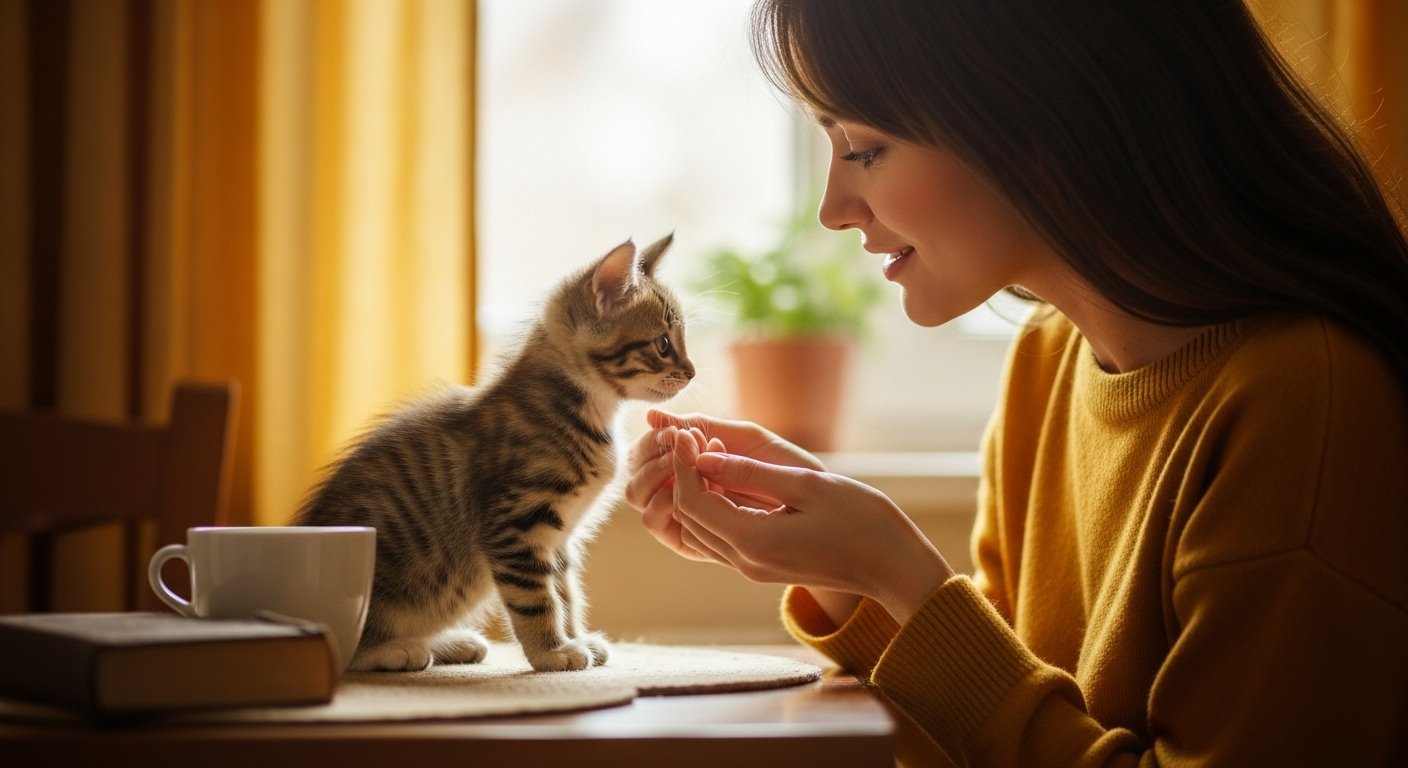
- Start with the Lure: Hold a treat between your index finger and thumb (palm up). Let your kitten sniff it 1-2 cm from their nose. If they’re grabby, loosely close your fist. Kneel or stand comfortably in front.
- Guide the Movement: Slowly raise the treat 5-7 cm up, then arc it back toward their tail. Their gaze follows, naturally lowering their bottom to sit. Hold steady if needed—it might take seconds.
- Mark and Reward: The instant their butt touches the floor, click (or say “yes!”) and give the treat. Praise softly: “Good sit!” Toss the treat away to reset if they stay put.
- Repeat and Build Consistency: Do 5-10 reps per session. Once they sit reliably with the lure, hide the treat in your other hand or pocket.
- Add Verbal and Hand Cues: Say “sit” just before the gesture. Use a wrist flick or palm-up signal. Reward every time initially.
- Fade the Lure and Advance: Pretend to hold a treat, then reward from elsewhere. Increase distance, duration, or distractions gradually. Intermittently reward to maintain.
Tips for Purr-fect Results
- Motivation Matters: If treats don’t excite, try toys, petting, or catnip-rubbed items. Schedule feedings to heighten hunger.
- Common Pitfalls to Avoid: Don’t raise the treat too high (causes jumping) or repeat cues excessively (confuses them). If they claw or turn, lower/raise hand accordingly.
- Troubleshooting Table
| Issue | Possible Cause | Solution |
|---|---|---|
| Won’t Sit | Treat too high/low or not motivated | Adjust height; try stinkier treats or a harness for focus |
| Gets Distracted | Noisy environment | Switch to quieter spot; shorten sessions |
| Forgets Command | Inconsistent practice | Daily reps; integrate into routines like mealtime |
| Seems Stressed | Forcing or long sessions | End on a positive note; take breaks if frustrated |
- Advanced Twists: Once mastered, combine with “stay” or teach in new spots for generalization. Community tips from forums suggest gestures over words for some cats.
Wrapping Up: Celebrate the Wins
With time, your kitten’s “sit” will become second nature, turning training into joyful playtime. If progress stalls, seek a vet or behaviorist—underlying health issues could play a role. Share your success stories online for inspiration! For more, explore resources from Cats Protection or Zoetis Petcare.
Key Citations:
- Train your cat to sit | Blog
- How to Teach a Cat to SIT & STAY (Easy Way)
- How to Train a Cat to Sit | Zoetis Petcare
- PROTOCOL FOR TEACHING CATS AND DOGS TO “SIT,” “STAY”…
- Can I get a tutorial of how to teach my cat to sit : r/CatTraining
- How to Teach Your Cat to SIT – for BEGINNERS – Easy Step-by-Step
- At-Home Tips for Keeping Your Pets Busy and Engaged – ASPCA
- Sit, Stay, Read On for Tips and Tricks to Teach Your Pet