
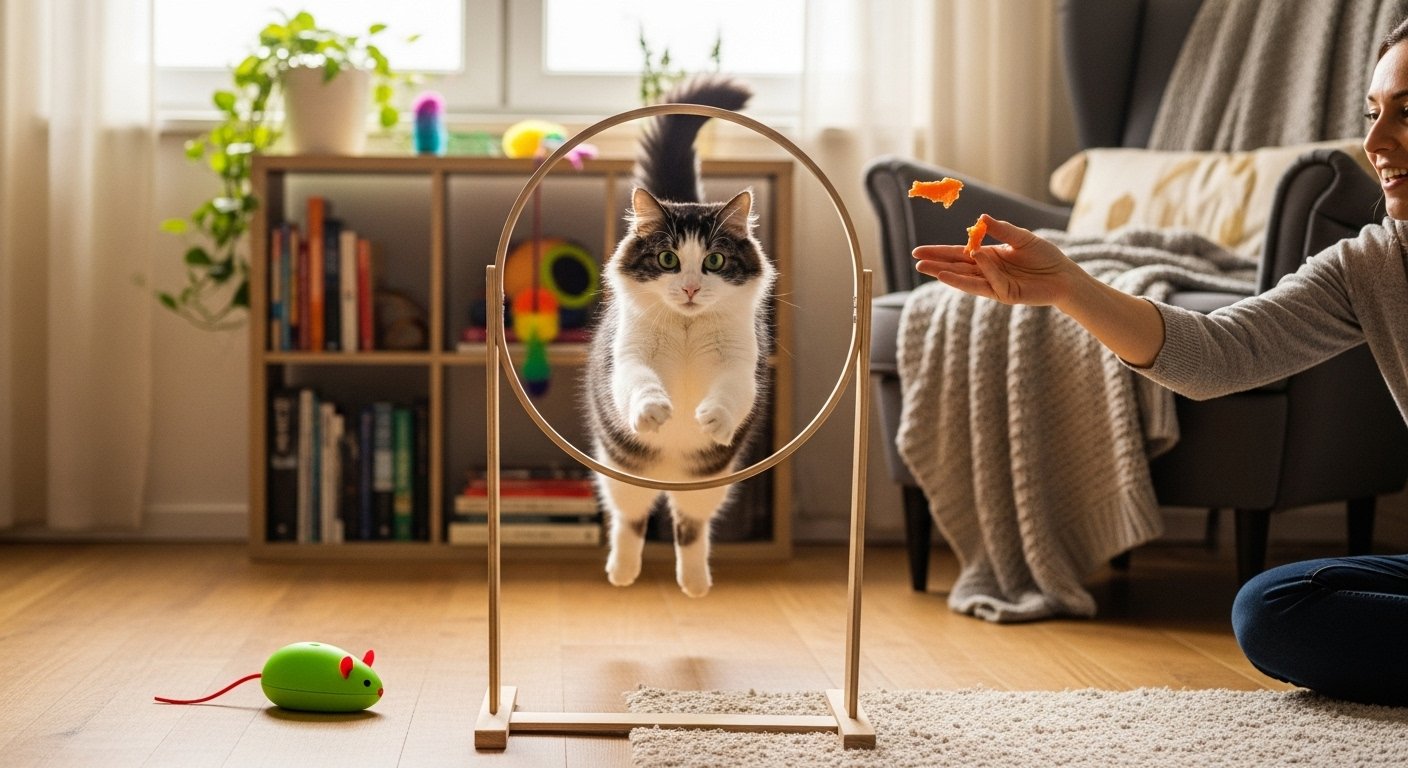
Training your cat can be a rewarding way to bond and stimulate their mind, but remember that cats learn at their own pace—patience and positive reinforcement are key. Research suggests most cats respond well to clicker training and treats, though individual personalities vary.
- Start Simple: Begin with basic commands like “sit” to build confidence; evidence from animal behaviorists indicates short, fun sessions (5-10 minutes) prevent boredom.
- Use Rewards Wisely: High-value treats motivate cats, but experts recommend limiting them to avoid weight gain—opt for healthy options like freeze-dried meat.
- Be Consistent: Repeat tricks daily in a quiet space; studies show consistency leads to faster learning, but forcing it can cause stress.
- Adapt to Your Cat: Not all cats enjoy tricks; if yours seems uninterested, it might signal underlying issues—consult a vet if needed.
Why Teach Tricks?
Engaging your cat in tricks can reduce behavioral problems like scratching furniture, as mental stimulation tires them out more than play alone. According to pet training resources, this also strengthens your bond, making vet visits easier.
Safety First
Always use positive methods—never punish. Watch for signs of stress like flattened ears, and ensure tricks suit your cat’s age and health; kittens learn quicker, while seniors may need gentler approaches.
Teaching tricks to your cat isn’t just about showing off—it’s a fantastic way to deepen your bond, provide mental stimulation, and even address common behavioral issues like boredom-induced mischief. Cats are often stereotyped as aloof and untrainable, but that’s far from the truth. With the right approach, rooted in positive reinforcement, you can unlock your feline friend’s potential right at home. This guide dives into seven fun, achievable tricks, complete with step-by-step instructions, tips for success, and troubleshooting advice. Whether you’re a first-time cat owner or a seasoned pro, these methods draw from expert insights in animal behavior to ensure safe, enjoyable training sessions.
We’ll cover everything from basic setup to advanced variations, emphasizing patience since cats learn through curiosity rather than obedience like dogs. Expect sessions to last 5-15 minutes, 2-3 times a day, and always end on a positive note. Tools you’ll need are minimal: a clicker (or a distinct sound like a tongue click), high-value treats (small pieces of tuna or commercial cat treats), and a quiet space free from distractions.
Preparing for Training: The Essentials
Before jumping into the tricks, set yourself up for success. Positive reinforcement is the cornerstone here—reward good behavior immediately to create associations. A clicker marks the exact moment your cat does something right, followed by a treat. If you don’t have a clicker, use a verbal cue like “yes!” Studies from organizations like the ASPCA highlight that this method builds trust and eagerness to learn.
Choose treats wisely: They should be tiny (pea-sized) to avoid overfeeding, and irresistible to your cat. Test a few options—some prefer crunchy, others soft and meaty. Track progress in a simple journal: Note what works, session lengths, and any setbacks. If your cat has health issues, like obesity or dental problems, consult your vet for treat recommendations.
Environment matters too. Train in a familiar room without other pets or loud noises. Start when your cat is slightly hungry but not starving, ideally before mealtime. Kittens (under 1 year) pick up tricks faster due to their playful nature, while adult cats might need more motivation. Seniors can learn too, but keep sessions short to prevent fatigue.
Trick 1: Sit on Command
The “sit” trick is a great starter, teaching impulse control and paving the way for more complex behaviors. It’s based on natural cat postures, making it intuitive.
Step-by-Step Guide:
- Hold a treat above your cat’s nose, slightly back so they look up.
- Slowly move the treat toward their tail— their bottom should naturally lower to sit.
- As soon as they sit, click and reward. Say “sit” just before the action.
- Repeat 5-10 times per session, gradually phasing out the lure until they respond to the verbal cue alone.
Tips for Success: If your cat jumps for the treat, lower your hand. Practice in short bursts to maintain interest. Variations include “sit pretty” (front paws raised), but only for agile cats.
Common Challenges and Fixes: If they ignore you, try a more enticing treat or train when they’re alert. Expect 1-2 weeks for mastery.
Trick 2: High-Five or Paw Shake
This adorable trick mimics human greetings and engages your cat’s paws, which can help with nail trimming tolerance.
Step-by-Step Guide:
- Get your cat to sit first (using Trick 1).
- Gently tap their paw while holding a treat in your closed fist at paw level.
- When they paw at your hand, click, open your fist, and reward. Add the cue “high-five” or “shake.”
- Gradually raise your hand for a true high-five.
Tips for Success: Use soft touches to avoid startling them. Reward even light touches initially. For fun, teach left and right paws separately.
Common Challenges and Fixes: Shy cats may need coaxing—start with just lifting the paw yourself a few times. Full proficiency might take 2-3 weeks.
Trick 3: Come When Called
Essential for safety, this recall trick ensures your cat responds to their name, useful for mealtimes or emergencies.
Step-by-Step Guide:
- Call your cat’s name in a cheerful tone from a short distance, shaking a treat bag.
- When they approach, click and reward lavishly.
- Increase distance gradually, practicing in different rooms.
- Add distractions like toys once reliable.
Tips for Success: Pair with mealtime for natural reinforcement. Use their full name or a whistle for variety.
Common Challenges and Fixes: If they don’t come, avoid chasing—lure with treats instead. Multi-cat homes may require individual sessions. Aim for reliability in 1-4 weeks.
Trick 4: Fetch Like a Dog
Yes, cats can fetch! This taps into their hunting instincts, providing exercise and fun.
Step-by-Step Guide:
- Choose a lightweight toy (like a crumpled paper ball) that your cat loves.
- Toss it gently; when they chase and touch it, click and reward.
- Encourage bringing it back by calling them or using a treat trail.
- Reward only full retrieves eventually.
Tips for Success: Start with short throws. Rotate toys to keep it exciting—ping-pong balls or feather wands work well.
Common Challenges and Fixes: If they lose interest, end the game early. Not all cats fetch; if yours doesn’t, try a laser pointer variation. Mastery in 2-4 weeks.
Trick 5: Roll Over
A cute, acrobatic trick that showcases your cat’s flexibility, but skip if they have joint issues.
Step-by-Step Guide:
- Start with your cat lying down, relaxed.
- Hold a treat near their nose, then arc it over their shoulder to encourage rolling.
- Click and reward partial rolls first, saying “roll over.”
- Build to a full roll with practice.
Tips for Success: Do this on a soft surface like carpet. Combine with “down” for a sequence.
Common Challenges and Fixes: Dizzy or reluctant cats? Shorten sessions and use slower movements. Expect 3-5 weeks for smoothness.
Trick 6: Jump Through a Hoop
This circus-like trick boosts agility and confidence, ideal for energetic cats.
Step-by-Step Guide:
- Use a hula hoop or DIY ring on the ground.
- Lure your cat through with a treat on the other side, clicking as they pass.
- Gradually raise the hoop, adding the cue “jump.”
- Reward enthusiastic jumps.
Tips for Success: Start low to build success. For advanced, add multiple hoops.
Common Challenges and Fixes: Fearful cats need extra coaxing—place treats inside the hoop first. Time to learn: 2-4 weeks.
Trick 7: Target Touch (Nose or Paw to Stick)
Targeting teaches focus and can lead to endless variations, like turning lights on/off.
Step-by-Step Guide:
- Present a target stick (or your finger) with a treat behind it.
- When your cat noses or paws it, click and reward. Say “touch.”
- Move the target around, rewarding touches.
- Use for guiding to new spots or tricks.
Tips for Success: This foundational skill enhances others. Experiment with objects like bells for ringing.
Common Challenges and Fixes: Inconsistent touches? Reinforce basics. Full adaptation in 1-3 weeks.
Advanced Training Ideas and Benefits
Once these basics are down, chain tricks together—like sit, high-five, then fetch—for impressive routines. Benefits extend beyond fun: Training reduces stress, as per veterinary behavior research, and can mitigate issues like aggression or anxiety. For multi-cat households, train separately to avoid competition.
Track your cat’s progress with a simple table:
| Trick | Sessions per Week | Progress Notes | Estimated Mastery Time |
|---|---|---|---|
| Sit | 3-5 | Quick learner if food-motivated | 1-2 weeks |
| High-Five | 3-5 | Builds on sit; paw-sensitive cats slower | 2-3 weeks |
| Come | Daily | Essential; practice in real scenarios | 1-4 weeks |
| Fetch | 2-4 | Play-based; varies by toy interest | 2-4 weeks |
| Roll Over | 2-3 | Physical; monitor for comfort | 3-5 weeks |
| Jump | 3-4 | Agility-focused; energetic cats excel | 2-4 weeks |
| Target | 4-5 | Versatile; great for shy cats | 1-3 weeks |
Troubleshooting Common Issues
If training stalls, reassess: Is the treat appealing? Sessions too long? Signs of overstimulation include tail flicking or avoidance—pause and try later. For stubborn cats, incorporate play; puzzle toys can bridge to formal training. If behavioral problems persist, professional trainers or vets specializing in feline behavior can help.
In conclusion, teaching these tricks transforms routine interactions into joyful adventures. Remember, the goal is enjoyment for both of you—celebrate small wins. With consistency, your cat might surprise you with their cleverness!