- positive reinforcement is highly effective: It encourages desired behaviors through rewards like treats or praise, making training enjoyable and building trust between you and your cat.
- It seems likely to outperform punishment methods: Avoiding aversive techniques reduces stress, fear, and potential aggression, fostering a happier home environment for all.
- Evidence leans toward simple, consistent application: With immediate timing and high-value motivators, even stubborn cats can learn tricks, habits, or life skills, though patience is key as results vary by individual cat.
What is Positive Reinforcement?
Positive reinforcement involves rewarding your cat immediately after a desired behavior to increase the chance of it happening again. Common rewards include small treats, petting, or playtime, tailored to what your cat loves most.
Why It Works for Cats
Cats are independent but responsive to incentives, especially food. This method leverages their natural learning process, creating positive associations without causing anxiety, unlike yelling or spraying water, which can damage your bond.
Basic Steps to Get Started
- Identify motivators: Test treats or toys to find what excites your cat.
- Reward promptly: Give the reward within seconds of the behavior.
- Be consistent: Use the same cues and rewards every time.
- Start small: Begin with easy behaviors like coming when called, then build to more complex ones.
Introduction: Unlocking Your Cat’s Potential with Kindness
Training a cat might seem like a challenge—after all, they’re known for their independence and selective listening. But what if I told you that the secret to a well-behaved, happy feline lies not in strict discipline, but in rewards and encouragement? Positive reinforcement is a game-changer in cat training, turning potential frustrations into fun bonding sessions. This approach, backed by animal behavior experts, focuses on rewarding good behaviors rather than punishing bad ones, leading to lasting results and a stronger relationship with your furry friend.
In this detailed guide, we’ll explore the science behind positive reinforcement, its benefits over traditional methods, step-by-step training techniques, real-world examples, common pitfalls to avoid, and tips for success. Whether you’re dealing with a kitten learning the litter box or an adult cat scratching furniture, these strategies can help. Let’s dive in and make training as enjoyable as a sunny nap spot for your cat!
Understanding Positive Reinforcement: The Basics
Positive reinforcement is a training technique rooted in behavioral psychology, where you add something pleasant (a “reinforcer”) right after a behavior to make it more likely to occur again. For cats, this could mean a tiny piece of tuna after using the scratching post or verbal praise like “good kitty!” paired with a gentle scratch behind the ears.
Unlike dogs, who often aim to please their owners, cats are motivated by self-interest—what’s in it for them? Food treats work best for most cats because they’re quick and highly desirable. Experts emphasize that rewards must be immediate—within seconds—to help your cat connect the action to the prize. If you delay, they might associate the treat with something else, like standing up instead of sitting.
This method draws from operant conditioning, a concept studied extensively in animals. It contrasts with punishment, which can increase stress and lead to problems like inappropriate elimination or aggression. Studies show cats trained with positive methods have lower stress scores and better welfare outcomes.
The Benefits: Why Choose Positive Over Punishment?
Positive reinforcement isn’t just kinder—it’s more effective for long-term behavior change. Here’s why it shines:
- Builds Trust and Reduces Stress: Punishment like squirting water or yelling can make cats fearful, leading to avoidance or even biting. Positive methods create positive associations, making your cat more relaxed and cooperative. For instance, cats punished harshly are 12 times more likely to have litter box issues.
- Encourages Voluntary Participation: Cats choose to engage because it’s rewarding, turning training into play. This boosts their confidence and your bond.
- Versatile for All Ages and Breeds: From kittens learning basics to seniors adapting to new routines, it works. Even “stubborn” cats respond well with patience. Recent discussions highlight its success with intelligent breeds like Burmese or Chausies for tricks.
- Health and Practical Perks: Trained cats handle vet visits, nail trims, or carriers better, reducing everyone’s anxiety. It also prevents destructive behaviors by redirecting instincts, like scratching, to appropriate outlets.
To illustrate the differences, here’s a comparison table:
| Aspect | Positive Reinforcement | Punishment-Based Methods |
|---|---|---|
| Core Approach | Rewards desired behavior | Suppresses undesired behavior |
| Effect on Cat | Builds confidence, reduces stress | Can cause fear, anxiety, aggression |
| Long-Term Results | Lasting changes through association | Temporary suppression, potential rebound |
| Examples | Treat for using scratching post | Squirt bottle for jumping on counters |
| Expert Recommendation | Highly recommended by vets and behaviorists | Discouraged due to welfare concerns |
This table underscores how positive methods align with cats’ natural independence, making training sustainable.
Step-by-Step Guide: How to Train Your Cat
Ready to start? Follow these steps for effective positive reinforcement training. Remember, sessions should be short (5-15 minutes) and fun—train before meals when your cat is motivated.
- Choose Your Tools: Gather high-value treats (e.g., small bits of cooked chicken or commercial cat treats), a clicker (optional, to mark the exact moment of good behavior), and toys. A clicker acts as a “bridge” to the reward, helping with precision.
- Identify the Behavior: Pick one skill, like “sit” or using the litter box. For unwanted actions, redirect: Distract with a noise (not yelling), guide to the alternative, and reward.
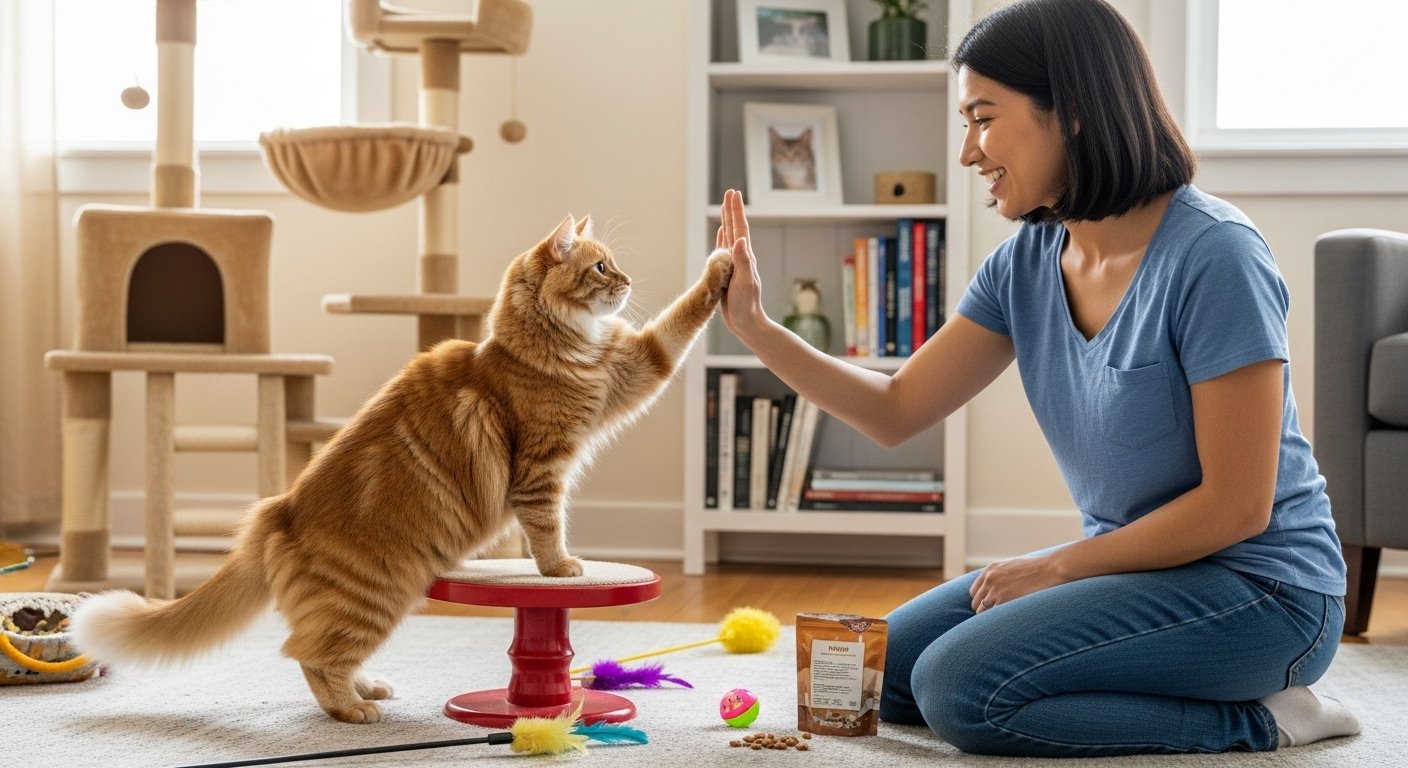
- Use Luring or Shaping: Lure with a treat to guide the behavior (e.g., hold a treat above their head to encourage sitting). For shaping, reward approximations—first a paw lift for “high-five,” then full contact.
- Reward Immediately and Consistently: Click (if using) or praise, then treat. Everyone in the household must use the same cues, like “sit” or “come.”
- Fade Rewards Gradually: Once mastered, switch to intermittent rewards (e.g., every other time) to maintain the behavior without overfeeding. Keep praise consistent.
- Monitor and Adjust: Watch body language—if your cat seems frustrated (e.g., tail flicking), stop and try later. Build gradually for complex skills.
For visual learners, consider resources like books on clicker training or online videos.
Real-World Examples: Training in Action
Let’s apply this to common scenarios:
- Litter Box Training: For kittens or issues, reward immediately after use with a treat and praise. Keep the box clean and quiet—consistency and positive vibes prevent accidents.
- Scratching Post Use: When your cat approaches the post, reward with treats. Redirect from furniture by distracting and guiding, then praise. Over time, they’ll prefer the post.
- Coming When Called: Say their name, reward when they approach. Practice in various rooms to generalize.
- Tricks Like High-Five or Fetch: Use shaping: Reward paw movement, then touch, building to the full trick. Burmese cats excel here with positive methods.
- Carrier Training: Leave the carrier out as cozy furniture. Reward entry with treats, progressing to short closures and rides. This eases vet trips.
- Reducing Meowing or Aggression: Ignore unwanted behavior, reward quiet or calm moments. For shy cats, treat for emerging from hiding.
These examples show versatility—adapt to your cat’s personality.
Common Mistakes and How to Avoid Them
Even with good intentions, pitfalls can arise:
- Delayed Rewards: Always treat instantly to avoid confusing associations.
- Inconsistency: Mixed signals from family members undermine progress—post cue lists for unity.
- Over-Rewarding: Phase out treats to prevent begging or weight gain.
- Forcing Participation: Never physically guide or punish—this builds fear. Let your cat opt in.
- Ignoring Motivation: If treats don’t work, try toys or affection. Trial and error is key.
- Long Sessions: Keep them brief to maintain interest—bored cats tune out.
By sidestepping these, you’ll see quicker results.
Advanced Tips for Success
- Incorporate Clickers: For precision, “charge” the clicker by clicking and treating repeatedly until your cat associates the sound with rewards.
- Variable Schedules: After mastery, reward unpredictably to keep motivation high, like a slot machine.
- Handle Stressful Situations: Use rewards during nail trims or brushing to create calm associations, though some cats may need professional help.
- For Multi-Cat Homes: Train individually to avoid competition, rewarding relaxed interactions.
- Track Progress: Keep a simple journal of sessions to note what works.
Recent community shares emphasize patience and repetition for litter training or tricks.
Conclusion: A Rewarding Journey for You and Your Cat
Positive reinforcement transforms cat training from a chore into a delightful adventure, proving that kindness yields the best results. By focusing on rewards, timing, and consistency, you’ll not only teach practical skills but also deepen your bond. Remember, every cat is unique—be patient, observe their cues, and celebrate small wins. If challenges persist, consult a vet or behaviorist.
Start today with one simple behavior, and watch your cat thrive. Your home will be happier, and your Pinterest board of cute cat moments? Overflowing!