Off-leash training allows dogs to enjoy more freedom while maintaining safety and obedience, but it requires patience, consistency, and a strong foundation in basic commands. Research suggests that starting with reliable recall and using positive reinforcement leads to better outcomes, though success can vary by breed, age, and individual temperament. It’s important to assess your dog’s readiness and local laws before beginning, as not all dogs may achieve full off-leash reliability in every environment.
Key Benefits and Considerations
- Enhanced Freedom and Bond: Off-leash training can strengthen your relationship with your dog through trust and communication, providing mental and physical stimulation.
- Safety First: Always prioritize identification like microchips and GPS trackers, and avoid high-risk areas like roads or where leash laws apply.
- Realistic Expectations: Progress depends on consistent practice; some dogs may need professional help for challenges like distractions or impulse control.
Getting Started
Begin in a controlled environment with basic obedience mastered. Use tools like long lines for gradual transitions, and focus on commands such as sit, stay, come, and heel. Positive reinforcement with treats and praise is key to building confidence.
Progression Tips
Move from basics to advanced by increasing distractions, distance, and duration. Proof commands in varied settings, and always reward check-ins to encourage voluntary returns.
Off-leash training represents a rewarding journey that transforms your dog’s obedience from leash-dependent to reliably independent, allowing for shared adventures in parks, hikes, or open fields while ensuring their safety and your peace of mind. This comprehensive guide draws from expert veterinary and training sources to provide a step-by-step roadmap, emphasizing positive, humane methods that respect your dog’s individual pace and personality.
Understanding Off-Leash Training
Off-leash training teaches your dog to respond to commands without physical restraint, focusing on behaviors like staying close, recalling on cue, and ignoring distractions. It’s not just about freedom—it’s about building a deep bond based on trust and clear communication. Unlike basic obedience, which often occurs in low-distraction settings, off-leash skills must hold up in real-world scenarios with temptations like squirrels or other dogs. Benefits include increased exercise opportunities, reduced behavioral issues from pent-up energy, and a stronger human-canine relationship, but it demands commitment to avoid risks such as your dog bolting or encountering dangers.
Before diving in, evaluate if your dog is ready: They should already know fundamentals like responding to their name, have good impulse control, be socialized, and ideally be spayed/neutered with proper ID. Consider legal aspects—many areas have leash laws, so identify dog-friendly off-leash zones. Safety precautions are non-negotiable: Use microchips, collars with tags, and GPS devices to mitigate separation risks.
Prerequisites and Preparation
Success starts with a solid foundation. Ensure your dog has mastered basic obedience in controlled environments before attempting off-leash work. This includes physical and mental conditioning through regular walks, play, and enrichment activities to build stamina and focus.
Key equipment includes:
- Sturdy collars or harnesses.
- Long lines (10-15 feet initially, extending longer for advanced practice).
- High-value treats for rewards.
- Training aids like clickers or whistles.
Build trust by using consistent cues, body language, and tone. Socialize your dog to various people, animals, and environments to prevent fear-based reactions. Set realistic goals—training timelines vary, often taking weeks to months depending on the dog’s age and breed.
Basic Level: Laying the Foundation
At the basics, focus on essential commands that form the bedrock of off-leash reliability. Start indoors or in fenced areas with minimal distractions.
Core Commands:
- Sit: Teaches impulse control; use treats to lure the dog into position, marking with “Yes!” and rewarding.
- Stay: Builds duration; start with short holds, gradually increasing time while you step away.
- Come (Recall): Critical for safety; call your dog’s name enthusiastically, reward immediate returns.
- Heel: Encourages walking beside you; practice on-leash first, rewarding alignment.
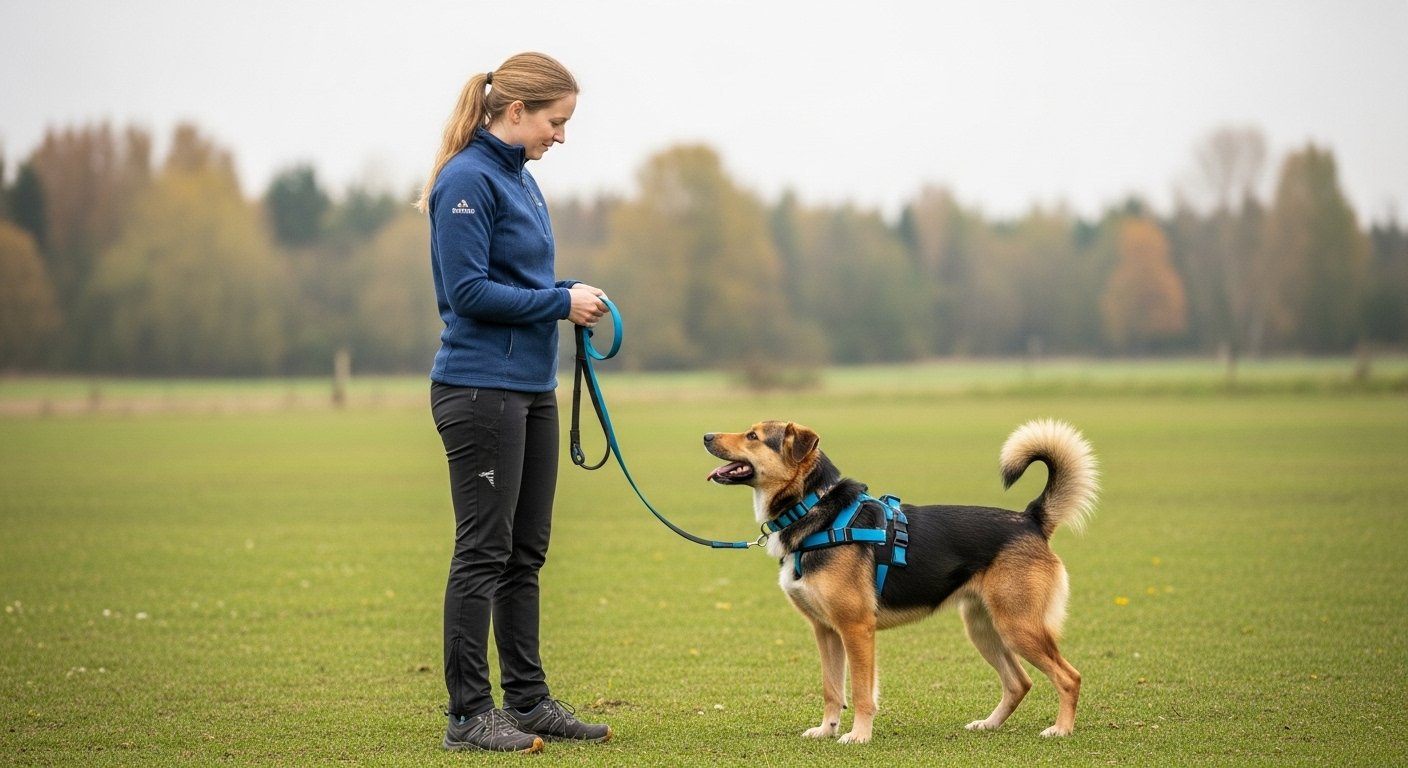
Use positive reinforcement exclusively—punishment can erode trust. Practice daily in short sessions (10-15 minutes) to keep your dog engaged. Transition to a long line for “illusion of freedom” while maintaining control.
5
“Step-by-step illustration of recall training, showing progression from basic calls to distraction-proof responses.”
“LARGE”
Intermediate Level: Building Reliability
Once basics are solid, introduce challenges to proof behaviors. Use a long line in larger enclosed spaces, gradually increasing distance and distractions.
Key Techniques:
- Distraction Training: Start with mild stimuli (e.g., toys), redirect attention back to you with commands like “Leave It,” rewarding focus.
- Distance Control: Extend the radius; use hand signals and voice for commands from afar, ensuring the dog checks in voluntarily.
- Radius Training: Condition your dog to stay within a set distance (e.g., 10-15 feet) by rewarding unsolicited returns and changing directions unexpectedly.
Practice in varied locations, like quiet parks, to generalize skills. If regressions occur, revisit basics without frustration.
| Command | Purpose | Training Steps | Common Challenges |
|---|---|---|---|
| Recall (Come) | Brings dog back safely | 1. Call name happily. 2. Reward return. 3. Add distance/distractions. | Distractions like wildlife; counter with higher-value rewards. |
| Stay | Maintains position | 1. Command sit/stay. 2. Step away briefly. 3. Return and reward. | Breaking early; build duration slowly. |
| Heel | Keeps dog at side | 1. Walk with treats at knee level. 2. Reward alignment. 3. Fade treats. | Pulling ahead; use direction changes. |
| Leave It | Ignores temptations | 1. Show treat, say “Leave It.” 2. Reward from other hand. 3. Practice with real items. | High-drive dogs; use desensitization. |
This table outlines foundational commands with practical steps, adapted from expert guides.
Advanced Level: Mastering Real-World Scenarios
Advanced training refines skills for unpredictable environments. Focus on high-distraction proofing, such as near traffic or wildlife.
Advanced Skills:
- Emergency Stop/Drop It: Teaches instant halts or releases; vital for hazards like toxic items.
- Off-Leash in Varied Settings: Progress to hikes or camping; maintain check-ins and use bribery (visible treats) if needed for escapes.
- Tricks and Enhancements: Incorporate fun elements like agility or advanced obedience to keep training engaging.
Continue intermittent rewards to prevent behavior fading. For puppies, note developmental stages (e.g., recall dips at 14-16 weeks) and use long lines during adolescence.
Common Mistakes and How to Avoid Them
Many owners rush the process, skipping basics or ignoring distractions, leading to unreliable behaviors. Other pitfalls include inconsistent cues, poor socialization, or punishing mistakes, which can cause fear or avoidance.
To sidestep these:
- Maintain patience and positivity.
- Gradually increase challenges.
- Read body language (e.g., ears perked for alertness) to gauge readiness.
- If your dog runs off, stay calm, avoid chasing, and use treats to lure back.
Tips for Long-Term Success
Consistency is paramount—integrate training into daily life with varied rewards (treats, toys, praise). Celebrate milestones, respect public etiquette (e.g., ask before approaches), and seek professional trainers for persistent issues like anxiety. Ongoing maintenance through classes or sports ensures skills remain sharp.
In summary, off-leash training is a progressive process that rewards dedication with a well-behaved, happy companion. Tailor approaches to your dog’s needs, and remember that professional guidance can accelerate results while addressing unique challenges.