- Research suggests that consistency in routines, like scheduled potty breaks after meals and play, is key to success, though individual dog personalities may require tailored approaches.
- It seems likely that separating dogs during initial training sessions helps reduce distractions and competition, preventing issues like marking or accidents from group dynamics.
- Evidence leans toward using positive reinforcement, such as treats and praise, for each successful potty trip, while avoiding punishment to build trust—especially important in households with rescued or shy dogs.
- Challenges like varying learning paces or resource guarding can arise, but tools like crates and designated potty spots often help manage them diplomatically for all pets involved.
Understanding the Basics
Potty training multiple dogs involves recognizing each pet’s unique needs while maintaining household harmony. Start with a consistent schedule to sync their body clocks, and use tools like crates for safe confinement. This approach minimizes accidents and fosters positive habits.
Common Challenges and Solutions
In multi-dog homes, distractions from play or competition over spots can slow progress. Solutions include separate training sessions and thorough cleaning of accidents with enzymatic cleaners to eliminate scents that encourage repeat offenses.
Essential Tools
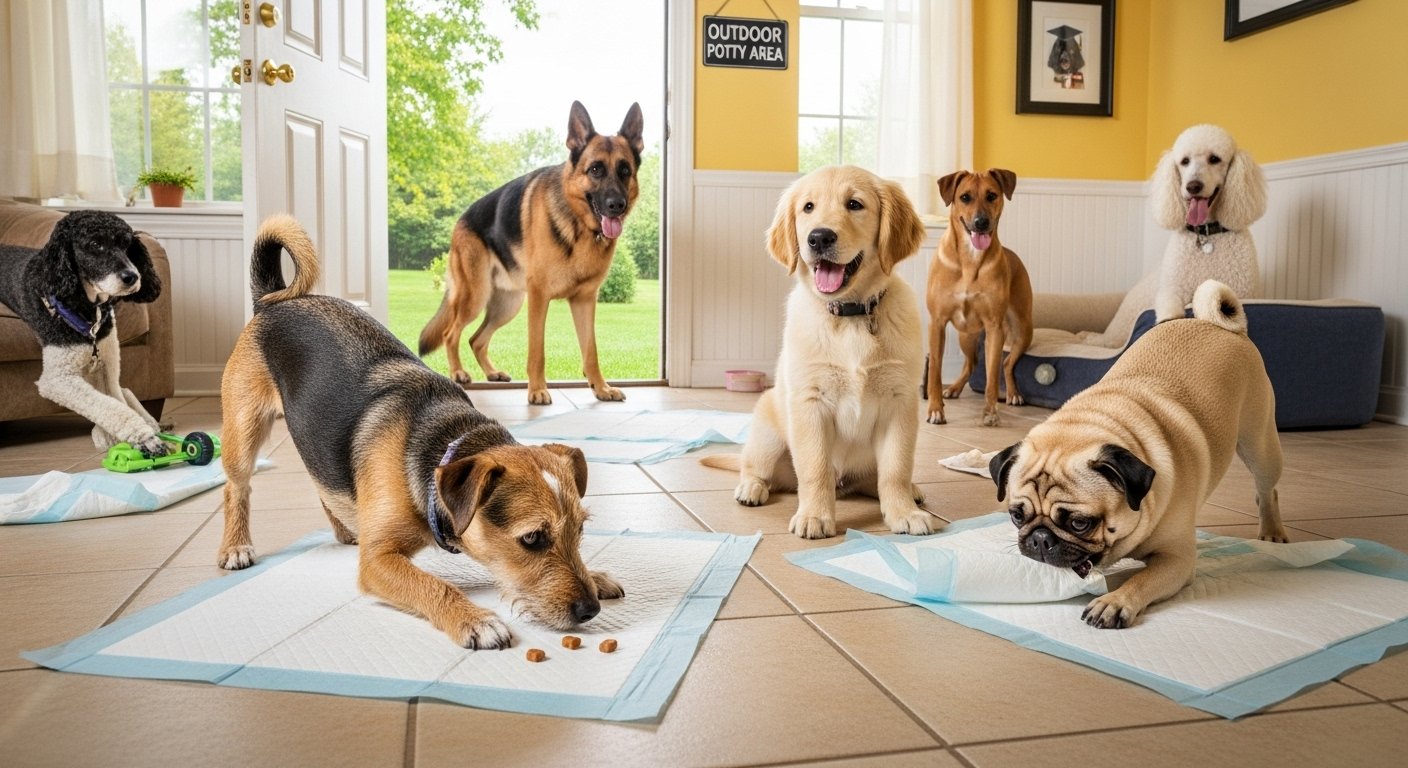
Gather crates, pee pads, treats, and cleaners. These help create a structured environment where dogs feel secure.
Potty training in a multi-dog home can feel overwhelming, but with the right strategies, it’s entirely achievable and can even strengthen the bond between your furry family members. This detailed guide draws from expert insights to provide practical, step-by-step advice tailored for households with more than one dog. Whether you’re dealing with puppies, adult rescues, or a mix, we’ll cover challenges, preparation, training methods, troubleshooting, and long-term maintenance. Think of this as your comprehensive resource—complete with schedules, tips, and visuals—to turn potty mishaps into a thing of the past.
Introduction: Why Potty Training Multi-Dog Homes Requires a Special Approach
Bringing multiple dogs into your home adds joy, companionship, and a bit of chaos—especially when it comes to potty training. Unlike single-dog households, where focus is undivided, multi-dog setups introduce dynamics like competition, imitation of behaviors (good and bad), and varying energy levels that can complicate the process. According to certified dog trainers, understanding these interactions is crucial; for instance, a dominant dog might mark territory, prompting others to follow suit, or littermates could distract each other during crucial learning moments. The goal? Create a harmonious routine that respects each dog’s individuality while promoting consistency across the pack.
Research from organizations like the American Kennel Club (AKC) emphasizes that multi-dog training succeeds when distractions are minimized and positive reinforcement is maximized. This isn’t just about avoiding accidents; it’s about building trust and preventing stress-related issues like anxiety or resource guarding. If you’re starting with puppies, expect a 4-6 month timeline; for adult or rescued dogs, it might take 2-4 weeks of intensive effort, depending on past experiences. Patience is your best friend here—rushing can lead to setbacks, but a structured plan yields reliable results.
The Unique Challenges of Potty Training in Multi-Dog Households
Multi-dog homes present specific hurdles that single-pet owners rarely face. One major issue is competition and resource guarding: Dogs may vie for the same potty spot, leading to marking behaviors where one dog’s scent triggers others to “claim” areas indoors. This is especially common in homes with unneutered males or littermates, where territorial instincts kick in.
Another challenge is distractions and imitation: Playful pups might interrupt each other’s focus, or a less-trained dog could encourage accidents by example. For rescued dogs, past traumas—like living in confined kennels where elimination happened in living spaces—can make outdoor pottying feel unnatural. Varying personalities add layers; a shy dog might hold it due to fear, while an energetic one gets overstimulated and forgets.
Time management is also key—single owners might struggle with simultaneous needs, and syncing body clocks (via feeding and water schedules) becomes essential to predict potty times. Environmental factors, like weather aversion or substrate preferences (e.g., grass vs. gravel), can exacerbate issues in group settings. Finally, scent lingering from accidents invites repeat offenses, as dogs rely heavily on smell to identify “bathroom” zones.
To address these, experts recommend starting with observation: Note each dog’s signals (pacing, sniffing) and adjust accordingly. Tools like leashes for controlled outings and separate potty areas can mitigate conflicts.
Preparation: Setting Up for Success
Before diving into training, prepare your home and mindset. Gather these essentials:
- Crates: One per dog, sized just right to discourage soiling (they should stand, turn, and lie down comfortably). Introduce gradually with treats to make it a safe den.
- Pee Pads or Porch Potty: Ideal for indoor transitions or bad weather; scented pads guide puppies.
- Treats and Rewards: Small, high-value bites for immediate positive reinforcement.
- Enzymatic Cleaners: To neutralize urine odors and prevent re-marking.
- Leashes and Gates: For supervision and confinement to accident-proof areas like kitchens.
Designate potty zones: Outdoors, choose a consistent spot “seasoned” with a urine-soaked rag to attract them. Indoors, use gates to limit access initially. In multi-dog setups, consider separate zones to avoid competition.
Assess personalities: Bold dogs might learn fast with group sessions, while shy ones need solo time. If possible, consult a vet to rule out medical issues like UTIs that mimic training failures.
Step-by-Step Expert Tips for Potty Training
Follow this phased approach, blending separate and group elements for efficiency.
- Establish a Routine: Sync feeding (same time, separate bowls) and water access to predict potty needs—breaks every 10-15 minutes initially, then hourly. Bookend activities (meals, play, naps) with outings.
- Choose Training Style:
- Separate Sessions: Ideal for beginners; train one dog at a time in a quiet space to build focus. Pros: Tailored pace; Cons: Time-intensive.
- Concurrent Training: For littermates; let them observe each other for social learning. Monitor for distractions.
- Use Positive Reinforcement: Reward every success with treats, praise, or play. Interrupt accidents gently (“Whoops!”) and redirect outside—no punishment, as it erodes trust.
- Incorporate Crate Training: Crates teach bladder control; use for naps and nights, with potty breaks upon release. Start bedtime routines early, limiting water 3 hours prior.
- Monitor and Adjust: Track progress; if one dog regresses, separate more. For rescues, frequent outings combat old habits.
Here’s a sample Daily Training Schedule for a multi-dog home (adjust for ages/energy):
| Time | Activity | Notes for Multi-Dog Setup |
|---|---|---|
| 6:00 AM | Wake-up & Potty Breaks | Take individually to designated spots; reward successes. |
| 7:00 AM | Breakfast (Separate Bowls) | Sync clocks; potty 15-30 min after. |
| 8:00 AM | Playtime & Training Session | Group play, then separate for basics like name recognition. |
| 10:00 AM | Crate Nap | Individual crates; potty upon wake. |
| 12:00 PM | Lunch & Potty | Monitor water; use leashes if needed. |
| 2:00 PM | Walk & Group Outing | Reinforce outdoor elimination together. |
| 5:00 PM | Dinner | Potty after; limit evening water. |
| 7:00 PM | Wind-Down Play | Final potty at 8:00 PM; crate for night. |
Handling Common Issues and Mistakes
- Marking or Accidents: Clean thoroughly; use belly bands temporarily. Separate if competition arises.
- Regression: Often from stress or changes; revert to basics and reinforce.
- Weather Aversion: Use covered areas or indoor alternatives like Porch Potty.
- Avoidable Mistakes: Inconsistency, punishment, or ignoring signals. Always supervise initially.
Expert Siddhika Bhat advises: “Work with your dogs’ personalities, not against them—build deeper connections through respectful routines.”
Long-Term Maintenance and Harmony
Once trained, maintain by sticking to routines and providing individual attention. In multi-dog homes, ongoing training like stationing (teaching dogs to wait in spots) prevents future issues. Celebrate milestones, and remember: Every dog learns differently, so empathy goes a long way.
This guide equips you with tools to navigate potty training confidently. For personalized advice, consult a professional trainer.