- Teaching your cat to roll over is possible with consistent, positive reinforcement, though success varies by cat’s age, health, and personality—research suggests most healthy cats can learn basic tricks if motivated properly.
- Start with foundational skills like lying down on cue, using treats or a clicker to guide movements gently without force.
- Sessions should be short (under 3 minutes) to keep it fun, and always end on a positive note to build confidence.
- It seems likely that clicker training enhances learning, but simple treat luring works too; evidence leans toward patience being key, as some cats master it in days while others may take longer or not at all.
Why Teach Your Cat Tricks?
Engaging your cat in training like rolling over provides mental stimulation, strengthens your bond, and can boost their confidence. It’s especially rewarding for indoor cats, offering a fun way to channel energy. Remember, not all cats will enjoy or succeed at this—respect their limits to avoid stress.
What You’ll Need
- High-value treats (small, soft, and irresistible).
- A clicker (optional but helpful for precise timing).
- A quiet space and patience.
Basic Steps to Follow
- Have your cat lie down in front of you.
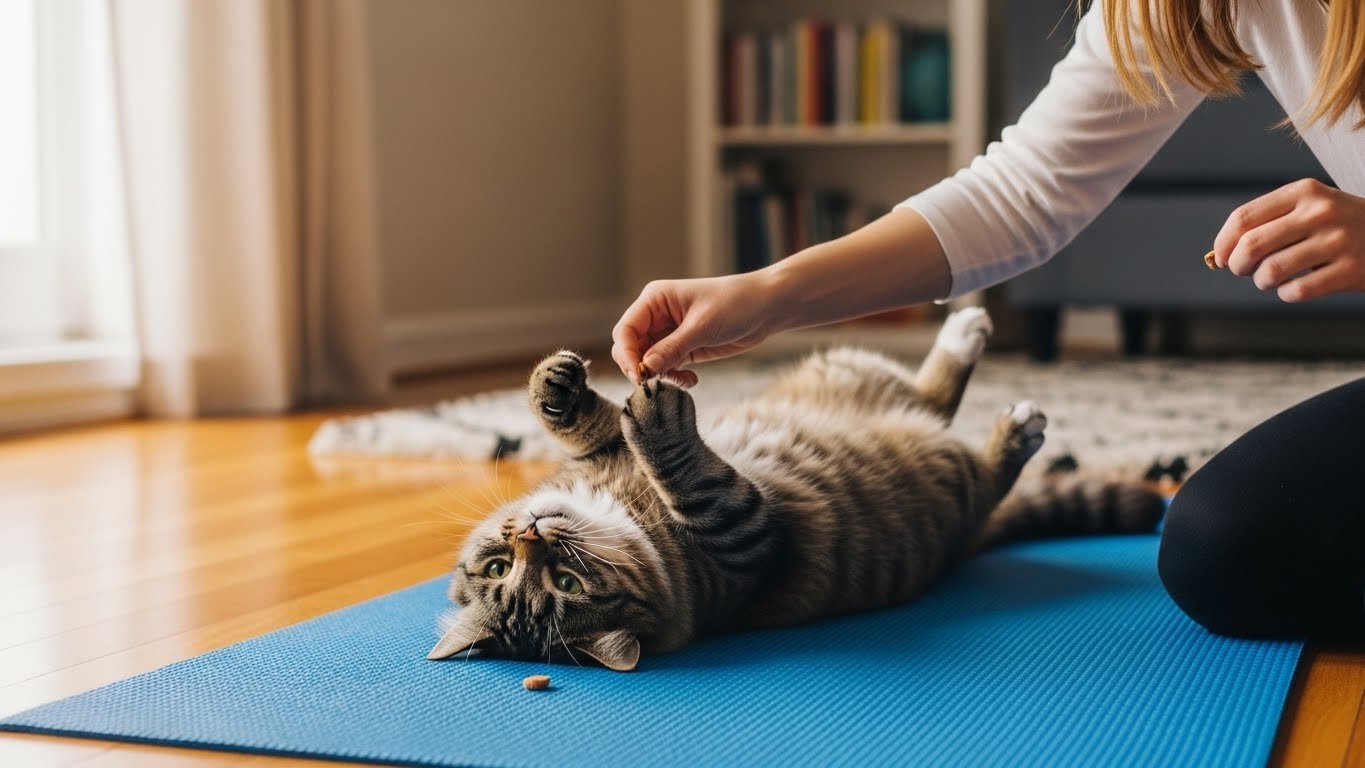
- Hold a treat near their nose and slowly arc it over their shoulder to lure them into rolling.
- Reward immediately with praise and the treat when they roll.
- Gradually reduce the lure, adding a verbal cue like “roll over.”
- Practice in short sessions, building up to a full roll.
Common Tips
Keep training positive; if your cat seems frustrated, pause and try later. Older or less agile cats might need modifications. For best results, combine with other basic commands for a well-rounded routine.
Teaching your cat to roll over might seem like a whimsical endeavor, but it’s a fantastic way to deepen your connection with your feline friend while providing them with essential mental exercise. Unlike dogs, cats aren’t always eager to please, but with the right approach—rooted in positive reinforcement and patience—you can unlock their potential for learning impressive tricks. This guide draws from expert advice on cat behavior and training methods, emphasizing gentle techniques to ensure the process is enjoyable for both you and your cat. Whether you’re a first-time cat owner or a seasoned enthusiast, these simple steps can turn playtime into a productive bonding session.
Introduction to Cat Training
Cats are intelligent creatures capable of learning a variety of tricks, from sitting to more advanced moves like rolling over. According to animal behaviorists, training stimulates their natural curiosity and hunting instincts, reducing boredom-related issues like scratching or excessive meowing. The key is using rewards they love, such as treats, to associate the behavior with something positive. Clicker training, a method where a small device marks the exact moment of desired behavior, can accelerate learning by providing clear feedback. Before diving in, assess your cat’s health—consult a vet if they’re older or have mobility issues, as rolling might not suit every kitty.
Here’s a quick visual to get inspired: a cute cat mid-roll, showcasing the fun end result.
Prerequisites for Success
Before attempting the roll over, ensure your cat is comfortable with basic commands. They should ideally know how to lie down on cue, as this is the starting position. If not, begin by rewarding natural lying-down behaviors to build the foundation.
You’ll need:
- Treats: Opt for small, soft ones like freeze-dried chicken or commercial cat treats that don’t require much chewing.
- Clicker: Inexpensive and available online; it helps “mark” the behavior precisely.
- Environment: A distraction-free room with a soft surface like a bed or carpet to make rolling comfortable.
- Time Commitment: Limit sessions to 2-3 minutes, up to three times a day, to prevent overwhelm.
Patience is crucial—some cats pick this up in a week, while others might need more time or prefer simpler tricks.
Step-by-Step Guide to Teaching Roll Over
Follow these detailed steps, adapted from proven training tutorials. Start slow, and only progress when your cat consistently succeeds at the current stage.
- Get Your Cat into Position: Have your cat lie down directly in front of you. If they don’t know “down,” lure them by holding a treat low to the ground and rewarding when they comply. Sit or kneel for better control.
- Introduce the Lure: Hold a treat between your thumb and index finger, palm down, about 1-2 cm from their nose. This grabs their attention without overwhelming them.
- Arc the Treat: Slowly move the treat in an arc toward one ear (choose their preferred side—test both). If they lean forward, that’s okay, but restart if they stand up. Aim for a gentle incline to encourage head turning.
- Guide Over the Shoulder: Continue arcing the treat diagonally toward the middle of their back. Their eyes should follow, prompting them to look over their shoulder and begin shifting weight.
- Encourage the Initial Roll: As they follow, they should roll onto their side. Click (if using a clicker) or praise verbally (“Good!”) and give the treat immediately. Repeat until consistent.
- Build to a Full Roll: Once side-rolling is mastered, extend the movement further to get them onto their back, then all the way over. Reward at each incremental success—halfway at first, then full.
- Refine Hand Movements: Use smaller arcs, keeping the treat closer to their head. If they still roll, gradually move it farther to promote the full motion.
- Fade the Lure: Pretend to grab a treat but use empty hand signals. Reward from your other hand to teach that the motion, not the visible treat, earns the prize.
- Add Verbal Cue: Say “roll over” just before the hand signal. Over time, they’ll associate the word with the action and respond without the visual prompt.
- Practice Both Sides: Train the non-preferred side for balance, but stick to one initially if they’re struggling.
- Generalize the Trick: Practice in different rooms or with distractions to solidify the behavior.
For a visual aid, check this illustration of the luring process.
Using Clicker Training for Better Results
Clicker training refines timing: Charge the clicker first by clicking and treating repeatedly until your cat associates the sound with rewards. In steps like relaxing the hip or shoulder, click the instant they shift position. This method is particularly effective for cats that get excited by treats alone, as a target stick can guide without food in hand.
Troubleshooting Common Issues
If things aren’t going smoothly, here’s a table summarizing potential problems and solutions:
| Issue | Possible Cause | Solution |
|---|---|---|
| Cat stands up instead of rolling | Treat movement too fast or high | Slow down; keep treat closer to nose and arc gently. Practice on a soft surface. |
| No interest in treats | Low-value rewards or full stomach | Use higher-value treats like tuna; train before meals. |
| Rolls only halfway | Lack of momentum | Reward partial rolls first; gradually require more. Use paws to assist gently if needed. |
| Prefers one side | Natural asymmetry | Stick to preferred side initially; train the other later for balance. |
| Gets frustrated or walks away | Session too long or stressful | Shorten to 1-2 minutes; end with success and playtime. |
| Older cat struggles | Physical limitations | Modify to partial rolls or consult vet; focus on easier tricks. |
Always avoid forcing positions—this can cause stress or injury. If your cat shows signs of discomfort, stop and try another day.
Advanced Variations and Maintenance
Once mastered, combine roll over with other tricks like “play dead” or chain it into a sequence for extra fun. Maintain by practicing sporadically with variable rewards to keep it engaging. Remember, every cat is unique—some might add flair, like flipping into position, which is perfectly fine.
Inspire yourself with this adorable example of a cat executing the trick flawlessly.
Conclusion
Training your cat to roll over is more than a party trick; it’s a gateway to understanding their behavior and enhancing your relationship. With consistency, positive vibes, and the steps outlined here, you’ll likely see progress. If it doesn’t click, that’s okay—celebrate small wins and enjoy the process. Share your success stories in the comments, and happy training!