
- Research suggests litter box avoidance is one of the most frequent issues, often linked to medical conditions or environmental factors, and can usually be addressed by consulting a vet and optimizing the box setup.
- Destructive scratching on furniture seems common but manageable; providing appropriate scratching posts and using positive reinforcement can redirect this natural behavior effectively.
- Aggression in cats, while potentially concerning, often stems from fear, play, or territory—evidence leans toward using desensitization and avoiding punishment to reduce it, though controversies exist around medication use.
- Excessive meowing may indicate needs like attention or health issues, and studies show ignoring unwanted vocalization combined with scheduled play can help, respecting that cats communicate differently.
- Biting or nibbling during interaction is typically play-related in young cats, with experts recommending toy redirection to teach boundaries empathetically.
Understanding Cat Behavior Basics
Cats are independent creatures with instincts rooted in their wild ancestors, making training different from dogs. Positive reinforcement, like treats or play, works best, as punishment can increase fear or aggression. Always rule out medical causes with a vet before assuming it’s purely behavioral.
Essential Training Tips
Start with consistency: Set routines for feeding, play, and litter maintenance. Use clicker training for desired behaviors, rewarding immediately. Enrich the environment with toys, perches, and safe spaces to prevent boredom-related problems. Patience is key—changes may take weeks.
When to Seek Professional Help
If issues persist despite home efforts, consult a veterinary behaviorist. Signs like sudden aggression or elimination problems could indicate pain or illness. Early intervention prevents escalation.
Cats exhibit a range of behaviors that can sometimes puzzle or frustrate their owners, but understanding these as natural instincts or responses to environment can lead to effective training. This comprehensive guide explores common cat behavior problems, drawing from veterinary and animal welfare expertise, and provides detailed, step-by-step solutions. We’ll cover everything from litter box woes to aggression, incorporating techniques like desensitization and positive reinforcement. Remember, while these tips are based on established methods, individual cats vary, so consulting a professional is advisable for persistent issues.
The Foundations of Cat Training
Training cats isn’t about dominance but building trust and meeting their needs. Techniques from veterinary manuals emphasize habituation (repeated exposure to reduce reactions), extinction (removing rewards for unwanted behaviors), desensitization (gradual exposure to triggers), counterconditioning (pairing triggers with positives), response substitution (replacing bad with good), and shaping (rewarding progress steps). For example, if a cat meows excessively for attention, extinction involves ignoring it consistently until the behavior fades, while counterconditioning might reward quiet moments with treats.
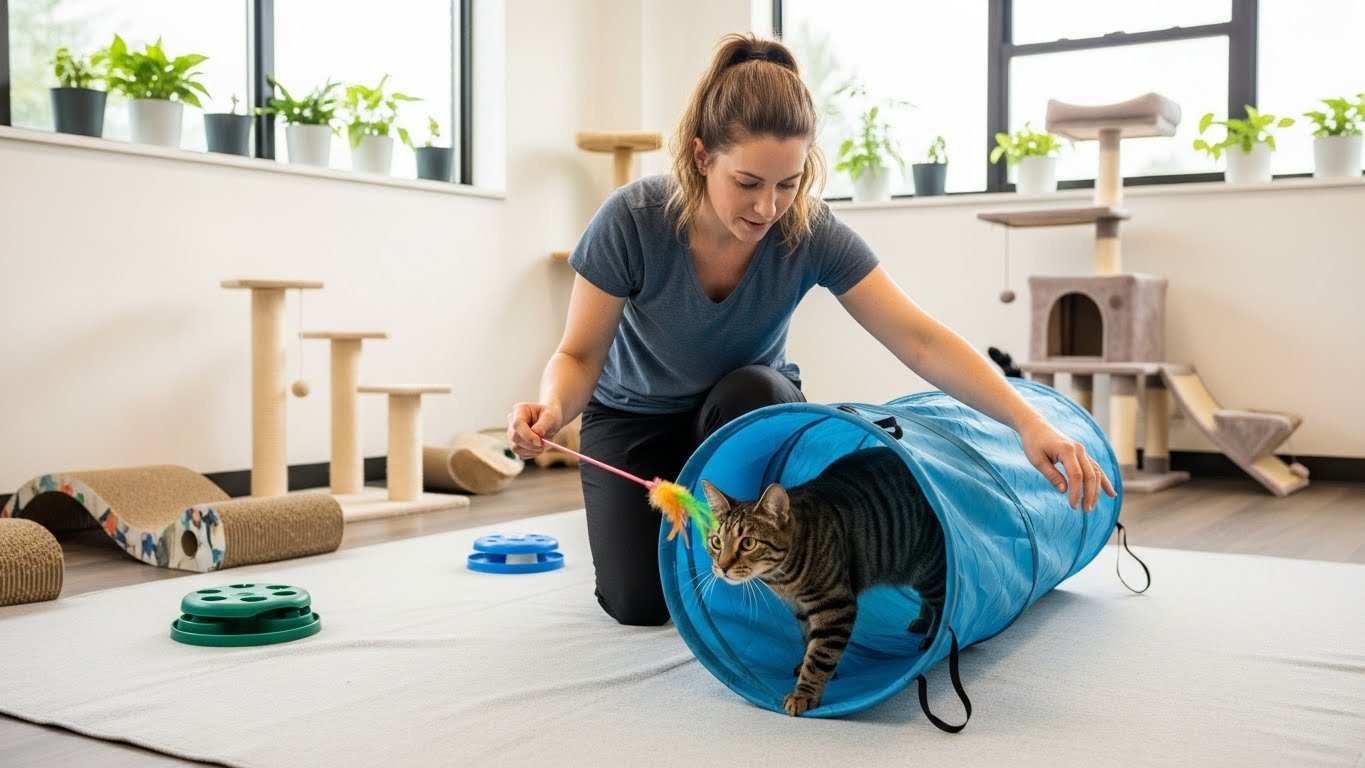
Avoid punishment— it can worsen fear or aggression. Instead, focus on enrichment: Provide scratching posts, interactive toys, and vertical spaces like cat trees to satisfy instincts. Spaying/neutering reduces hormone-driven issues like marking or fighting.
Common Problem 1: Litter Box Avoidance
One of the top complaints, affecting at least 10% of cats, litter box issues can stem from medical problems (e.g., urinary infections), stress, or poor setup. Signs include urinating outside the box or straining.
Solutions and Training Steps:
- Visit a vet to rule out health issues like infections or kidney problems.
- Follow the “one box per cat plus one” rule; place in quiet, accessible spots.
- Scoop daily, clean weekly with mild soap—avoid strong scents.
- Experiment with litter types (unscented, clumping) and box sizes (larger for big cats).
- If stress-related (e.g., new pets), use pheromone diffusers like Feliway for calming.
For urine marking (spraying vertical surfaces), common in unneutered cats, clean soiled areas with enzymatic cleaners and address territorial triggers.
Common Problem 2: Destructive Scratching
Cats scratch to mark territory, stretch, and sharpen claws—it’s instinctual, not spiteful. Furniture damage is frustrating, but redirection works.
Solutions and Training Steps:
- Provide stable, tall scratching posts (at least 30 inches) in preferred materials like sisal or carpet; place near furniture.
- Reward use with treats or catnip; rub posts with catnip to attract.
- Cover furniture with double-sided tape or throws temporarily.
- Trim claws regularly or use soft nail caps as a humane alternative.
- If boredom contributes, increase playtime to 15-20 minutes daily.
Long-term, integrate posts into daily routines for habit formation.
Common Problem 3: Aggression Toward Humans or Other Pets
Aggression types include play (common in kittens), fear, petting-induced, redirected, pain-induced, status, territorial, maternal, and inter-cat. Causes range from poor socialization to medical pain.
Solutions and Training Steps:
- Identify type: Observe signs like dilated pupils or flattened ears.
- Rule out pain with a vet check—conditions like arthritis can trigger.
- For play aggression, use toys instead of hands; adopt in pairs for socialization.
- Fear aggression: Desensitize gradually with treats from a distance.
- Territorial: Slow introductions using scent swapping and barriers.
- Avoid physical intervention; use distractions like noise cans.
- Medications may help severe cases, but pair with behavior mods.
Reintroductions can take months; patience prevents escalation.
Common Problem 4: Excessive Meowing or Yowling
Cats vocalize for hunger, attention, mating, or illness—seniors may yowl due to cognitive decline.
Solutions and Training Steps:
- Vet check for issues like hyperthyroidism or pain.
- Ignore attention-seeking meows; reward quiet with play or food.
- Schedule interactive sessions: 5-10 minutes of lure chasing multiple times daily.
- Provide enrichment like puzzle feeders to reduce boredom.
- For nighttime yowling, use auto-feeders or blackout curtains.
Consistency in extinction training is crucial to avoid reinforcing the behavior.
Common Problem 5: Biting or Nibbling
Often from overstimulating play or teething in kittens.
Solutions and Training Steps:
- Hiss or yelp to mimic pain response, then withdraw attention.
- Redirect to toys; provide chew options like dental treats.
- Adopt littermates for natural bite inhibition learning.
- Short, frequent play sessions to tire without frustration.
Additional Problems and Fixes
- Jumping on Counters: Offer alternative perches; use textured mats as deterrents.
- Eating Houseplants: Switch to cat-safe greens; use barriers like pinecones.
- Waking You at Night: Gradual alarm training with food rewards.
- Fearful Behavior: Create safe zones; desensitize to triggers slowly.
- Senior Cat Changes: Monitor for cognitive issues; adapt environment with ramps and nightlights.
Comparison Table of Common Problems and Solutions
| Problem | Possible Causes | Key Solutions | Prevention Tips |
|---|---|---|---|
| Litter Box Avoidance | Medical issues, dirty box, stress | Vet check, multiple boxes, daily scooping | Consistent cleaning, quiet locations |
| Destructive Scratching | Instinct, boredom | Scratching posts, rewards, nail trims | Enrich environment, regular play |
| Aggression | Fear, pain, territory | Desensitization, vet eval, slow intros | Socialize early, avoid punishment |
| Excessive Meowing | Hunger, attention, illness | Ignore/redirect, scheduled play | Enrichment toys, routine feeding |
| Biting/Nibbling | Play, teething | Toy redirection, pain mimic | Pair adoptions, short sessions |
| Jumping on Counters | Curiosity, views | Alternative spots, deterrents | Window perches, training consistency |
| Eating Plants | Boredom, nutrition | Safe alternatives, barriers | Non-toxic plants, grass pots |
| Night Waking | Hunger, habit | Auto-feeders, gradual delay | Evening play, full meals |
| Fearful Behavior | Trauma, new stimuli | Safe spaces, gradual exposure | Positive associations, calm home |
| Senior Changes | Aging, cognitive decline | Adapted environment, vet checks | Regular health screens, comfort aids |
This table summarizes approaches, but tailor to your cat.
Advanced Training Considerations
For compulsive behaviors like overgrooming, combine mods with meds if anxiety-driven. Multi-cat homes need resource abundance to avoid competition. Track progress in a journal to adjust strategies. If problems involve children or allergies, professional trainers ensure safety.
In conclusion, fixing cat behavior problems requires empathy, consistency, and sometimes expert input. By addressing root causes and using positive methods, you can foster a harmonious home.