
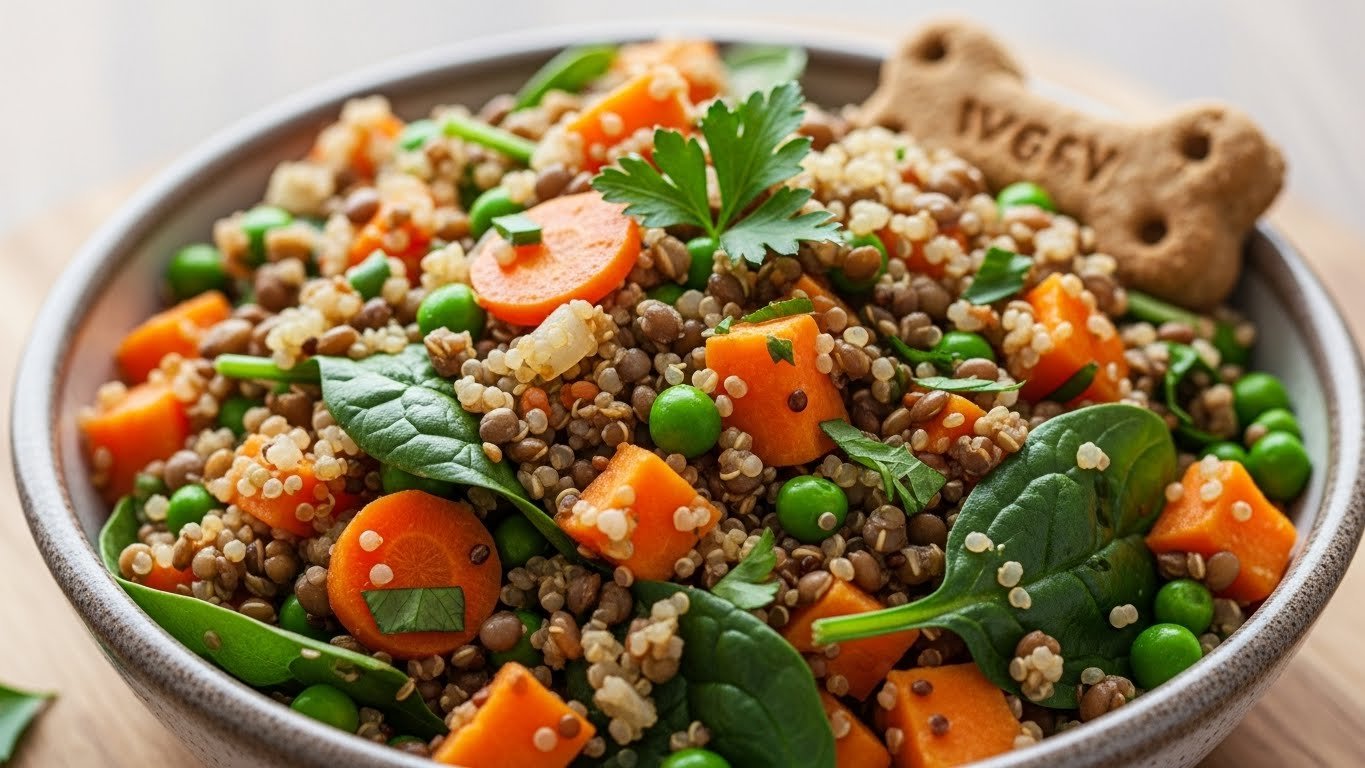
- Safety First: Research suggests that dogs, as omnivores, can adapt to a well-formulated vegan diet without major health risks, provided it includes essential supplements for nutrients like taurine and vitamin B12. However, not all studies agree, and some highlight potential deficiencies if the diet isn’t carefully balanced.
- Health Benefits: Evidence leans toward vegan-fed dogs showing fewer vet visits, better coat quality, and reduced medication needs, though results vary and long-term data is limited.
- Environmental and Ethical Wins: Plant-based options reduce the carbon paw-print and align with compassionate living, appealing to eco-conscious pet parents.
- Recipe Essentials: Focus on protein-rich plants like lentils and chickpeas, paired with veggies and grains; always consult a vet for personalization.
- Brand Recommendations: Top picks include V-Dog and Wild Earth for complete, tasty formulas.
Is a Vegan Diet Right for Your Dog?
It seems likely that many dogs can flourish on plant-based nutrition, especially with veterinary guidance to avoid imbalances. Start slow, monitor energy levels, and adjust as needed. For more info, check resources from the American Kennel Club (akc.org) or your local vet.
Quick Vegan Food Ideas to Try
Whip up simple meals like lentil stew with carrots and rice, or sweet potato mash with peas. Commercial options from brands like Bramble offer convenience without the hassle.
Transition Tips
Ease your pup into vegan eats over 7-10 days by mixing with their current food. Watch for digestive changes and celebrate those happy tail wags!
As pet parents increasingly explore sustainable and ethical lifestyles, the conversation around vegan dog food has grown from a niche idea to a mainstream option. This comprehensive guide delves into the science, practicalities, and creative ideas for plant-based canine nutrition, drawing from recent studies and expert insights to help you make informed choices. We’ll cover everything from nutritional foundations to homemade recipes, commercial brands, potential benefits and risks, and even how to tailor diets for different life stages—all while emphasizing balance and veterinary oversight.
Understanding Canine Nutrition: Why Plants Can Work
Dogs are classified as omnivores, having evolved alongside humans to digest a variety of foods beyond meat. Unlike strict carnivores like cats, dogs possess enzymes for breaking down starches and can derive essential nutrients from plant sources. Key requirements include proteins (for amino acids like taurine), fats, carbohydrates, vitamins (e.g., B12, D), and minerals (e.g., calcium, iron). Plant-based diets can meet these through ingredients like lentils, quinoa, and supplements, but formulation is crucial to prevent deficiencies.
A 2023 systematic review of vegan diets for dogs and cats found no convincing evidence of major health impacts when diets are complete, though small sample sizes in studies call for caution. Another study from the University of Illinois in 2023 tested human-grade vegan diets and confirmed they provide adequate nutrition, with dogs maintaining healthy weights and activity levels. However, a 2024 analysis noted that while plant-based foods compare well to meat-based ones, no dry dog food is fully nutritionally complete without careful checking.
| Essential Nutrient | Plant-Based Sources | Potential Risks if Deficient | Supplementation Tips |
|---|---|---|---|
| Protein (Amino Acids) | Lentils, chickpeas, quinoa, peas | Muscle loss, poor coat | Add yeast or algae for taurine; aim for 18-25% protein in adult diets |
| Omega-3 Fatty Acids | Flaxseeds, chia seeds, algae oil | Dry skin, inflammation | Use algae-based DHA/EPA supplements |
| Vitamin B12 | Fortified nutritional yeast | Anemia, neurological issues | Always supplement, as it’s not naturally in plants |
| Calcium & Phosphorus | Kale, broccoli, fortified plant milk | Bone weakness | Balance ratio 1:1 to 2:1; use bone meal alternatives |
| Iron & Zinc | Spinach, pumpkin seeds | Fatigue, immune issues | Pair with vitamin C-rich foods for absorption |
This table highlights how to build a balanced plate—consult AAFCO guidelines for precise needs based on your dog’s age, size, and health.
Benefits of Plant-Based Diets: What the Evidence Shows
Plant-based nutrition offers several potential advantages, supported by emerging research. A 2022 study of 2,500 dogs found vegan-fed pups had 36% illness rates versus 49% for conventional meat diets, with lower odds of disorders like skin issues and digestive problems. Guardians reported shinier coats, more energy, and fewer allergies, possibly due to anti-inflammatory phytonutrients in plants like antioxidants in berries and fiber for gut health.
Environmentally, vegan diets reduce water use and emissions—key for eco-minded owners. Ethically, they avoid animal agriculture concerns. A 2024 study confirmed dogs on year-long plant-based diets maintained normal blood work and cardiac health. However, benefits aren’t universal; raw meat diets scored slightly better in some metrics, showing diet quality matters more than type.
Risks and How to Mitigate Them
While promising, vegan diets carry risks if not done right. Common concerns include taurine deficiency (linked to heart disease) and alkaline urine leading to stones. A Brazilian study found inadequacies in some vegan foods, but this isn’t unique to plants—many conventional diets fail too. The British Veterinary Association notes jury’s out on long-term safety, urging monitoring.
Mitigation: Work with a veterinary nutritionist, use AAFCO-approved formulas, and test blood/urine regularly. Avoid DIY without expertise.
Homemade Vegan Dog Food Recipes: Tail-Wagging Delights
Homemade options let you control ingredients. Always add supplements like Just Be Kind or VegeDog for completeness. Here’s a sample weekly plan for a 30-lb adult dog (adjust portions; ~800-1000 kcal/day).
Recipe 1: Lentil Veggie Stew (Serves 2-3 days)
- Ingredients: 1 cup lentils, 1/2 cup brown rice, 2 carrots (chopped), 1 sweet potato (diced), 1 cup peas, 1 tbsp flaxseed oil, supplements.
- Steps: Cook lentils and rice in 4 cups water (45 min). Add veggies last 15 min. Cool, mix in oil/supplements. Portion: 1-1.5 cups/meal.
Recipe 2: Chickpea Sweet Potato Mash
- Ingredients: 1 can chickpeas (drained), 2 sweet potatoes (baked), 1/2 cup spinach, 1/4 cup pumpkin seeds, algae oil.
- Steps: Mash all, add supplements. Great for sensitive tummies.
Recipe 3: Quinoa Black Bean Bowl
- Ingredients: 1 cup quinoa, 1/2 cup black beans, zucchini, broccoli, nutritional yeast.
- Steps: Cook quinoa, mix with steamed veggies/beans. Top with yeast for B vitamins.
| Recipe | Protein Source | Veggie Boost | Calorie Estimate (per serving) | Best For |
|---|---|---|---|---|
| Lentil Stew | Lentils | Carrots, Peas | 400 kcal | Everyday energy |
| Chickpea Mash | Chickpeas | Sweet Potato, Spinach | 350 kcal | Skin health |
| Quinoa Bowl | Quinoa, Beans | Zucchini, Broccoli | 450 kcal | Digestive support |
Store in fridge up to 5 days; freeze extras. Vary to prevent boredom.
Top Vegan Dog Food Brands for 2025
For convenience, try these AAFCO-compliant brands:
- V-Dog: Affordable kibble with peas and lentils; great for allergies.
- Wild Earth: Yeast-based protein; high in omegas.
- Bramble: Fresh, human-grade meals.
- Halo Garden of Vegan: Wet food options for picky eaters.
- Just Be Kind: UK-based with supplements for homemade.
Prices range $2-5/lb; check for 2025 updates on sites like Chewy.com.
Special Considerations: Puppies, Seniors, and Health Issues
Puppies need higher protein (22-32%); use growth formulas. Seniors benefit from joint-supporting plants like turmeric. For allergies, vegan often helps by eliminating common triggers. Always vet-approved.
Final Thoughts on Going Vegan
With proper planning, plant-based nutrition can lead to happier, healthier dogs. Monitor closely, embrace variety, and enjoy the journey—your pup’s wagging tail will thank you!