
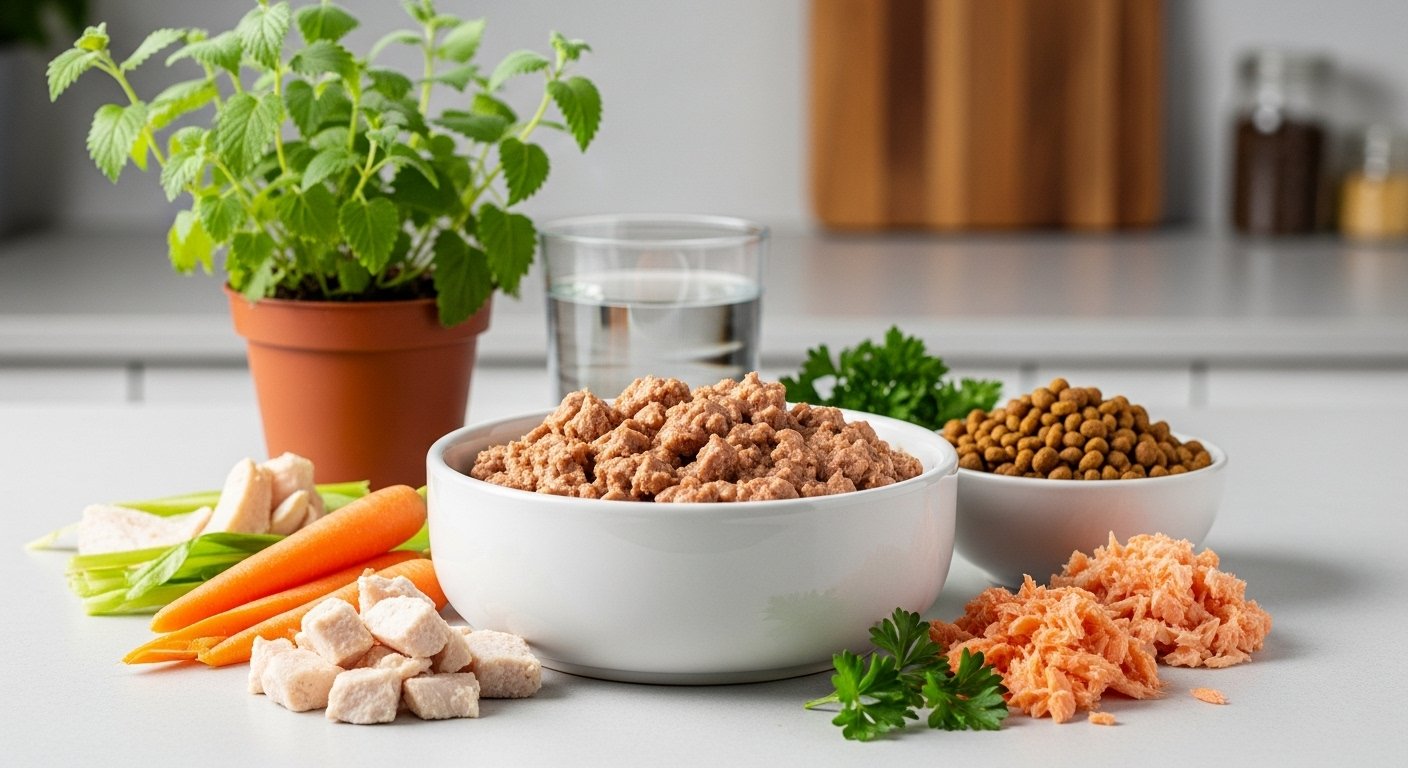
Feeding your cat the right food isn’t just about filling their bowl—it’s about supporting their overall health, energy, and longevity. Cats have unique nutritional requirements compared to dogs or humans, needing higher levels of protein and certain nutrients they can’t produce on their own. Poor nutrition can lead to issues like obesity, urinary problems, or heart conditions, but a well-chosen diet can prevent these. Start by selecting foods labeled as “complete and balanced” to cover basics, and adjust based on your cat’s age, activity level, and health status.
Quick Guide to Decoding Labels
Cat food labels can seem overwhelming, but focus on these essentials: The ingredients list shows components in order of weight—aim for real meats like chicken or fish at the top. The guaranteed analysis provides minimums for protein and fat, and maximums for fiber and moisture; for adult cats, seek at least 26% protein. The AAFCO statement verifies if the food meets nutrient profiles through formulation or testing—prefer those for your cat’s life stage. Feeding guidelines offer starting points, but monitor your cat’s weight and consult your vet for tweaks.
Essential Tips for Optimal Feline Health
To promote your cat’s well-being, combine label reading with practical habits. Provide fresh water always, as cats often under-drink. Consider wet foods for hydration, especially for urinary health. Transition foods gradually over 7-10 days to avoid digestive upset. If your cat has special needs, like allergies or kidney issues, veterinary diets may be recommended. Regular vet check-ups ensure the diet aligns with their evolving health, helping them stay playful and vibrant.
Feeding your feline companion the right nutrition is crucial for their vitality and long-term health. As obligate carnivores, cats evolved to thrive on animal-based diets rich in proteins and fats, with minimal carbohydrates. This comprehensive guide delves into the fundamentals of cat nutrition, drawing from authoritative sources like the Association of American Feed Control Officials (AAFCO) and veterinary experts. We’ll break down how to interpret food labels step by step, highlight essential nutrients with detailed tables, address common pitfalls, and offer actionable advice to help you make informed choices. Whether you’re a new cat owner or a seasoned one, understanding these elements can prevent health issues and enhance your cat’s quality of life.
The Basics of Cat Nutrition
Cats require a diet that mirrors their natural prey, emphasizing high-quality proteins for muscle maintenance, fats for energy and skin health, and specific micronutrients they can’t synthesize. Unlike dogs, cats need pre-formed vitamin A, taurine, and arachidonic acid from animal sources. Water is vital, comprising up to 80% of wet foods, aiding hydration and urinary tract function.
Key macronutrients include:
- Proteins: Essential for growth, repair, and immune function. Cats need higher levels than many other pets.
- Fats: Provide concentrated energy and support absorption of fat-soluble vitamins.
- Carbohydrates: Not essential but can provide fiber; excess may contribute to obesity.
- Fiber: Helps with digestion and hairball control, but too much can reduce nutrient absorption.
- Moisture: Critical in wet foods to prevent dehydration-related issues.
Micronutrients like vitamins and minerals round out a balanced diet, with specifics outlined by AAFCO profiles.
Essential Nutrients for Cats: AAFCO Standards
AAFCO establishes nutrient profiles for two main life stages: growth and reproduction (for kittens, pregnant, or lactating cats) and adult maintenance. These are minimum requirements on a dry matter (DM) basis, assuming 4,000 kcal metabolizable energy (ME) per kg DM. Adjustments may be needed for energy-dense or low-calorie foods.
Below are detailed tables from AAFCO guidelines. Note that values for growth/reproduction are higher to support development, and some nutrients have maximums to prevent toxicity.
AAFCO Cat Food Nutrient Profiles (Dry Matter Basis)
| Nutrient | Units | Growth & Reproduction Minimum | Adult Maintenance Minimum | Maximum |
|---|---|---|---|---|
| Crude Protein | % | 30.0 | 26.0 | – |
| Arginine | % | 1.24 | 1.04 | – |
| Histidine | % | 0.33 | 0.31 | – |
| Isoleucine | % | 0.56 | 0.52 | – |
| Leucine | % | 1.28 | 1.24 | – |
| Lysine | % | 1.20 | 0.83 | – |
| Methionine | % | 0.62 | 0.20 | 1.5 |
| Methionine-cystine | % | 1.10 | 0.40 | – |
| Phenylalanine | % | 0.52 | 0.42 | – |
| Phenylalanine-tyrosine | % | 1.92 | 1.53 | – |
| Threonine | % | 0.73 | 0.73 | – |
| Tryptophan | % | 0.25 | 0.16 | 1.7 |
| Valine | % | 0.64 | 0.62 | – |
| Crude Fat | % | 9.0 | 9.0 | – |
| Linoleic acid | % | 0.6 | 0.6 | – |
| alpha-Linolenic acid | % | 0.02 | ND | – |
| Arachidonic acid | % | 0.02 | 0.02 | – |
| Eicosapentaenoic + Docosahexaenoic acid | % | 0.012 | ND | – |
| Calcium | % | 1.0 | 0.6 | – |
| Phosphorus | % | 0.8 | 0.5 | – |
| Potassium | % | 0.6 | 0.6 | – |
| Sodium | % | 0.2 | 0.2 | – |
| Chloride | % | 0.3 | 0.3 | – |
| Magnesium | % | 0.08 | 0.04 | – |
| Iron | mg/kg | 80 | 80 | – |
| Copper (extruded) | mg/kg | 15 | 5 | – |
| Copper (canned) | mg/kg | 8.4 | 5 | – |
| Manganese | mg/kg | 7.6 | 7.6 | – |
| Zinc | mg/kg | 75 | 75 | – |
| Iodine | mg/kg | 1.8 | 0.6 | – |
| Selenium | mg/kg | 0.3 | 0.3 | – |
| Vitamin A | IU/kg | 6668 | 3332 | 2333300 |
| Vitamin D | IU/kg | 280 | 280 | 30080 |
| Vitamin E | IU/kg | 40 | 40 | – |
| Vitamin K | mg/kg | 0.1 | 0.1 | – |
| Thiamine | mg/kg | 5.6 | 5.6 | – |
| Riboflavin | mg/kg | 4.0 | 4.0 | – |
| Pantothenic acid | mg/kg | 5.75 | 5.75 | – |
| Niacin | mg/kg | 60 | 60 | – |
| Pyridoxine | mg/kg | 4.0 | 4.0 | – |
| Folic acid | mg/kg | 0.8 | 0.8 | – |
| Biotin | mg/kg | 0.07 | 0.07 | – |
| Vitamin B12 | mg/kg | 0.020 | 0.020 | – |
| Choline | mg/kg | 2400 | 2400 | – |
| Taurine (extruded) | % | 0.10 | 0.10 | – |
| Taurine (canned) | % | 0.20 | 0.20 | – |
*ND: Not Determined. Additional notes include adjustments for bioavailability (e.g., iron from oxides not counted) and processing losses (e.g., thiamine).
AAFCO Cat Food Nutrient Profiles (per 1000 kcal ME)
| Nutrient | Units | Growth & Reproduction Minimum | Adult Maintenance Minimum | Maximum |
|---|---|---|---|---|
| Crude Protein | g | 75 | 65 | – |
| Arginine | g | 3.10 | 2.60 | – |
| Histidine | g | 0.83 | 0.78 | – |
| Isoleucine | g | 1.40 | 1.30 | – |
| Leucine | g | 3.20 | 3.10 | – |
| Lysine | g | 3.00 | 2.08 | – |
| Methionine | g | 1.55 | 0.50 | 3.75 |
| Methionine-cystine | g | 2.75 | 1.00 | – |
| Phenylalanine | g | 1.30 | 1.05 | – |
| Phenylalanine-tyrosine | g | 4.80 | 3.83 | – |
| Threonine | g | 1.83 | 1.83 | – |
| Tryptophan | g | 0.63 | 0.40 | 4.25 |
| Valine | g | 1.55 | 1.55 | – |
| Crude Fat | g | 22.5 | 22.5 | – |
| Linoleic acid | g | 1.40 | 1.40 | – |
| alpha-Linolenic acid | g | 0.05 | ND | – |
| Arachidonic acid | g | 0.05 | 0.05 | – |
| Eicosapentaenoic + Docosahexaenoic acid | g | 0.03 | ND | – |
| Calcium | g | 2.5 | 1.5 | – |
| Phosphorus | g | 2.0 | 1.25 | – |
| Potassium | g | 1.5 | 1.5 | – |
| Sodium | g | 0.5 | 0.5 | – |
| Chloride | g | 0.75 | 0.75 | – |
| Magnesium | g | 0.20 | 0.10 | – |
| Iron | mg | 20.0 | 20.0 | – |
| Copper (extruded) | mg | 3.75 | 1.25 | – |
| Copper (canned) | mg | 2.10 | 1.25 | – |
| Manganese | mg | 1.90 | 1.90 | – |
| Zinc | mg | 18.8 | 18.8 | – |
| Iodine | mg | 0.45 | 0.15 | – |
| Selenium | mg | 0.075 | 0.075 | – |
| Vitamin A | IU | 1667 | 833 | 83325 |
| Vitamin D | IU | 70 | 70 | 7520 |
| Vitamin E | IU | 10 | 10 | – |
| Vitamin K | mg | 0.025 | 0.025 | – |
| Thiamine | mg | 1.40 | 1.40 | – |
| Riboflavin | mg | 1.00 | 1.00 | – |
| Pantothenic acid | mg | 1.44 | 1.44 | – |
| Niacin | mg | 15 | 15 | – |
| Pyridoxine | mg | 1.0 | 1.0 | – |
| Folic acid | mg | 0.20 | 0.20 | – |
| Biotin | mg | 0.018 | 0.018 | – |
| Vitamin B12 | mg | 0.005 | 0.005 | – |
| Choline | mg | 600 | 600 | – |
| Taurine (extruded) | g | 0.25 | 0.25 | – |
| Taurine (canned) | g | 0.50 | 0.50 | – |
These profiles ensure foods are “complete” (all nutrients present) and “balanced” (in proper ratios). For example, taurine deficiency can cause heart disease, so it’s mandatory in cat foods.
Step-by-Step Guide to Decoding Cat Food Labels
Pet food labels follow strict regulations from AAFCO and the FDA, ensuring transparency. Here’s how to navigate them:
1. Product Name and Brand
The name must reflect content accurately, using rules like the “95% rule” (e.g., “Chicken Cat Food” must be 95% chicken excluding water). Avoid misleading claims like “proven” without evidence.
2. Intended Species and Net Weight
Clearly states “for cats” and includes weight in English and metric units.
3. Ingredients Statement
Listed in descending order by weight, including moisture. Prioritize named meats (e.g., “chicken”) over by-products or meals if possible, though meals can be nutrient-dense. Watch for allergens or fillers like corn, which may not suit all cats. No collective terms like “animal protein products” are allowed; all must use AAFCO-defined names.
4. Guaranteed Analysis
Provides minimums for protein and fat, maximums for fiber, moisture, and sometimes ash. “Crude” refers to testing methods, not quality. For comparisons, convert to dry matter basis: e.g., Protein (DM) = [Protein % / (100% – Moisture %)] x 100. Wet foods appear lower in protein due to high moisture (up to 78%), but adjust for accurate assessment.
5. Nutritional Adequacy Statement
The most critical part: Confirms if the food is “formulated to meet” AAFCO profiles or substantiated by “feeding tests.” Specifies life stage (e.g., “all life stages,” “adult maintenance”). Treats may lack this if not complete. Feeding trials are preferred as they verify digestibility.
6. Feeding Directions
Guidelines based on weight and life stage, often in cups or grams per day. These are averages; adjust for activity, spay/neuter status, and body condition. Overfeeding leads to obesity in 60% of cats.
7. Other Elements
- Calorie Content: In kcal/kg and per unit (e.g., cup).
- Manufacturer/Guarantor: Contact info for questions.
- Descriptive Terms: “Light” or “low-fat” must meet specific reductions.
- Optional: Best-by dates, UPC, or claims like “grain-free” (verify relevance).
Common Mistakes and Myths in Cat Feeding
Many owners overlook moisture content, leading to misjudged nutrient levels. Myth: “Meat first” always means high-quality—high-moisture meats can inflate their position. Avoid over-relying on “organic” or “natural” without AAFCO verification, as these don’t guarantee balance. Another pitfall: Ignoring life stage—kitten food is too rich for seniors, potentially causing weight gain.
Practical Tips for Choosing and Feeding Cat Food
- Select Based on Needs: Kittens need growth formulas; seniors may benefit from joint-support nutrients. Indoor cats often require lower calories.
- Wet vs. Dry: Wet aids hydration; dry promotes dental health. Mix for variety.
- Transitioning Foods: Gradually over 7-10 days to prevent GI upset.
- Supplements and Treats: Only if needed; treats should be <10% of calories.
- Homemade Diets: Risky without vet guidance, as balancing is complex.
- Monitoring Health: Weigh monthly, check coat/skin, and note energy levels. Annual vet visits for bloodwork.
- Budget and Quality: Reputable brands are transparent; request “typical analysis” for exact nutrients.
By mastering label reading and aligning with AAFCO standards, you can confidently nourish your cat for a healthier, happier life. Always partner with your veterinarian for tailored recommendations, especially for health conditions.
Key Citations: