What Is Clicker Training?
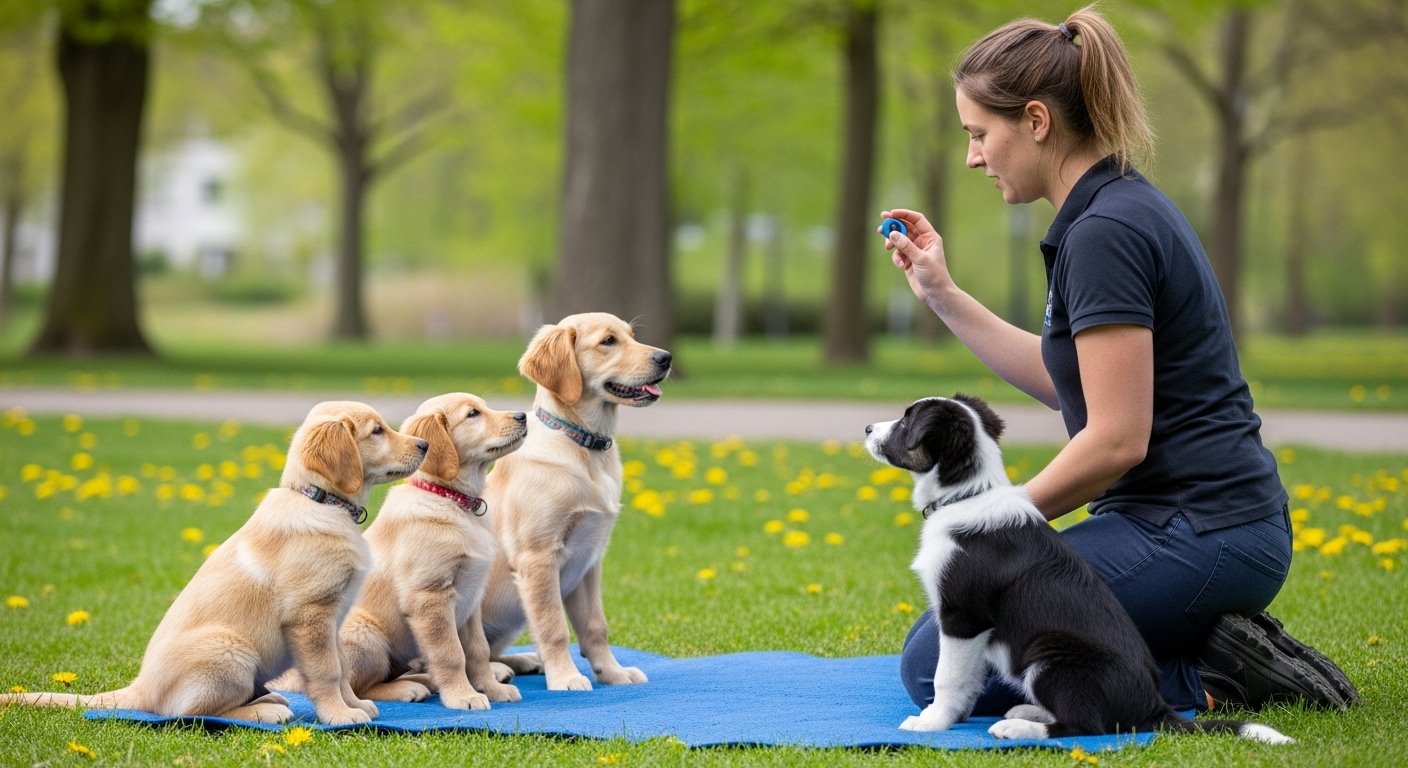
Clicker training is a science-based technique rooted in operant conditioning, where a small device emits a “click” to precisely mark the moment a puppy performs a desired action, followed immediately by a reward like a treat. This clear communication helps energetic pups understand expectations quickly, turning training into an engaging activity rather than a chore. It’s particularly suited for high-energy dogs, as it provides instant feedback that keeps them motivated and focused.
Getting Started
To begin, “charge” the clicker by associating the sound with rewards: Click once and immediately toss a high-value treat, repeating 10-20 times in short sessions until your pup perks up at the sound. Use methods like luring (guiding with food), capturing (rewarding natural behaviors), or shaping (building skills step-by-step) for best results. For energetic pups, train after a short walk to burn off excess energy, keeping sessions to 5-10 minutes.
Top Games for Energetic Pups
Here are some engaging clicker-based games to try:
- Name Game: Builds attention by calling your pup’s name and clicking when they look.
- Hide and Seek: Encourages recall and focus in a playful chase.
- Treat Toss: Teaches quick responses and accuracy.
- Muffin Tin Puzzle: Boosts problem-solving for mental tiredness.
- Red Light Green Light: Promotes impulse control amid excitement.
- Spin Trick: Channels energy into fun physical movements.
- Hand Target: Develops targeting skills for advanced tricks.
Clicker training has emerged as a cornerstone of modern dog education, particularly for energetic puppies whose boundless vitality can sometimes overwhelm traditional methods. This positive reinforcement strategy, grounded in behavioral science, leverages a simple tool—a clicker—to deliver precise, timely feedback that transforms chaotic energy into focused, joyful learning experiences. By marking the exact instant a desired behavior occurs with a distinct “click” sound, followed by a reward, owners can communicate effectively with their pups, fostering a deeper bond and encouraging self-control without resorting to punishment. Ideal for breeds like Border Collies, Australian Shepherds, or Jack Russell Terriers, which thrive on mental and physical stimulation, clicker training channels hyperactivity into productive outlets, reducing unwanted behaviors such as jumping or excessive barking.
In this comprehensive exploration, we’ll delve into the foundations of clicker training, its tailored benefits for high-energy pups, step-by-step setup instructions, and a curated selection of engaging games designed to exhaust both body and mind. Drawing from expert sources in canine behavior, we’ll include practical tips, common pitfalls to avoid, and ways to progress from basic exercises to advanced challenges. Whether you’re a first-time puppy parent or a seasoned trainer, these insights will equip you to create a harmonious, stimulating environment for your furry companion.
Understanding Clicker Training: The Science Behind the Click
At its core, clicker training is an application of operant conditioning, a learning theory popularized by psychologists like B.F. Skinner, where behaviors are shaped through consequences. The clicker acts as a “marker” signal—neutral, consistent, and instantaneous—bridging the gap between the puppy’s action and the reward. Unlike verbal praise, which can vary in tone or timing due to human factors (e.g., stress or distraction), the click remains uniform, minimizing confusion and accelerating comprehension.
For energetic pups, this precision is invaluable. High-energy dogs often struggle with impulse control, leading to frustration in training sessions. Clicker training addresses this by providing immediate positive feedback, keeping sessions dynamic and rewarding. Studies and expert observations indicate that dogs trained this way learn commands up to 50% faster than with traditional methods, as the clear association strengthens neural pathways for desired behaviors. Moreover, it’s entirely force-free, aligning with humane training philosophies endorsed by organizations like the American Kennel Club (AKC) and the ASPCA.
Benefits Tailored for Energetic Puppies
Energetic pups, often from working or herding breeds, require more than physical exercise; they crave mental engagement to prevent boredom-induced mischief. Clicker training excels here by:
- Enhancing Focus and Impulse Control: Short bursts of training teach pups to pause and think, countering hyperactivity.
- Building Confidence and Bonding: Positive reinforcement boosts self-esteem and trust, making owners a source of fun rather than authority.
- Promoting Physical and Mental Exhaustion: Games combine movement with problem-solving, tiring pups more effectively than endless fetch.
- Adaptability for All Ages: Puppies as young as 8 weeks can start, with sessions scaled to their attention span.
- Reducing Problem Behaviors: By redirecting energy, it mitigates issues like destructive chewing or excessive zooming.
Experts note that consistent use can lead to calmer household dynamics, with pups learning to self-regulate over time.
How to Get Started: Essentials and Setup
Before diving into games, prepare your toolkit and “charge” the clicker to build the association. You’ll need:
- A clicker (button-style for comfort; quieter versions for sensitive pups).
- High-value treats (small pieces of chicken, cheese, or liver—avoid kibble for motivation).
- A treat pouch for quick access.
- A quiet space free from distractions.
Step-by-Step Charging Process:
- Gather 20 tiny treats in a distraction-free room.
- Click once and immediately toss a treat to the floor.
- Wait for your pup to finish and lose interest, then repeat.
- Vary timing to click during different activities, ensuring no specific behavior is targeted.
- Complete 2-3 sessions daily over 2-3 days until your pup anticipates a treat upon hearing the click.
Once charged, incorporate three core techniques:
- Luring: Guide with a treat (e.g., hold above head for “sit”).
- Capturing: Reward natural actions (e.g., click a spontaneous stretch).
- Shaping: Build incrementally (e.g., click for looking at a mat, then stepping on it).
For energetic pups, schedule after mild exercise and limit to 5-10 minutes to maintain engagement.
Clicker Training Games: Fun Ways to Channel Energy
These games blend physical activity with cognitive challenges, using the clicker to mark successes. Start simple, gradually adding complexity.
1. Name Game (Attention Builder)
This foundational game teaches quick response to their name, perfect for redirecting energy.
- Step 1: Toss a treat to distract your pup.
- Step 2: Say their name happily as they finish.
- Step 3: Click when they look at you, then toss another treat away.
- Step 4: Repeat 10-15 times, turning it into a back-and-forth chase.
Play 2-3 times daily; advance by adding distractions like toys.
2. Hide and Seek (Recall Fun)
Boosts bonding and recall while expending energy through searching.
- Step 1: Have a partner hold your pup while you hide nearby.
- Step 2: Call their name excitedly.
- Step 3: Click and reward with treats/praise when they find you.
- Step 4: Increase hiding difficulty over sessions.
Ideal indoors; use for 10 minutes to tire mental faculties.
3. Treat Toss (Precision and Speed)
Hones reaction time and accuracy, mimicking fetch with a clicker twist.
- Step 1: Click and toss a treat a short distance.
- Step 2: Encourage your pup to retrieve it.
- Step 3: Click again when they return or drop it.
- Step 4: Gradually increase distance for more running.
Great for outdoor spaces; limits treats to avoid overfeeding.
4. Muffin Tin Puzzle (Mental Challenge)
A brain game to calm hyperactivity through problem-solving.
- Step 1: Place treats in some cups of a muffin tin, cover with tennis balls.
- Step 2: Let your pup sniff and remove balls.
- Step 3: Click and praise for each discovery.
- Step 4: Vary treat placement for replay value.
Use once daily; excellent for rainy days.
5. Red Light Green Light (Impulse Control)
Teaches stop-start behavior, curbing overexcitement.
- Step 1: Say “green light” and encourage running or playing.
- Step 2: Say “red light” and cue “sit” or “stop.”
- Step 3: Click and reward for compliance.
- Step 4: Resume with “green light.”
Play in a yard; build duration gradually.
6. Spin Trick (Physical Outlet)
Channels energy into coordinated movements.
- Step 1: Lure with a treat in a circle above their head.
- Step 2: Click midway through the spin.
- Step 3: Reward and add a cue like “spin.”
- Step 4: Fade the lure for independent performance.
Short sessions; fun for showing off.
7. Hand Target (Targeting Foundation)
Builds toward advanced tricks like weaves or jumps.
- Step 1: Present your palm with a treat behind it.
- Step 2: Click when their nose touches.
- Step 3: Reward and repeat, adding distance.
- Step 4: Use for guiding through obstacles.
Versatile; integrate into daily routines.
Game Overview Table
| Game | Description | Benefits | Difficulty | Energy Level |
|---|---|---|---|---|
| Name Game | Call name, click on eye contact | Improves attention, quick responses | Easy | Low-Medium |
| Hide and Seek | Hide, call pup to find you | Enhances recall, bonding | Medium | High |
| Treat Toss | Click and toss treats for retrieval | Builds speed, accuracy | Easy | Medium-High |
| Muffin Tin Puzzle | Hide treats under balls in tin | Mental stimulation, problem-solving | Medium | Low |
| Red Light Green Light | Alternate run and stop commands | Teaches impulse control | Medium | High |
| Spin Trick | Lure into a spin, click midway | Physical coordination, fun tricks | Easy-Medium | Medium |
| Hand Target | Nose to hand touch | Foundation for advanced skills | Easy | Low-Medium |
This table summarizes key attributes, helping owners select based on their pup’s needs.
Tips for Success and Common Mistakes
- Timing is Everything: Click precisely during the behavior, not after; poor timing can confuse pups.
- High-Value Rewards: Use irresistible treats for motivation, especially with distractible energetic breeds.
- Short Sessions: Overlong training leads to frustration; aim for multiple brief ones.
- Progress Gradually: Add distractions or duration slowly to avoid setbacks.
- Avoid Overuse: Phase out the clicker for mastered behaviors, transitioning to verbal cues.
- Common Pitfalls: Clicking too late/early, inconsistent rewarding, or training when overtired—these can slow progress. For deaf pups, substitute with a light flash.
Advancing to Complex Challenges
Once basics are solid, escalate to multi-step tricks like weaving through legs, jumping over hurdles, or even agility courses. Incorporate games into daily routines, such as clicking calm behaviors during walks to reinforce overall composure. For ultimate engagement, explore organized activities like Treibball (urban herding) or scent work, adapting clicker principles for competition-level fun.
In conclusion, clicker training games offer a transformative way to harness your energetic pup’s zest for life, turning potential chaos into cooperative delight. With patience and consistency, you’ll witness remarkable growth, creating a well-balanced companion ready for any adventure.