
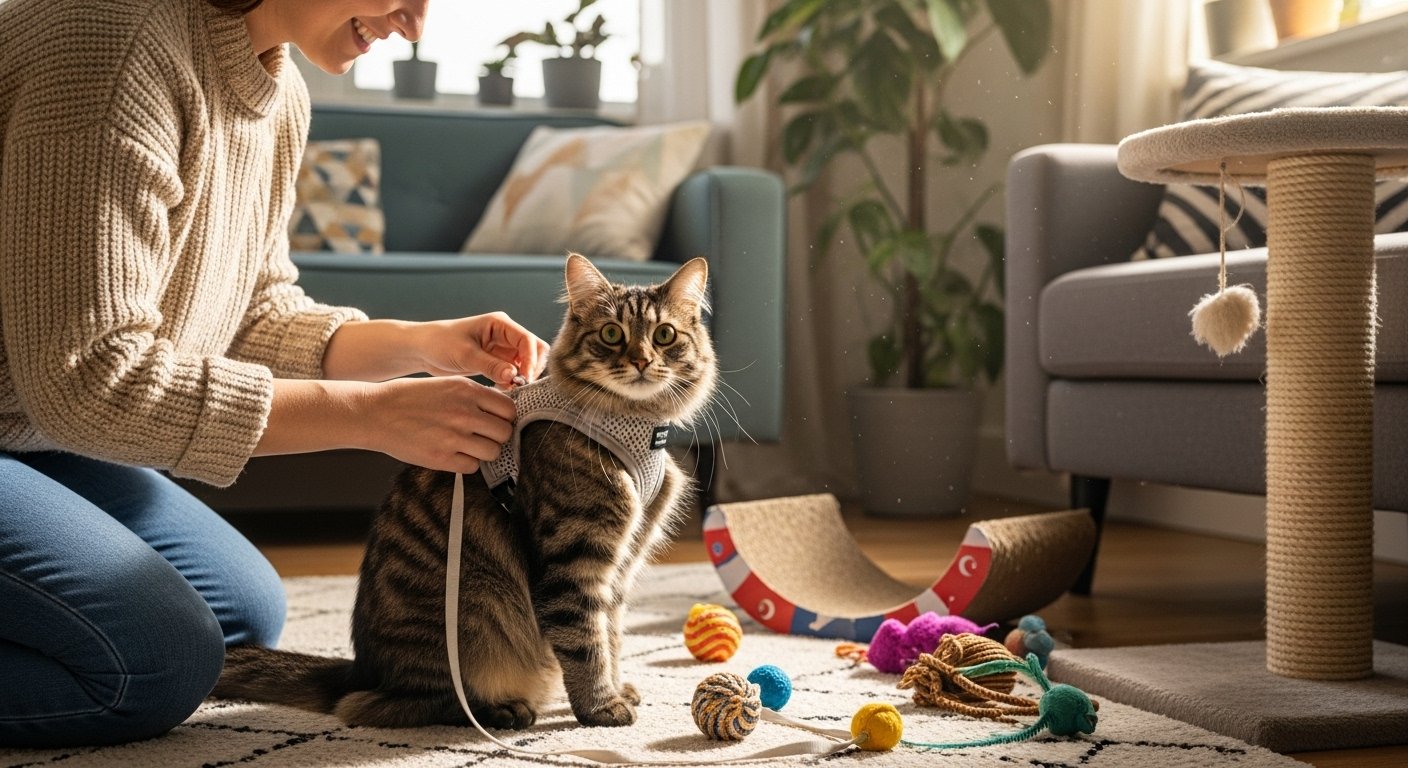
Harness training can open up a world of safe exploration for your indoor cat, providing mental stimulation and exercise while minimizing risks like traffic or predators. Research suggests that with patience, most cats can adapt to a harness, though individual personalities play a big role—some may thrive on adventures, while others prefer shorter outings.
Key Benefits
- Enrichment and Exercise: Outdoor time helps prevent boredom and obesity, offering new scents and sights.
- Safety Over Free-Roaming: Reduces dangers from wildlife or cars, as experts emphasize controlled environments.
- Bonding Opportunity: Builds trust through positive training sessions.
- Practical Uses: Eases vet visits, travel, or emergencies.
Choosing the Right Gear
Start with a secure harness designed for cats—avoid collars to prevent injury. Opt for lightweight leashes around 6 feet long. Ensure a snug fit where you can slip one or two fingers underneath.
Basic Training Steps
- Introduce the harness indoors with treats to create positive associations.
- Gradually fasten it for short periods, rewarding calm behavior.
- Attach the leash inside, letting your cat lead.
- Venture outdoors in quiet areas, keeping sessions brief.
Remember, progress varies; if your cat shows stress, slow down to maintain a fun experience.
Tips for Success
Use high-value treats and watch body language. Not all cats will become avid hikers, but even backyard time can be rewarding.
Imagine transforming your indoor-only feline into a confident explorer, safely sniffing fresh air and chasing leaves under your watchful eye. Harness training isn’t just about walks—it’s about enriching your cat’s life while prioritizing safety and fun. In this comprehensive guide, we’ll dive deep into the why, how, and what-ifs of harness training, drawing from expert advice and real cat parent experiences. Whether you’re a first-time trainer or looking to refine your approach, you’ll find step-by-step instructions, gear recommendations, troubleshooting, and more to make outdoor adventures a reality for you and your cat.
Why Harness Train Your Cat?
Cats are natural explorers, but letting them roam free poses significant risks, including cars, predators, toxins, diseases, and even harm to local wildlife. Harness training offers a middle ground: controlled outdoor access that satisfies their curiosity without the dangers. According to cat behavior experts, this can lead to better mental health, reduced anxiety, and stronger bonds with owners. For instance, studies and anecdotal evidence show that enriched environments help prevent issues like obesity (affecting over 60% of North American cats) and destructive behaviors from boredom.
Benefits include:
- Mental Stimulation: New sights, sounds, and smells provide sensory enrichment that’s hard to replicate indoors.
- Physical Health: Encourages exercise, aiding weight management and fulfilling hunting instincts.
- Practical Applications: Prepares cats for vet trips, car travel, or emergency evacuations.
- Fun and Bonding: Shared adventures build trust; many owners report their cats eagerly anticipate “walk time.”
- Confidence Boost: Helps shy cats adapt to new experiences, turning them into more resilient companions.
However, not every cat is suited for this—older or fearful cats may need more time, and some might prefer indoor alternatives like window perches.
Selecting the Perfect Harness and Leash
The right gear is crucial for comfort and security. Harnesses are preferred over collars because they distribute pressure evenly and reduce escape risks. Here’s a breakdown of common types:
| Harness Type | Description | Pros | Cons | Best For |
|---|---|---|---|---|
| H-Style (Roman) | Loops around neck and torso with connecting straps, resembling an “H.” | Adjustable, lightweight, affordable. | Can twist or rub if not fitted well. | Active cats who need mobility. |
| Step-In | Cat steps into loops for front legs, then fastens at the back. | Easy to put on, secure for wrigglers. | Less adjustable; may not suit all body shapes. | Kittens or small cats. |
| Vest/Jacket | Covers more of the body like a little jacket, often with Velcro or buckles. | Comfortable, escape-proof, padded for sensitive skin. | Bulkier, can overheat in warm weather. | Anxious cats needing extra security. |
Fit tips: Measure your cat’s chest (widest part behind front legs) and neck. The harness should allow 1-2 fingers underneath—too loose risks escape, too tight causes discomfort. Shop from reputable brands and consider escape-proof designs for Houdini-like cats.
For leashes: A 6-foot basic nylon or cotton one is ideal for beginners. Avoid retractable options, as they can jolt your cat; bungee styles absorb shock but start simple.
Step-by-Step Harness Training Guide
Training should be gradual, positive, and tailored to your cat’s pace—rushing can create negative associations. Use high-value treats (like tuna or freeze-dried meat) and praise. Expect initial reactions like flopping or freezing; that’s normal.
Phase 1: Introduction Indoors (1-7 Days)
- Familiarize with the Harness: Leave it near food or play areas. Reward sniffing or approaching with treats.
- Handle Gently: Touch areas where the harness will go (back, sides, belly), pairing with rewards.
- Practice Sounds: Click buckles or rip Velcro near your cat, followed by treats to desensitize.
- Try It On Briefly: Drape without fastening, then secure for seconds. Increase time daily, always with distractions like meals.
Phase 2: Leash Attachment Indoors (3-10 Days)
- Attach and Drag: Once comfortable wearing the harness, clip the leash and let it trail in a safe room. Follow your cat, rewarding movement.
- Guide Gently: Hold the leash loosely, encourage walking with toys or treat trails. Avoid pulling—use calls or clicks for direction.
- Build Recall: Teach “come” by calling and tossing treats, incorporating the leash.
Phase 3: Outdoor Adventures (Ongoing)
- First Outings: Carry your cat to a quiet spot (backyard preferred). Keep the door open for quick retreats. Let them explore at their pace, sessions starting at 5-10 minutes.
- Expand Gradually: Increase time and distance as confidence grows. Use a backpack for rest or if overwhelmed.
- Advanced Tips: Incorporate clicker training for heeling or recall. For travel, practice car rides in a carrier first.
Training time varies: Kittens adapt faster, while adults may take weeks. If resistance persists, consult a vet or trainer.
Safety Precautions and Troubleshooting
Safety first: Never leave your cat unattended in a harness, as tangling can occur. Watch weather—avoid extremes—and stay alert for dogs or wildlife. Carry essentials like water, poop bags, and a towel for panics.
Common Issues and Fixes:
- Escape Attempts: Ensure fit; use escape-proof designs.
- Freezing or Flopping: Shorten sessions, up rewards; it’s often temporary.
- Stress Signs (Tail Flicking, Hiding): Pause and revert steps; force can worsen fear.
- Overheating: Choose breathable materials; monitor paws on hot ground.
For wildlife protection, add colorful collar covers to make your cat visible to birds.
8
“Infographic with 20 tips for effective harness training.”
“SMALL”
Real Stories and Advanced Adventures
Take Flounder, a cat who started as a kitten with a ferret harness and grew into beach explorations—proof that early, positive training pays off. For advanced fun, consider cat backpacks for hikes or camping, always researching pet-friendly spots.
FAQs:
- Can any cat be trained? Most, but respect limits; consult vets for health concerns.
- How long does it take? Days to months—patience is key.
- What if my cat hates it? Try indoor enrichment instead; not all are adventurers.
With these tools, you’re set for memorable outings. Happy adventuring!
Key Citations:
- Train your cat to walk on a leash – Adventure Cats
- How to Leash Train a Cat: A Step-by-Step Guide to Safe Outdoor Adventures for Cats of All Ages
- A Step-by-Step Guide to Cat Harness Training
- Harness Training and Cat Backpack Adventures: Everything You Need to Know
- Cat Harness Training: Unlock the Secrets Today
- 8 Reasons to Harness & Leash Train Your Cat for Outdoor Adventures