
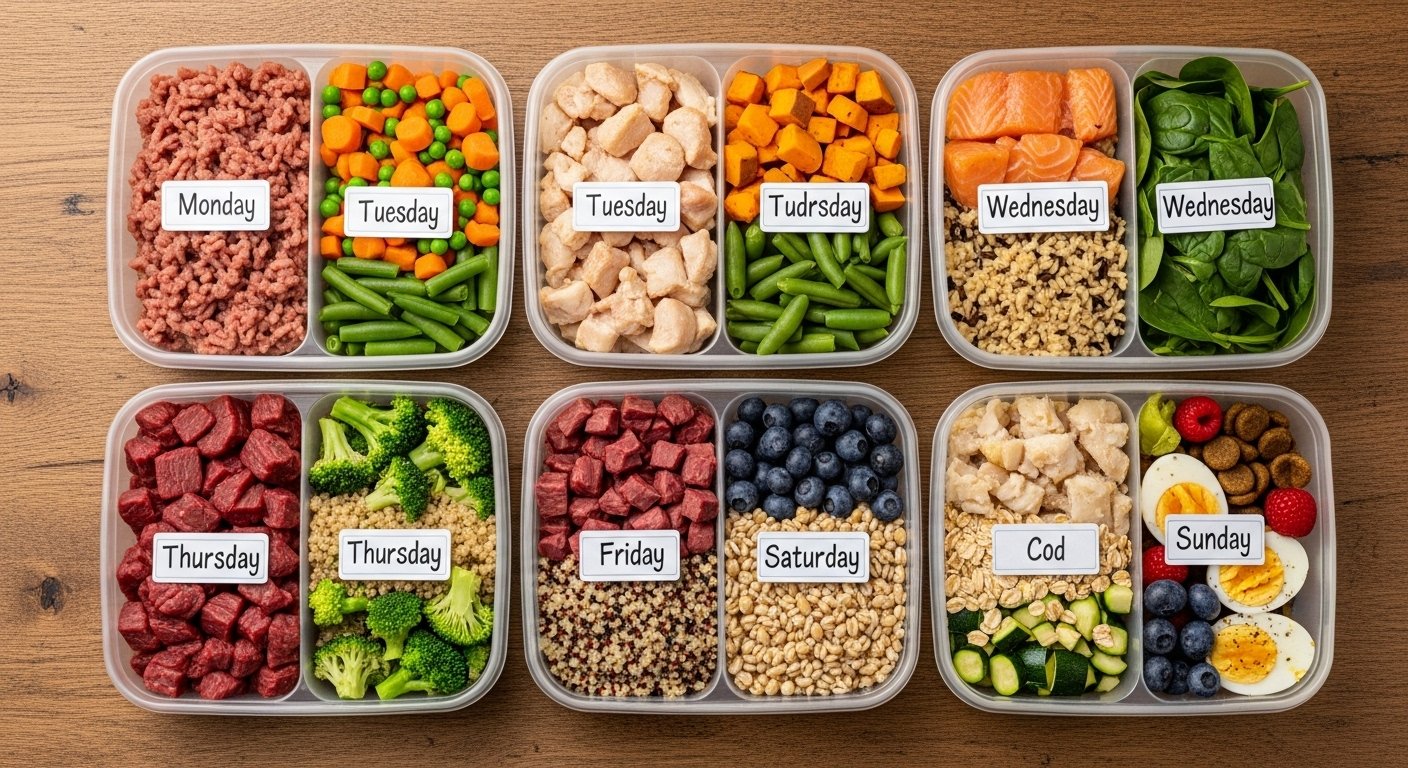
Why Choose Homemade Dog Food?
Preparing fresh meals at home allows you to select high-quality, human-grade ingredients while avoiding preservatives found in some commercial foods. According to veterinary sources, this approach can be appealing for picky eaters and may support allergies or sensitivities, but it’s essential to ensure nutritional completeness to prevent issues like bone problems or deficiencies.
Essential Nutrition Basics
Dogs need a mix of proteins (at least 18-22% for adults), fats (5-8%), carbs for energy, fiber for digestion, and vitamins/minerals. Use tools like Balance IT supplements for balance. Safe proteins include chicken, turkey, and beef; veggies like carrots and spinach add fiber. Avoid toxic foods such as chocolate, grapes, onions, and garlic to prevent health risks.
Quick Prep Tips
Start small: Batch cook for the week, portion into containers, and refrigerate (3-5 days) or freeze (up to 2 months). Weigh ingredients for accuracy and transition gradually over 5-7 days. Monitor your dog’s weight weekly and consult a vet if you notice changes in stool, energy, or appetite.
Preparing a weekly meal prep for your dog can be a rewarding way to ensure they’re getting fresh, nutrient-rich food tailored to their needs. This guide draws from veterinary-approved sources to provide a balanced 7-day plan, emphasizing safety, variety, and ease. Remember, while homemade diets offer benefits like fresher ingredients and customization, they must be nutritionally complete to avoid deficiencies—always consult your veterinarian or a board-certified veterinary nutritionist before starting, especially for puppies, seniors, or dogs with health conditions.
Introduction to Fresh Dog Nutrition
In today’s pet care landscape, more owners are turning to homemade meals as an alternative to commercial kibble, driven by recalls and a desire for transparency. Veterinary experts note that well-planned homemade diets can provide high-quality proteins, healthy fats, and fiber-rich veggies, potentially leading to shinier coats, better digestion, and increased vitality. However, a 2015 study from Tufts Cummings Veterinary Medical Center highlighted that even vet-created recipes can lead to imbalances if not followed precisely, underscoring the need for supplements and regular check-ups.
This 7-day meal prep focuses on vet-approved recipes, scaled for a 20-30 lb adult dog (adjust portions based on your dog’s weight and activity). Each day varies proteins and veggies for interest and nutrient diversity, incorporating essentials like omega-3s for joint health and fiber for gut support. Total prep time: About 2-3 hours for the week, yielding portions that store easily.
Benefits of Homemade Dog Meals
Switching to fresh, homemade food isn’t just trendy—it’s backed by potential health perks. Sources like the American Kennel Club (AKC) and Healthy Paws emphasize:
- Control Over Ingredients: Avoid fillers, artificial preservatives (e.g., BHA, BHT), and low-quality by-products common in some store-bought foods.
- Customization for Health: Ideal for dogs with allergies (e.g., grain-free options) or sensitivities, as you can swap ingredients like turkey for chicken.
- Improved Appeal and Digestion: Picky eaters often prefer the taste of fresh meats and veggies, and gentle cooking retains nutrients while easing digestibility.
- Cost-Effective Long-Term: Bulk buying ingredients can save money, especially compared to premium kibble.
- Environmental Angle: Using local, sustainable sources reduces packaging waste.
That said, homemade isn’t for everyone. The AVMA, FDA, and CDC caution against raw diets due to bacterial risks like Salmonella, recommending cooked meals. A balanced approach, as per Balance IT tools, ensures your dog gets at least 10% protein, 5.5% fats, and key minerals like calcium for bone health.
Safe Ingredients and Foods to Avoid
Choosing the right components is crucial for safety and balance. Veterinary guidelines from the AKC, ASPCA, and Spruce Pets recommend:
Safe Ingredients Table
| Category | Examples | Benefits | Notes |
|---|---|---|---|
| Proteins | Chicken (dark meat), turkey, lean beef, fish (salmon, tuna), eggs | Muscle repair, energy; provide essential amino acids | Cook thoroughly; aim for 18-22% of diet |
| Carbohydrates | Brown/white rice, quinoa, sweet potatoes, oats | Energy source, fiber for digestion | Up to 50% of meal; cook to soften |
| Vegetables/Fiber | Carrots, green beans, broccoli, spinach, pumpkin, peas, zucchini | Vitamins (A, C, K), fiber for gut health; low-cal for weight control | Blanch or grate for better absorption; 10-20% of meal |
| Fruits | Apples (no seeds), blueberries, cranberries | Antioxidants, vitamins; natural sweetness | Small amounts; avoid pits/seeds |
| Fats/Oils | Vegetable oil, coconut oil, salmon/flax oil | Skin/coat health, omega-3s for joints | 1-2 tsp per meal; essential for calorie density |
| Supplements | Balance IT Canine, calcium citrate (500 mg/day), multivitamins | Prevents deficiencies in vitamins/minerals | Required for completeness; vet-recommended |
Foods to Avoid Table (Based on ASPCA and other vet sources)
| Food | Reasons to Avoid | Potential Effects |
|---|---|---|
| Chocolate, Coffee, Caffeine | Contain methylxanthines | Vomiting, seizures, heart issues, death |
| Grapes/Raisins | Tartaric acid toxicity | Kidney damage |
| Onions, Garlic, Chives | Damage red blood cells | Anemia, GI irritation |
| Avocado | Persin toxin (affects birds/rabbits more, but dogs too) | Vomiting, diarrhea |
| Macadamia Nuts, Other Nuts | High fats, unknown toxins | Weakness, tremors, pancreatitis |
| Xylitol (in gum, candy) | Causes hypoglycemia | Seizures, liver failure |
| Raw Meat/Eggs/Bones | Bacterial risks (Salmonella, E. coli) | Infection, GI obstruction |
| Alcohol/Yeast Dough | Ethanol production, bloating | Coma, death, stomach twisting |
| Milk/Dairy | Lactose intolerance | Diarrhea |
| Salty Foods | Electrolyte imbalance | Tremors, seizures |
| Citrus (large amounts) | Citric acid/oils | Irritation, depression |
Always use fresh, human-grade items and avoid seasonings/salt. For a full list, visit ASPCA’s poison control resources.
Portion Sizes and Feeding Guidelines
Portions vary by weight, activity, and life stage. PetMD and other sources recommend 2-3% of your dog’s ideal body weight daily, split into 2-3 meals. For homemade food, use a gram scale for accuracy.
Portion Guide Table (For Adult Dogs; Adjust for Puppies/Seniors)
| Dog Weight | Daily Amount (Cooked Food) | Example (kcal ~1.5/gram) | Meals Per Day |
|---|---|---|---|
| 10-20 lbs | 4-8 oz (113-227g) | 1-1.5 cups | 2-3 |
| 21-50 lbs | 12-24 oz (340-680g) | 2-3 cups | 2 |
| 51-75 lbs | 24-36 oz (680-1020g) | 3-4 cups | 2 |
| 76+ lbs | 36+ oz (1020g+) | 4+ cups (add 1/4 cup per 10 lbs over 100) | 2 |
- Activity Adjustments: Active dogs (e.g., working breeds) may need 20-50% more; sedentary ones 20% less.
- Life Stage: Puppies eat 2-3x adult amounts; seniors often less to maintain weight.
- Weigh your dog weekly; aim for ideal body condition (ribs palpable, waist visible). Consult a vet for calorie calculations—e.g., a 30 lb dog needs ~800-1000 kcal/day.
Shopping List for the Week
For a 20-30 lb dog (scale up/down as needed; yields ~7-10 days with extras):
- Proteins: 2 lbs chicken, 2 lbs turkey, 1 lb beef, 1 lb fish (salmon/tuna), 1/2 lb organ meats (liver/hearts)
- Carbs: 5 cups brown rice, 2 cups quinoa, 3 sweet potatoes
- Veggies/Fruits: 2 lbs carrots, 1 lb green beans, 1 bunch spinach/broccoli, 1 zucchini, 1 cup blueberries/cranberries, 1 can pumpkin (unsweetened)
- Oils/Extras: 1/4 cup vegetable/coconut oil, 1/4 cup salmon/flax oil
- Supplements: Balance IT Canine (per recipe), calcium citrate (500 mg/day), multivitamin
- Total Cost Estimate: $20-40/week, depending on sourcing.
7-Day Meal Plan: Recipes and Prep
Batch prep on Sunday: Cook proteins/veggies in bulk, mix with carbs, portion into containers. Use a food processor for blending. Each recipe serves one day (adjust portions); calorie-dense at ~1.5 kcal/gram.
Day 1: Chicken and Brown Rice Power Mix
Ingredients: 8 oz cooked chicken, 1 cup brown rice, 1/2 cup carrots/blueberries, 1 tsp coconut oil, Balance IT (1.5 scoops).
Steps: Cook chicken/rice, blanch veggies, mix all, cool.
Nutrition: High protein for energy; fiber for digestion.
Day 2: Turkey and Veggie Bowl
Ingredients: 8 oz turkey, 1/2 cup peas/carrots, 1/2 sweet potato, 1 tsp salmon oil, 500 mg calcium citrate.
Steps: Cook turkey/veggies, mash sweet potato, blend.
Nutrition: Bone support; omega-3s for joints.
Day 3: Grain-Free Sensitive-Stomach Stew
Ingredients: 8 oz turkey, 1/2 cup pumpkin/peas, 1 sweet potato, 1 tsp flax oil.
Steps: Stew all, add oil post-cook.
Nutrition: Gentle on tummy; high fiber.
Day 4: Puppy-Inspired Tuna Quinoa Bowl (Adapt for Adults)
Ingredients: 6 oz tuna, 1 cup quinoa, 1/2 cup veggies (zucchini/spinach), 1 tsp coconut oil.
Steps: Cook quinoa/tuna, mix in grated veggies.
Nutrition: DHA for brain health; varied textures.
Day 5: Beef and Organ Puploaf
Ingredients: 6 oz beef, 2 oz organs (liver/hearts), 1/2 cup greens/cranberries, 1 egg, 1 tsp flax oil.
Steps: Mix, bake at 350°F for 20 min, cool.
Nutrition: Organ boost for vitamins; antioxidants.
Day 6: Chicken Bone Broth Topper with Veggies
Ingredients: 8 oz chicken, 1/2 cup low-sodium broth, broccoli/rice, blueberries.
Steps: Cook chicken/broccoli, add to broth.
Nutrition: Hydration; joint-friendly.
Day 7: Instant Pot Batch Variety
Ingredients: 8 oz beef/turkey mix, 1 cup quinoa/rice, mixed veggies, 1 tsp oil/turmeric.
Steps: Pressure cook 35 min, portion.
Nutrition: Weekly reset; anti-inflammatory.
Storage and Serving Tips
- Prep: Use clean tools; cook meats to safe temps (165°F for poultry).
- Storage: Fridge 3-5 days; freeze in portions (Souper Cubes recommended) up to 2 months. Thaw overnight, warm gently.
- Serving: Room temp; add water if dry. Rotate recipes for variety.
- Monitoring: Track pH (6.5 ideal), weight, and stool. If issues arise, stop and see vet.
FAQs
- Is this safe for all dogs? Not without vet approval—puppies/seniors need adjustments.
- Can I go raw? Vets advise against due to risks; stick to cooked.
- What if my dog has allergies? Swap proteins (e.g., fish for beef); test small batches.
- How to ensure balance? Use supplements; tools like Balance IT generate custom recipes.
- Cost vs. Kibble? Often comparable or cheaper for quality.
By following this plan, you’re investing in your dog’s well-being with fresh, loving meals. For personalized advice, visit sites like Balance IT or your local vet.
Key Citations: