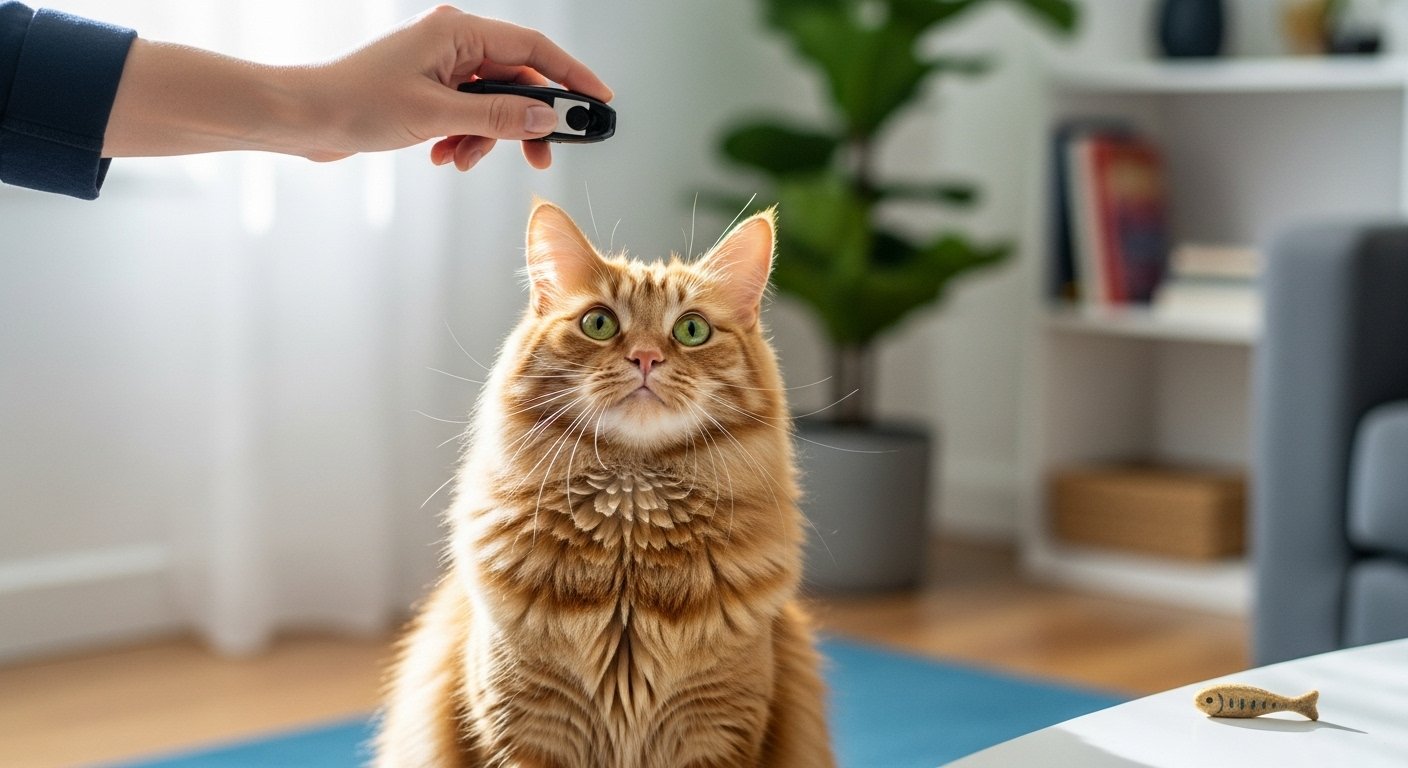
- Positive Reinforcement Method: Clicker training marks desired behaviors with a distinct sound, followed by a treat, helping cats learn quickly and enjoyably without punishment.
- Benefits for Beginners: It strengthens your bond with your cat, provides mental stimulation, and can address common issues like scratching furniture or jumping on counters.
- Easy to Start: You’ll need a clicker, treats, and short sessions—most cats pick it up in days with consistency.
- Potential Challenges: Some cats may fear the click sound initially, but muffling it or using alternatives like a pen click can help; patience is key as results vary by cat.
What Is Clicker Training?
Clicker training is a form of positive reinforcement where a small device makes a “click” sound to signal to your cat that they’ve done something right, immediately followed by a reward like a treat. This precise timing helps cats associate behaviors with positive outcomes, making learning efficient and stress-free. It’s based on operant conditioning, similar to methods used for dogs or even marine animals, but adapted for cats’ independent nature.
Why Try It as a Beginner Cat Owner?
Research suggests clicker training enhances your cat’s well-being by reducing stress and increasing engagement. It can teach fun tricks like sitting or high-fiving, while also curbing unwanted behaviors. Plus, it’s a great way to bond—sessions are short (5-10 minutes) and rewarding for both of you.
Getting Started: Basic Supplies and First Steps
Gather a clicker (available online or at pet stores), high-value treats (like tuna bits), and optionally a target stick. Start by “charging” the clicker: Click and immediately give a treat, repeating until your cat expects the reward after the sound. Then, move to simple targeting—hold a stick or finger, click when they touch it, and reward.
Simple Tricks to Teach First
Begin with “sit”: Wait for your cat to sit naturally, click, and treat. Add a cue word once consistent. For high-five, hold your hand out; click when they paw it. Keep sessions positive—end on a success to build confidence.
Clicker training offers beginner cat owners an accessible, science-backed way to foster better behavior and deeper connections with their pets. Rooted in positive reinforcement, this method uses a simple “click” sound to mark exact moments of desired actions, bridging the gap to a reward and accelerating learning. Unlike punitive approaches, which can increase stress and erode trust, clicker training leverages cats’ natural curiosity and food motivation, making it both effective and enjoyable. Studies on shelter cats have shown it improves adoptability by teaching cued behaviors like sitting or high-fiving, while also alleviating environmental stress through mental enrichment.
Understanding the Science Behind Clicker Training
At its core, clicker training is a subset of operant conditioning, where behaviors are shaped through consequences. The click acts as a secondary reinforcer—a neutral signal that becomes meaningful when paired with a primary reinforcer like food. This “bridge” allows for precise timing, which is crucial since cats process information quickly and may lose the association if rewards are delayed. Animal behaviorists note that positive reinforcement outperforms coercive methods, leading to faster acquisition of skills and reduced fear responses. For instance, one study found clicker-trained cats learned tasks more rapidly than those trained without markers, with bolder cats showing even greater gains.
Cats, being obligate carnivores with predatory instincts, respond well to this because it mimics hunting—effort leads to reward. It also provides essential mental stimulation, combating boredom that can manifest as destructive behaviors like scratching or excessive meowing. Experts emphasize that while cats are often seen as “untrainable,” their independence actually makes them ideal for clicker methods, as they thrive on choice and predictability rather than dominance.
Benefits for Cats and Owners
Beyond basic obedience, clicker training yields multifaceted advantages. For cats, it enhances physical activity through tricks like jumping or spinning, which can improve agility and reduce obesity risks. Mentally, it offers enrichment akin to puzzle toys, lowering stress hormones and promoting calmer demeanors—particularly useful in multi-pet households or for anxious rescues. Owners report stronger bonds, as training fosters mutual understanding and positive interactions.
Practically, it addresses common issues: Redirect scratching to posts by clicking during appropriate use, or teach “off” for counters by rewarding floor time. It even aids veterinary care, like accepting nail trims or carriers, reducing trauma for both parties. Long-term, trained cats are more adaptable to changes, such as new homes or routines, making them easier companions.
Essential Supplies and Setup
To begin, assemble these basics:
| Item | Description | Where to Get | Approximate Cost |
|---|---|---|---|
| Clicker | Small plastic device with a metal tongue for the “click” sound. Opt for softer versions if your cat is sound-sensitive. | Pet stores, online (e.g., Amazon) | $5–$10 |
| Treats | High-value, small, soft rewards like tuna flakes, chicken bits, or commercial treats with strong aromas. Reserve for training only. | Grocery or pet stores | $3–$8 per pack |
| Target Stick | Extendable pointer or chopstick to guide behaviors without physical force. Some clickers include built-in sticks. | Online pet suppliers | $5–$15 |
| Training Mat or Area | Quiet, distraction-free space like a mat or perch to signal session start. | Household item or pet store | Free–$20 |
Ensure sessions occur when your cat is hungry but not starving—pre-meal times work best. Limit to 5–10 minutes, 2–3 times daily, to prevent frustration.
Step-by-Step Guide to Getting Started
- Charge the Clicker: Pair the click with a treat 10–20 times without expecting behavior. Click, then immediately reward. Your cat should soon anticipate the treat upon hearing the sound. This “loading” phase takes 1–2 sessions.
- Introduce Targeting: Hold the target near your cat’s nose. Click and treat the instant they sniff or touch it. Gradually move it farther, encouraging movement. This foundational skill teaches following cues.
- Capture Natural Behaviors: Observe and click spontaneous actions like sitting. Add a verbal cue (e.g., “sit”) once consistent, clicking only when they respond to it.
- Shape Complex Tricks: Break down behaviors into increments. For high-five: Click paw lifts, then touches to your hand. Use “shaping” to build gradually.
- Fade the Clicker: Once mastered, reduce clicks and treats, using praise or play. Maintain occasional rewards to sustain the behavior.
Teaching Common Behaviors: A Table of Examples
Here’s a breakdown of beginner-friendly tricks and their applications:
| Behavior | Steps to Teach | Real-Life Use | Time to Learn |
|---|---|---|---|
| Sit | Wait for natural sit, click/treat; add cue. | Calms excited cats during meals or greetings. | 1–3 days |
| High-Five | Hold hand out, click paw contact; shape from lifts. | Fun interaction; builds confidence. | 3–7 days |
| Come When Called | Click/treat when they approach; add name/whistle. | Safety for indoor/outdoor recall. | 2–5 days |
| Target Touch | Present stick, click nose touch; move to guide. | Leads to carrier or off counters without force. | 1–2 days |
| Spin | Lure with treat in circle, click completion; fade lure. | Mental exercise; impresses guests. | 4–10 days |
Adapt based on your cat’s personality—food-motivated cats excel, while toy-driven ones may prefer play rewards.
Common Mistakes and How to Avoid Them
Beginners often falter by free-feeding, which reduces treat motivation—switch to scheduled meals. Another pitfall: Clicking too late, confusing the cat; practice timing alone first. Overlong sessions lead to boredom—keep them brief. If your cat fears the click, muffle it in a sock or use a verbal marker like “yes.” Expecting instant results ignores individual differences; older or shy cats may need more time. Finally, inconsistent family involvement dilutes progress—ensure everyone follows the plan.
Troubleshooting and Advanced Tips
If progress stalls, reassess rewards—switch to higher-value items like prawns. For multi-cat homes, train separately to avoid competition. Advanced users can tackle behaviors like tooth brushing or leash walking, using the same principles. Monitor for signs of overload, like avoidance, and pause if needed. Resources like books (e.g., Karen Pryor’s “Getting Started”) or online communities can provide support.
In summary, clicker training empowers beginner owners to unlock their cat’s potential, transforming everyday interactions into opportunities for growth and fun. With patience and consistency, you’ll see lasting improvements in behavior and happiness.