- Puppies often bite and nip due to natural behaviors like teething, exploration, play, or tiredness, but with consistent training, most outgrow it by 6-7 months.
- Research suggests positive reinforcement methods, like redirecting to toys and using time-outs, are effective and help build trust without causing fear.
- It seems likely that providing enough rest, exercise, and socialization can prevent many biting issues, though individual puppies may vary based on breed and environment.
- Evidence leans toward avoiding punishment, as it can worsen behavior; instead, focus on teaching bite inhibition through gentle, patient techniques.
Understanding Why Puppies Bite
Puppies aren’t being aggressive when they nip—it’s usually a mix of curiosity, sore gums from teething, or an invitation to play. Starting around 8-12 weeks, they explore the world with their mouths, much like babies do with hands. If left unchecked, it can become a habit, but early intervention makes a big difference. Always consult a vet to rule out any underlying issues like pain.
Essential Training Tips
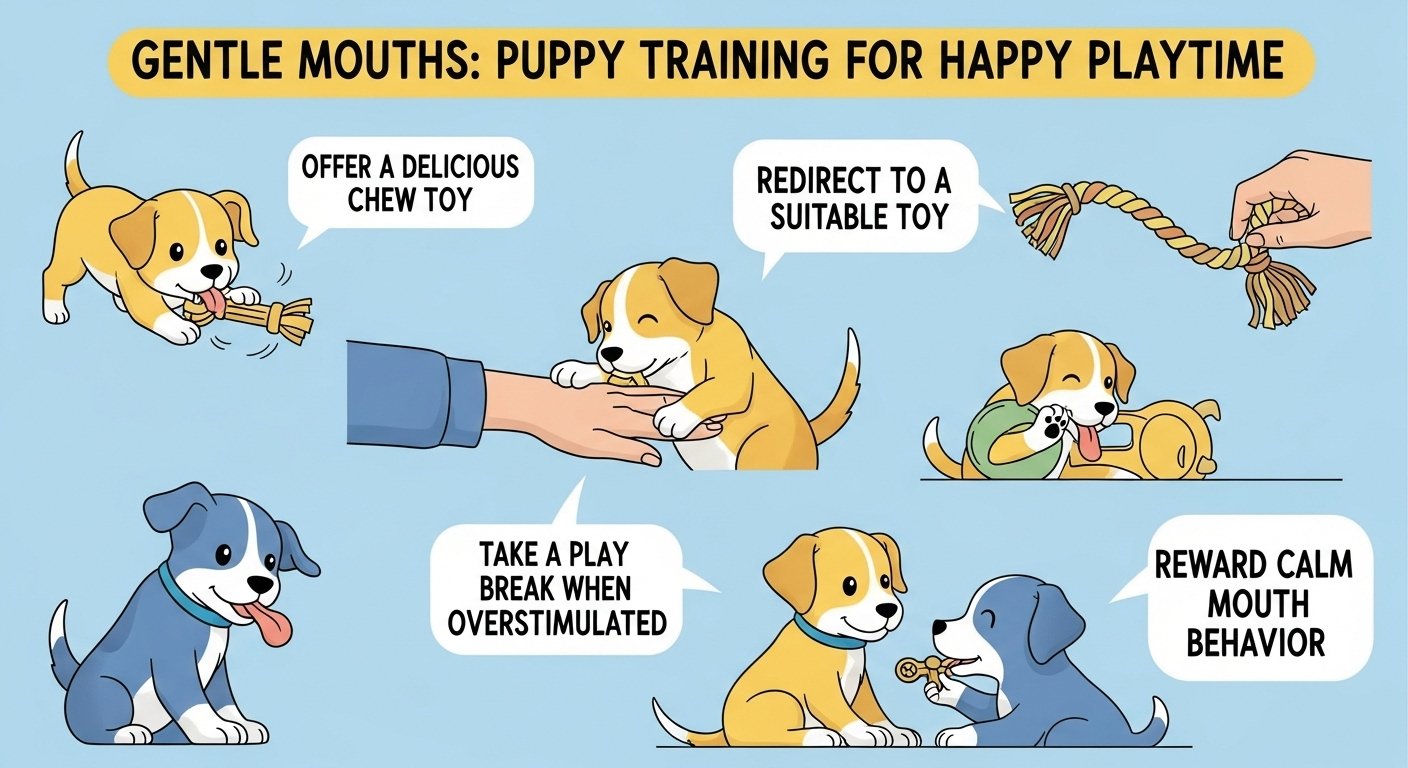
Start by mimicking how puppies learn from littermates: yelp softly if bitten too hard, then withdraw attention. Redirect immediately to chew toys, praising calm behavior. Use short time-outs in a crate (without anger) to let them settle. Consistency from all family members is key—mixed signals confuse puppies.
Tools and Toys to Help
Stock up on safe teething toys like soft rubber ones to soothe gums. Games like fetch or tug can channel energy positively. Enroll in puppy classes for socialization, which teaches them appropriate play.
Bringing home a fluffy new puppy is one of life’s greatest joys, but those razor-sharp little teeth can quickly turn playtime into a challenge. If you’re dealing with constant nipping at your hands, feet, or furniture, you’re not alone—puppy biting is a common phase that affects nearly every new dog owner. The good news? With the right approach, you can eliminate biting and nipping behaviors while strengthening your bond with your pup. This detailed guide draws from expert advice from sources like the American Kennel Club (AKC), PetMD, and professional trainers to provide actionable, positive training tips. We’ll cover the causes, step-by-step methods, common pitfalls, recommended toys, and more to help your puppy grow into a well-mannered companion.
The Science Behind Puppy Biting: Why Do They Do It?
Puppies don’t bite out of malice; it’s a natural part of their development. Understanding the root causes is the first step to effective training. According to experts at PetMD and Instinct Dog Behavior & Training, here are the primary reasons puppies nip and bite:
- Exploration and Sensory Learning: Puppies use their mouths to investigate textures, tastes, and the world around them, much like human toddlers grab everything in sight. This mouthing behavior helps them gather information but can accidentally include your fingers or clothes.
- Teething Discomfort: Starting around 12-16 weeks, puppies lose their baby teeth, leading to sore gums. Chewing provides relief, and without proper outlets, they may target whatever’s nearby—like your ankles.
- Play Initiation and Social Skills: Biting is how puppies invite play with littermates. Through these interactions, they learn “bite inhibition”—the ability to control the force of their bites. If a bite is too hard, the other pup yelps and stops playing, teaching boundaries.
- Overtiredness or Overexcitement: Puppies need 16-18 hours of sleep daily. When exhausted, they can become fussy and bitey, similar to an overtired child. High arousal from rough play can also lead to loss of self-control.
- Frustration or Saying “No Thanks”: If a puppy feels overwhelmed by petting or handling, they might nip to communicate discomfort. Actions like jerky movements or high-pitched sounds from owners can inadvertently encourage this.
- Genetics and Breed Tendencies: Some breeds, like herding dogs, are more prone to nipping at heels due to instincts. However, training can override these tendencies.
Recognizing these triggers allows for targeted solutions. For instance, if biting spikes in the evening, it might signal tiredness—cue a quiet nap time.
Step-by-Step Training Methods to Eliminate Biting
Positive reinforcement is the gold standard for puppy training, as harsh methods can create fear or aggression. The AKC emphasizes teaching bite inhibition early, ideally before 6 months. Here’s a comprehensive plan:
- Teach Bite Inhibition Through Play:
- Play gently with your puppy using toys (never hands or feet).
- If they bite too hard, make a high-pitched “ow!” sound to mimic a littermate’s yelp.
- Immediately stop play and turn away for 10-20 seconds. This teaches that hard bites end fun.
- Resume with praise if they play nicely. Repeat consistently—puppies learn quickly through repetition.
- Redirection Techniques:
- Always have approved chew toys nearby. When nipping starts, say “no” calmly and offer the toy instead.
- Reward with treats or affection when they engage with the toy. This shifts their focus from skin to appropriate items.
- For ankle nipping during walks, hold a treat by your side to encourage following without pouncing, or drag a tug toy behind you.
- Implement Time-Outs:
- If redirection fails, gently place your puppy in their crate or a quiet area for 1-2 minutes.
- Stay neutral—don’t scold, as this avoids associating the crate with punishment.
- Release once calm, and redirect to positive play. This helps them self-soothe.
- Burn Off Energy and Provide Structure:
- Schedule short play sessions, walks, and mental games to prevent boredom-induced biting.
- If biting persists, check for needs like hunger, thirst, or a potty break.
- Enroll in puppy socialization classes (e.g., AKC S.T.A.R. Puppy program) where they learn from other pups in a safe setting.
- Advanced Tips for Persistent Biters:
- Use calming signals: Slow blinks, soft voices, and frozen postures when overexcited.
- Practice impulse control games, like “Go Wild and Freeze,” to build self-regulation.
- If biting doesn’t improve by 6 months, consult a certified trainer or behaviorist—early intervention prevents adult issues.
Consistency across all household members is crucial. Track progress in a journal to spot patterns, like biting after certain activities.
Common Mistakes to Avoid in Puppy Training
Many well-intentioned owners unintentionally worsen biting. Based on insights from 3 Lost Dogs and Susan Garrett, here are pitfalls and fixes:
- Yelping or Ignoring Inconsistently: Yelping can excite some puppies more. Fix: Use it sparingly and pair with withdrawal.
- Overstimulation from Rough Play: Wrestling encourages loss of control. Fix: Stick to toy-based games.
- Punitive Corrections (e.g., Nose Taps): This heightens arousal or causes fear. Fix: Focus on positives like rewards for calm.
- Too Much Freedom Too Soon: Unsupervised pups practice bad habits. Fix: Use crates or pens for management.
- Ignoring Rest Needs: Overtired puppies bite more. Fix: Enforce nap schedules.
Avoiding these keeps training effective and stress-free.
Best Toys for Teething and Redirection
Teething toys are lifesavers, soothing gums while redirecting bites. From Business Insider’s tested picks and other experts:
| Toy Name | Description | Why Recommended | Price Range (USD) |
|---|---|---|---|
| Kong Puppy Teething Stick | Soft rubber stick with grooves for food stuffing like peanut butter. | Soothes sore gums, encourages safe chewing; durable for up to 9 months old. | $10-15 |
| Petstages Dogwood Calming Chew | Wood-fiber stick mimicking real sticks’ texture and flavor. | Safe alternative to hazardous sticks; redirects exploratory chewing. | $8-12 |
| West Paw Zogoflex Hurley | Flexible, bouncy bone from BPA-free material. | Tough yet gentle on teeth; great for aggressive chewers without fracture risk. | $15-20 |
| West Paw Zogoflex Toppl | Hollow treat-stuffing toy that rolls and bobs. | Promotes mental stimulation; ideal for teething pups needing engagement. | $20-25 |
| Nylabone Puppy Teething Rings | Soft plastic rings for gentle tugging and chewing. | Eases teething pain; interactive for bonding without hard bites. | $5-10 |
Choose based on your puppy’s size and chew strength—supervise to prevent swallowing pieces. Rotate toys to keep interest high.
Long-Term Prevention and Socialization
Prevention starts early: Puppy-proof your home by removing tempting items like shoes. Socialize your pup with vaccinated dogs to refine bite inhibition—classes are ideal for this. Monitor health; persistent biting could indicate pain or nutritional needs—chat with your vet.
As your puppy matures (around 7 months with full adult teeth), reinforce good habits. If issues linger, professional help ensures safety. Remember, patience is key—most puppies phase out biting with guidance.
Breed-Specific Considerations
While tips apply broadly, herding breeds (e.g., Border Collies) may nip more due to instincts. Tailor training with extra redirection during movement. For all breeds, early exposure to diverse people and environments builds confidence, reducing fear-based nips.
Real-Life Success Stories
Many owners report success: One AKC reader shared how consistent redirection turned their bitey Lab into a gentle family dog within weeks. Another from PetMD forums noted time-outs worked wonders for an overexcited Terrier. Your results depend on consistency, but these methods are proven.
In summary, eliminating puppy biting involves understanding causes, using positive techniques, avoiding mistakes, and providing outlets like toys. With time, your pup will learn boundaries, leading to happier playtimes for everyone.
Key Citations
- American Kennel Club: How to Stop Puppy Biting and Train Bite Inhibition
- PetMD: How To Stop a Puppy From Biting
- Instinct Dog Behavior & Training: 6 Reasons Your Puppy is Biting You
- Business Insider: The 13 Best Puppy Toys in 2025
- 3 Lost Dogs: 10 Common Mistakes That Make Puppy Behavior Worse
- Blue Cross: Puppy Biting and Mouthing
- Susan Garrett: How to Stop Puppy Biting