
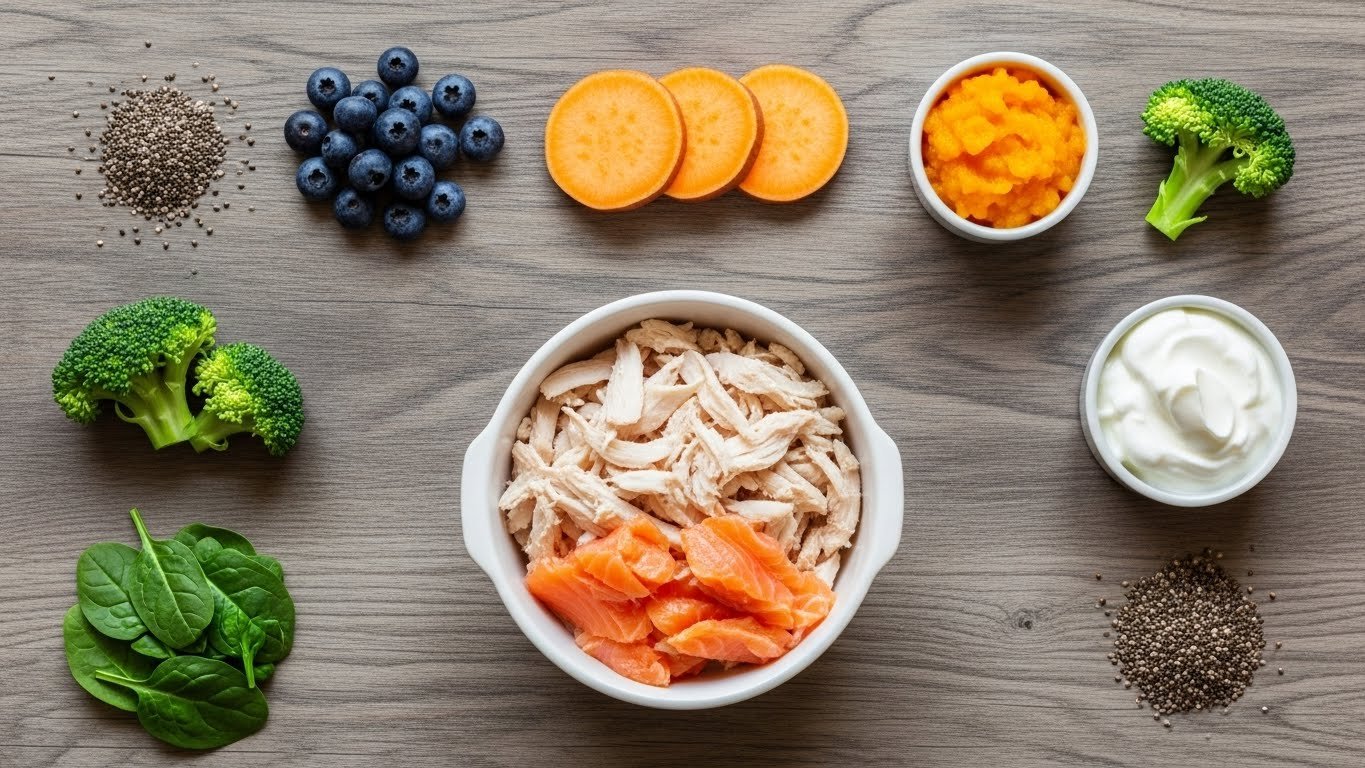
Adding nutrient-rich superfoods to your dog’s diet can support their overall health, but always consult your vet before making changes, as individual needs vary based on age, breed, and health conditions.
Key Points:
- Blueberries: These antioxidant-packed berries may help with cognitive function and joint health, making them a great low-calorie treat.
- Salmon: Rich in omega-3 fatty acids, it could boost immune function, skin health, and reduce inflammation.
- Pumpkin: High in fiber, this veggie aids digestion and may ease issues like diarrhea or constipation.
- Kale: Loaded with vitamins, it supports liver and heart health, but feed in moderation to avoid potential issues.
- Eggs: A complete protein source that promotes healthy skin, coat, and muscles.
- Turmeric: Known for its anti-inflammatory properties, it might help with arthritis and skin conditions.
- Yogurt: Probiotic-rich for gut health, providing calcium and protein for bones and overall vitality.
- Coconut Oil: Offers healthy fats that could improve digestion, skin, and coat while fighting infections.
Why Include Superfoods in Your Dog’s Diet?
Research suggests that incorporating superfoods—nutrient-dense foods like fruits, veggies, and proteins—can enhance your dog’s nutrition beyond standard kibble. They provide vitamins, minerals, antioxidants, and healthy fats that may support immunity, digestion, and longevity, though evidence varies and they’re not a cure-all. Start small to monitor for any reactions.
How to Add Them Safely
Introduce one superfood at a time, in small portions (about 10% of daily calories as treats). Use fresh, plain versions without added sugars or seasonings. For example, mix into meals or use as rewards. Always prioritize balanced commercial or vet-approved diets.
Potential Considerations
While these foods are generally safe, some dogs may have sensitivities—watch for upset stomach or allergies. Avoid overfeeding to prevent weight gain or nutrient imbalances, and skip if your dog has specific health issues like kidney problems.
In the world of pet nutrition, superfoods have transitioned from human wellness trends to valuable additions for our canine companions, offering a natural way to boost health through everyday ingredients. This comprehensive guide explores eight powerhouse ingredients that can elevate your dog’s diet, drawing from veterinary insights and nutritional research. We’ll delve into their benefits, scientific backing, preparation tips, potential recipes, and safety notes, ensuring you have all the tools to make informed choices. Remember, while these foods pack a punch, they’re best used as supplements to a complete, balanced diet—consult your veterinarian to tailor them to your dog’s unique needs, considering factors like age, breed, activity level, and any pre-existing conditions.
Understanding Superfoods for Dogs
Superfoods are defined as nutrient-rich foods that provide exceptional health benefits due to high concentrations of vitamins, minerals, antioxidants, and other bioactive compounds. For dogs, they can help address common issues like joint pain, digestive woes, skin irritations, and immune weaknesses, potentially extending lifespan and improving quality of life. Unlike processed treats, these natural options often come from your kitchen, making them accessible and cost-effective. However, not all human superfoods are dog-safe—avocados, for instance, are toxic due to persin, and chocolate is a no-go. The key is moderation: treats should comprise no more than 10% of your dog’s daily caloric intake to avoid obesity or nutritional imbalances.
Studies, including those on plant-based elements in canine diets, suggest superfoods may contribute to better coat health, reduced inflammation, and even cancer prevention, though more research is needed for definitive claims. Always source organic when possible to minimize pesticide exposure, and introduce new foods gradually over a week to monitor for adverse reactions like vomiting or diarrhea.
Summary Table of the 8 Superfoods
| Superfood | Key Nutrients | Primary Benefits | Precautions & Serving Tips |
|---|---|---|---|
| Blueberries | Antioxidants, Vitamin C, Fiber, Manganese | Supports brain health, reduces oxidative stress, aids joint function | Feed whole or mashed; limit to 5-10 berries/day for small dogs; may cause loose stools if overfed. |
| Salmon | Omega-3 Fatty Acids, Protein, Vitamin D | Boosts immune system, improves skin/coat, reduces inflammation | Cook thoroughly to avoid parasites; 1-2 oz/week; avoid if allergic to fish. |
| Pumpkin | Fiber, Beta-Carotene, Potassium | Aids digestion, supports eye health, helps with weight management | Use plain canned or cooked fresh; 1-4 tbsp/day; too much can cause diarrhea. |
| Kale | Vitamins A/C/K, Iron, Antioxidants | Promotes liver detox, heart health, anti-cancer properties | Steam or chop finely; small amounts only; high oxalates may affect calcium absorption. |
| Eggs | Protein, Vitamins A/D/E/K, Biotin | Builds muscle, supports digestion, enhances coat shine | Cook to avoid salmonella; 1 egg/week; shells can be ground for calcium if baked. |
| Turmeric | Curcumin (Anti-inflammatory Compound) | Eases arthritis, soothes skin issues, may fight cancer | Mix with oil for absorption; 1/4 tsp/day for small dogs; monitor for GI upset. |
| Yogurt | Probiotics, Calcium, Protein | Improves gut health, strengthens bones, boosts immunity | Plain, low-fat Greek; 1-2 tbsp/day; avoid if lactose intolerant. |
| Coconut Oil | Medium-Chain Triglycerides, Lauric Acid | Aids digestion, improves skin/coat, has antimicrobial properties | Start with 1/4 tsp/day; high calories, so use sparingly to avoid weight gain. |
Deep Dive into Each Superfood
1. Blueberries: Nature’s Antioxidant Powerhouse
Blueberries top many lists for their high antioxidant content, including anthocyanins that combat free radicals and support cellular health. Research on aging dogs shows they may enhance cognitive function, similar to how they benefit human brain health. They’re low in calories, making them ideal for weight control. To incorporate: Freeze for a cool treat or blend into homemade biscuits. Recipe idea: Mix 1/2 cup blueberries with oat flour and bake into cookies. Precautions: Wash thoroughly; excessive intake could lead to stomach upset due to fiber.
2. Salmon: Omega-Rich for Shiny Coats and Strong Joints
Salmon’s omega-3s, like EPA and DHA, are anti-inflammatory, potentially reducing arthritis symptoms and supporting heart health. It’s also a lean protein for muscle maintenance. Preparation: Bake or steam without bones or skin; use wild-caught for lower contaminants. Tip: Add flaked salmon to kibble once a week. Recipe: Salmon and sweet potato mash—cook 4 oz salmon with 1/2 cup pumpkin for a nutrient boost. Precautions: Raw salmon risks parasites; limit if your dog has pancreatitis due to fat content.
3. Pumpkin: The Digestion Hero
With soluble fiber that regulates bowel movements, pumpkin is a go-to for gastrointestinal issues, feeding beneficial gut bacteria. Beta-carotene converts to vitamin A for eye and immune support. How to feed: Use pureed form in meals or as a topper. Recipe: Pumpkin dog treats—mix with peanut butter and bake. Precautions: Opt for unsweetened canned; overfeeding may cause loose stools or vitamin A excess in rare cases.
4. Kale: Vitamin-Packed Green Goodness
Kale offers carotenoids and flavonoids for antioxidant protection, potentially aiding liver detox and cancer prevention. It’s mineral-rich for bone health. Preparation: Lightly steam to improve digestibility; chop to prevent choking. Tip: Blend into smoothies with yogurt. Recipe: Kale chips—bake leaves at low temp for crunchy treats. Precautions: High in oxalates, so avoid in dogs with stone history; start small to check tolerance.
5. Eggs: Complete Protein in a Shell
Eggs provide all essential amino acids, plus biotin for coat health and vitamins for energy metabolism. They’re versatile for all life stages. How to feed: Scramble or boil; include shell for calcium if crushed. Recipe: Egg and veggie scramble with carrots. Precautions: Cook to kill bacteria; limit to avoid cholesterol buildup in sensitive dogs.
6. Turmeric: The Golden Spice for Inflammation
Curcumin in turmeric has potent anti-inflammatory effects, helpful for joint pain and allergies. It may also support cancer-fighting mechanisms. Preparation: Make “golden paste” with oil and pepper for better absorption. Tip: Sprinkle on food. Recipe: Turmeric chicken bites—mix with ground meat and bake. Precautions: Can cause GI upset; use vet-recommended doses to avoid interactions with medications.
7. Yogurt: Probiotic Boost for Gut Harmony
Live cultures in yogurt promote healthy microbiota, aiding digestion and immunity. Calcium strengthens bones. How to feed: Plain Greek for lower lactose; dollop on meals. Recipe: Yogurt frozen pupsicles with berries. Precautions: Many dogs are lactose intolerant—choose low-fat, no additives; avoid flavored varieties with xylitol.
8. Coconut Oil: Fatty Acid Wonder for Skin and More
Its lauric acid offers antimicrobial benefits, while MCTs support brain health and energy. Great for dry skin. Preparation: Melt and mix into food or apply topically. Tip: Use as paw balm. Recipe: Coconut oil cookies with oats. Precautions: Calorie-dense, so monitor weight; introduce slowly to prevent diarrhea.
Integrating Superfoods into Daily Routines
Rotate these ingredients for variety—perhaps a blueberry-yogurt breakfast topper or salmon-pumpkin dinner mix. For puppies, focus on growth-supporting options like eggs; for seniors, anti-inflammatory ones like turmeric. Track changes in energy, coat, or stool. If DIY-ing, balance with commercial food to ensure complete nutrition.
Potential Drawbacks and When to Seek Advice
While beneficial, superfoods aren’t without risks—overuse could lead to hypervitaminosis or digestive imbalances. Dogs with conditions like diabetes should avoid sugary fruits. Always vet-check for interactions. In conclusion, these eight ingredients offer a simple path to supercharging your dog’s diet, fostering vibrant health through nature’s bounty.