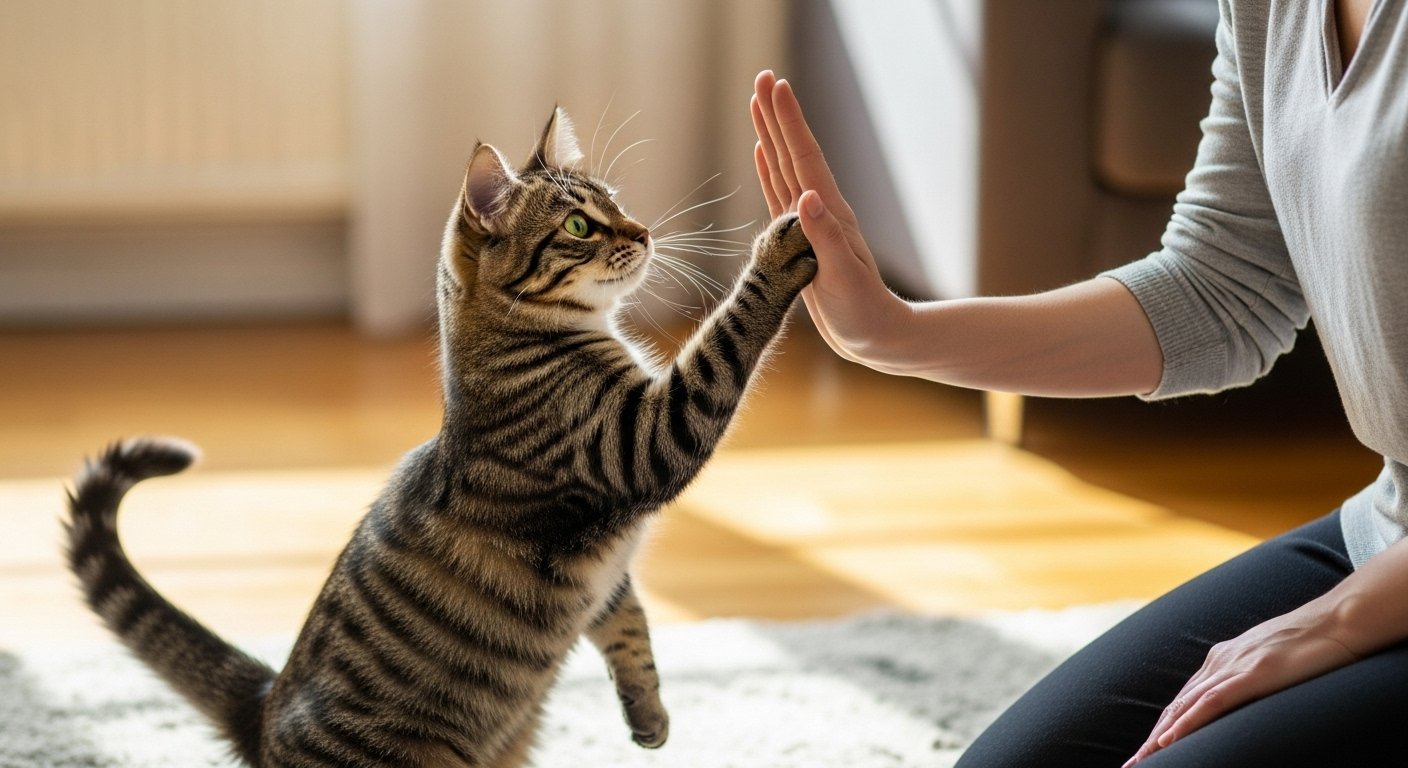
Animal welfare organizations shows that most cats can learn basic paw-touch tricks like high-five in 1-2 weeks with consistent, positive reinforcement training.
- Start with high-value treats and a distraction-free environment to encourage natural paw curiosity.
- Use a clicker or marker word for precision, but it’s not essential if you’re consistent with rewards.
- Sessions should last no more than 5 minutes to keep your cat engaged without frustration.
- Not all cats will master it immediately, but evidence suggests persistence pays off for curious or food-motivated felines.
Why Teach Your Cat This Trick
High-fiving isn’t just adorable—it’s a great way to engage your cat’s natural hunting instincts through play-like training. It can reduce boredom-related behaviors like scratching furniture, as noted in guides from humane societies. Plus, it’s an impressive party trick that showcases your cat’s smarts!
Essential Steps at a Glance
- Prepare treats and sit with your cat in a quiet spot.
- Hold a treat in a closed fist or open palm to prompt paw movement.
- Reward any paw lift immediately, using a “yes” or click.
- Add the “high five” cue once they touch reliably.
- Gradually raise your hand and fade out lures like treats in palm.
Quick Tips for Success
- Choose treats your cat loves, like small pieces of tuna or commercial rewards, to maintain motivation.
- Monitor body language; if ears flatten or tail swishes, pause and try later.
- Practice daily but briefly—overdoing it can lead to disinterest.
- If your cat uses claws, wait for gentle touches before rewarding.
How to Teach Your Cat to High-Five Like a Pro
Imagine your furry friend confidently slapping your palm on command—it’s not just a viral video moment; it’s a reality you can achieve with some simple, science-backed techniques. Cats, often stereotyped as aloof, are actually highly trainable using positive reinforcement methods rooted in operant conditioning, where desired behaviors are rewarded to encourage repetition. This trick taps into their natural curiosity and pawing instincts, similar to how they’d bat at prey in the wild. Whether you have a playful kitten or a laid-back senior, high-fiving can boost their confidence, provide mental enrichment, and deepen your bond. In fact, animal behavior experts from organizations like the Blue Cross emphasize that such training can help prevent issues like anxiety or destructive habits by keeping cats stimulated.
In this comprehensive guide, we’ll cover everything from preparation to advanced variations, drawing from trusted sources in feline behavior and training. Expect to spend 5-10 minutes per session over 1-2 weeks, depending on your cat’s personality. Food-motivated cats often pick it up faster, but even picky ones can learn with the right incentives. Let’s dive in!
The Benefits of Training Your Cat to High-Five
Before we get to the steps, why bother? Training isn’t just for dogs—cats thrive on it too. According to humane societies, interactive tricks like this:
- Enhance Mental Health: Cats need stimulation to avoid boredom, which can lead to over-grooming or aggression. High-fiving engages their problem-solving skills.
- Strengthen Your Relationship: Shared activities build trust, making vet visits or grooming easier.
- Physical Exercise: Paw-reaching encourages light movement, beneficial for indoor cats.
- Social Bragging Rights: Who doesn’t love showing off a clever cat? It’s a hit on social media and with guests.
Studies from veterinary resources show that positively reinforced training reduces stress hormones in cats, leading to happier, healthier pets. If your cat already knows basics like “sit,” this trick builds on that foundation for even more fun.
Tools and Preparation: What You’ll Need
Gather these essentials before starting to ensure smooth sessions. Using the right tools makes a big difference, as highlighted in clicker training guides.
| Item | Description | Why It’s Useful | Where to Get It |
|---|---|---|---|
| High-Value Treats | Small, soft pieces like freeze-dried chicken, tuna flakes, or commercial cat treats (e.g., Temptations or Inaba Churu). Aim for pea-sized bits. | Motivates your cat without filling them up; high-value means they’re irresistible and saved only for training. | Pet stores like Petco or online via Amazon. Avoid treats with fillers if your cat has sensitivities. |
| Clicker | A small plastic device that makes a distinct “click” sound (or use a verbal marker like “yes” in a consistent tone). | Marks the exact moment of desired behavior, helping cats associate actions with rewards faster than voice alone. Clickers provide a unique, non-emotional signal. | Available at pet supply shops or apps if you prefer digital; brands like Karen Pryor are popular. |
| Training Space | A quiet, indoor room free of toys, other pets, or distractions like TV noise. | Allows focus; cats learn best in comfortable, familiar environments without interruptions. | Your home—close doors and dim lights if needed. |
| Optional: Sticky Notes or Target Stick | Post-it notes for luring or a wand-like stick for targeting. | Helps guide paw placement in early stages, especially for shy cats. | Office supply stores or improvise with household items. |
Start by “charging” the clicker: Click and immediately give a treat 10-15 times until your cat looks expectant after the sound. This builds the association. Hold sessions when your cat is slightly hungry but not starving—right before mealtime is ideal.
Step-by-Step Training Guide
Follow these detailed steps, synthesized from expert sources. Go at your cat’s pace—some master it in days, others need weeks. Always end on a positive note.
- Set the Scene and Get Your Cat Sitting: Choose a calm time and sit on the floor with your cat. If they know “sit,” cue it; otherwise, wait for them to naturally sit or lure with a treat above their head. This position stabilizes them for paw-reaching. Reward the sit to start positively.
- Encourage Paw Movement with a Lure: Hold a treat in a closed fist or open palm (palm facing cat) at nose level, a few inches away. Cats’ curiosity often prompts sniffing or pawing. As soon as any paw lifts off the ground—even slightly—click or say “yes” and give the treat. Repeat 5-10 times per session. If no response, gently tap their paw first to show it’s safe, then reward.
- Shape the Touch Behavior: Once paw lifting is consistent, hold your hand flat without the treat visible (hide it in your other hand). Wait for them to touch your palm. Click/reward instantly on contact. Gradually raise your hand higher to mimic a true high-five. If they use their nose instead, lower your hand and only reward paw touches.
- Add the Verbal Cue: When they reliably touch on presentation, say “high five” just before offering your hand. Click/reward successful touches. Practice until they respond to the cue alone, without hand movement. Fade the lure by reducing treat visibility over sessions.
- Refine and Generalize: Once mastered, practice in different rooms or with family members. Vary hand height or speed for challenge. If using sticky notes (a creative lure from some trainers), place one over the treat in your palm, rewarding touches, then gradually remove it.
Timeline for Progress
Training varies by cat, but here’s a typical schedule based on expert recommendations:
| Week/Phase | Focus | Expected Sessions | Milestones |
|---|---|---|---|
| Week 1: Basics | Paw lifting and initial touches. | 3-5 sessions/day, 2-5 min each. | Cat consistently raises paw for treat lure. |
| Week 2: Cue Integration | Adding “high five” and raising hand. | 2-3 sessions/day. | Responds to cue 80% of the time in one spot. |
| Ongoing: Maintenance | Generalizing to new contexts. | 1-2 sessions/week. | Performs reliably anywhere, with occasional rewards to reinforce. |
Adjust if your cat shows signs of progress sooner or needs more time—patience is key.
Troubleshooting Common Issues
Not everything goes smoothly, but most hiccups are fixable. Here’s a table of frequent problems and solutions, drawn from real trainer experiences:
| Issue | Possible Cause | Solution | Prevention Tip |
|---|---|---|---|
| Cat ignores hand | Low motivation or distractions. | Use tastier treats or train in a quieter space. Switch to play rewards if food isn’t enticing. | Test treats beforehand; always train pre-meal. |
| Uses claws or bites | Overexcitement or discomfort. | Wait for gentle touch before clicking; if claws out, hold steady until retracted, then reward. | Start with soft touches and build tolerance gradually. |
| Loses interest mid-session | Session too long or boredom. | Keep under 5 minutes; end with success. Give breaks of hours or days if needed. | Monitor body language—stop at first sign of tail flicking. |
| Won’t lift paw at all | Shyness or no prior training. | Begin by rewarding any movement, even a weight shift. Use a target stick if available. | Build confidence with easier tricks like “touch” first. |
| Regresses after progress | Inconsistency or stress. | Review basics and reinforce with extra rewards. Avoid punishing mistakes. | Practice regularly but not daily to avoid burnout. |
If issues persist, consult a vet to rule out health problems like arthritis affecting paw use.
Advanced Variations and Fun Twists
Once high-five is solid, level up:
- Low-Five or Fist Bump: Lower your hand or close into a fist for variety—teach similarly but cue differently (e.g., “fist bump”).
- Double High-Five: Train both paws by alternating sides.
- High-Five Chain: Combine with other tricks, like sit then high-five, for a sequence.
- No-Hands Version: Teach paw-to-paw with another cat (if friendly) or to objects for enrichment.
These build on the same principles, keeping training exciting. Remember, the goal is enjoyment—never force it.
The Science Behind Cat Training
At its core, this method uses operant conditioning, pioneered by B.F. Skinner, where behaviors increase with positive outcomes. Cats’ brains respond well to this, as their hunting drive makes them eager for “wins.” Welfare groups note that clicker training, in particular, creates clear communication, reducing misunderstandings and stress. Unlike punishment-based methods (which can harm trust), positive reinforcement fosters eager learners.
In conclusion, teaching your cat to high-five like a pro is rewarding for both of you. With consistency, treats, and love, you’ll have a paw-slapping superstar in no time. Share your success stories in the comments—happy training!