
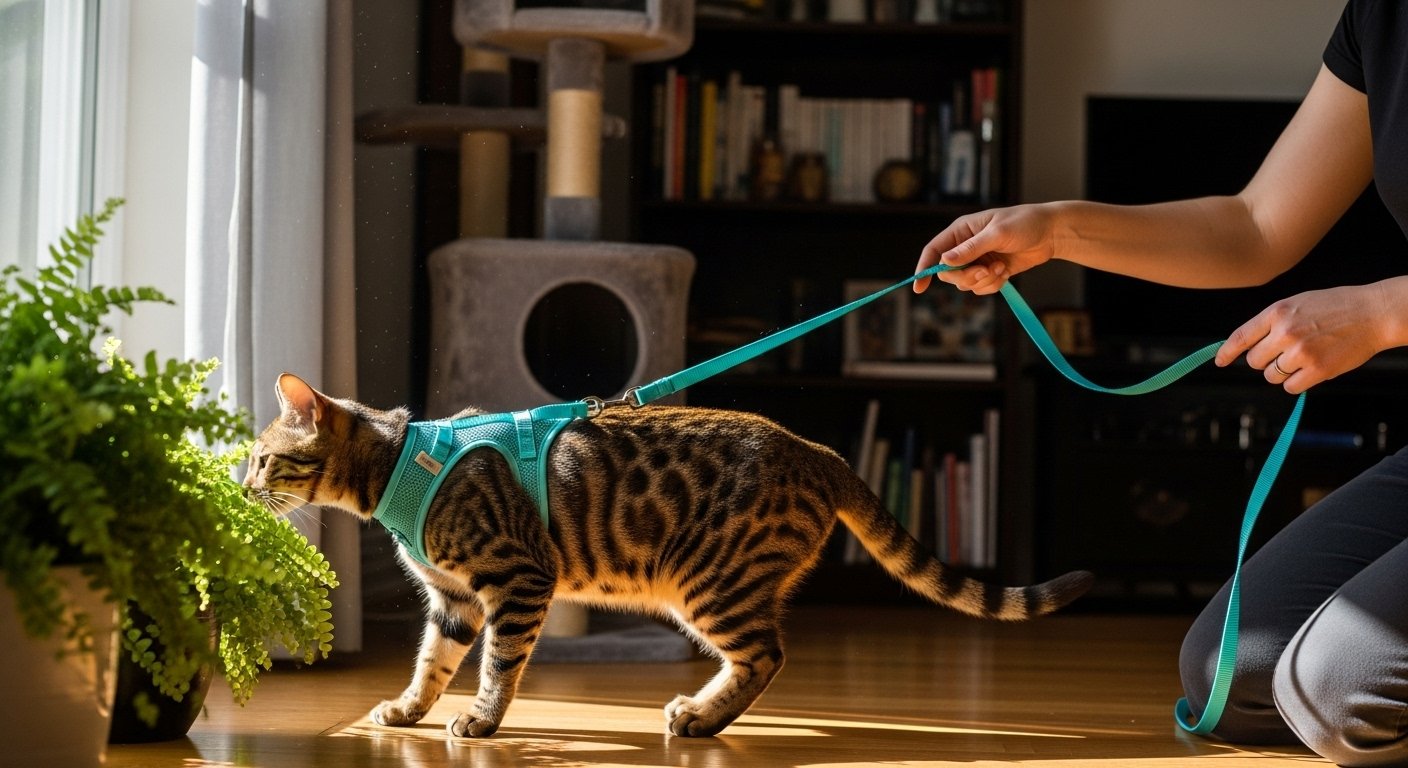
- Leash training can provide safe outdoor access for indoor cats, offering mental stimulation and exercise, though not all cats may enjoy it—patience is key to determining if it’s a good fit.
- Start with a proper harness rather than a collar to ensure safety and comfort; popular options include vest-style designs that distribute pressure evenly.
- Training involves gradual steps like introducing the harness indoors with treats, progressing to short outdoor sessions, always letting your cat set the pace to avoid stress.
- Common benefits include stronger bonding, reduced boredom, and healthier activity levels, but watch for signs of discomfort and consult a vet before starting.
- Avoid rushing the process or using force, as this can create negative associations; positive reinforcement with high-value treats is essential for success.
Why Consider Leash Training?
Research suggests that leash training can enrich an indoor cat’s life by allowing supervised exploration, which may help with behavioral issues like scratching or excessive meowing. It’s particularly useful for cats in apartments or those showing curiosity about the outdoors, but it’s not suitable for every cat—some prefer window watching.
Essential Gear Basics
Choose a cat-specific harness that’s snug yet comfortable (room for two fingers). Avoid collars to prevent injury. A non-retractable leash around 6-10 feet long works best for control without restriction.
Quick Training Overview
Begin indoors: Introduce the harness with treats, let your cat wear it briefly, attach the leash, then practice walking. Move outdoors only when comfortable, starting in quiet areas. Sessions should be short and positive.
Leash training an indoor cat opens up a world of safe adventures, blending the security of home with the excitement of the outdoors. While cats are often seen as independent homebodies, many thrive with supervised exploration, which can boost their physical health, mental sharpness, and even your bond with them. However, success depends on understanding your cat’s personality—some may love it, while others might prefer staying inside. This comprehensive guide draws from expert advice to walk you through everything from benefits and gear selection to step-by-step training, common pitfalls, and safety tips. Whether you’re a first-time cat owner or looking to enhance your feline’s routine, we’ll cover it all to help you create positive, enriching experiences.
Understanding the Benefits of Leash Training for Indoor Cats
Indoor cats lead safer lives, protected from traffic, predators, and diseases, but they can miss out on natural stimuli that keep them engaged. Leash training bridges this gap by offering controlled outdoor time. Key advantages include:
- Physical Exercise: Regular walks help combat obesity, a common issue in indoor cats, by encouraging movement and play. This can lead to better overall fitness and fewer health problems like diabetes or joint issues.
- Mental Stimulation: New sights, sounds, and smells activate a cat’s senses, reducing boredom and potentially curbing destructive behaviors such as excessive scratching or meowing. It satisfies their innate curiosity and hunting instincts in a safe way.
- Stronger Bonding: Training sessions and walks provide quality time, strengthening your relationship through shared experiences and positive reinforcement.
- Socialization and Confidence: For kittens or young cats, early exposure builds adaptability and reduces fear of new environments. Even adults can gain confidence, making vet visits or travel less stressful.
- Enrichment Variety: It adds variety to daily routines, complementing indoor play and helping prevent “play boredom.” Cats return home more relaxed and content after sensory-rich outings.
That said, not every cat will take to it—fearful or older cats might find it overwhelming. Always observe your cat’s cues and consult a veterinarian to ensure they’re healthy enough for outdoor activities, including up-to-date vaccinations and parasite preventives.
Potential Risks and How to Mitigate Them
While rewarding, leash training isn’t without challenges. Potential downsides include exposure to parasites like fleas or ticks, infectious diseases from other animals, overstimulation from noises or sights, and the risk of escape if gear isn’t secure. To minimize these:
- Use flea/tick preventatives and ensure vaccinations (e.g., rabies, feline leukemia).
- Start in low-traffic, quiet areas to avoid overwhelming your cat.
- Constant supervision is crucial—never leave them unattended.
- Choose escape-proof gear and monitor for stress signs like flattened ears or hiding.
If your cat shows persistent anxiety, it might not be the right fit; alternatives like window perches or indoor enrichment toys can provide similar benefits.
Selecting the Right Gear: Harnesses, Leashes, and Treats
The foundation of successful training is proper equipment. Cats are escape artists, so skip collars (which can cause neck strain) and opt for harnesses that distribute pressure across the chest and shoulders.
Types of Harnesses
Harnesses come in various styles to suit different cats:
- Step-In Harnesses: Legs step into loops; ideal for wiggly cats.
- Vest or Jacket Harnesses: Cover more body area for security and warmth.
- H-Style or Roman Harnesses: Strap-based for adjustability but may be less secure if not fitted well.
- Overhead Harnesses: Slip over the head; convenient but can be stressful for some.
Fit is critical: It should be snug (two fingers under straps) but not tight. Measure your cat’s neck and chest girth before buying.
Top Harness Recommendations
Based on testing and reviews, here’s a comparison table of popular options suitable for leash training:
| Harness Model | Type | Pros | Cons | Best For | Price Range |
|---|---|---|---|---|---|
| Rabbitgoo Cat Harness | Overhead | Comfortable, includes leash, multiple colors/sizes | Overhead design may unsettle some cats | Daily walks, beginners | $15-20 |
| BEAUTYZOO Cat Harness | Overhead | Sturdy straps, patterns available | No neck buckle | Secure outdoor exploration | $12-18 |
| PUPTECK Soft Mesh Vest | Vest | Secure buckle, warm for cooler weather | Bulky for small cats | Winter training, escape-prone cats | $10-15 |
| Sleepypod Cat Harness | Mesh Vest | Durable, breathable, includes light | Expensive, no leash included | Long adventures, visibility | $30-40 |
| Voyager Step-In Harness | Step-In | Adjustable, great value with leash | Sizing runs small | Quick sessions, active cats | $10-15 |
| Pet Safe Come with Me Kitty | Adjustable | Bungee leash for gentle pulls | Potential pinch on pulls | Polite walking training | $15-20 |
| Houdini Escape Resistant | Cinching | Quick adjust, escape-proof | Leash twists easily | Frequent outings, Houdini cats | $20-25 |
| Kitty Holster | Vest | Velcro for easy on/off | No leash, may feel clumsy | Comfort-focused, indoor start | $25-30 |
Leashes and Treats
- Leashes: 6-10 feet long, lightweight, and non-retractable to maintain control without jerking.
- Treats: High-value options like freeze-dried meat or lickable purees motivate during sessions. Avoid low-value kibble outdoors where distractions are high.
Step-by-Step Leash Training Process
Training should be gradual, positive, and cat-led—rushing can cause setbacks. Aim for short sessions (5-10 minutes) multiple times a day, using treats to build associations.
- Preparation and Positive Associations: Place the harness near food or play areas. Reward any interest with treats. Gradually hold it and encourage touching.
- Introducing the Harness: Slip it on briefly indoors. If resistant, use treats to lure the head through. Reward movement and remove before discomfort sets in.
- Buckling and Comfort Building: Clip it on, offer jackpot treats. Practice daily until the cat moves normally. Add gentle tugs paired with rewards.
- Attaching the Leash Indoors: Let it drag first, then hold it loosely. Use treats to encourage following you without tension.
- Indoor Walking Practice: Walk around the house, letting the cat lead but guiding gently. Keep sessions fun with play.
- First Outdoor Ventures: Start in a quiet backyard or enclosed area. Carry your cat out harnessed to prevent darting. Follow their pace—some sit and observe, others explore.
- Advanced Exploration: Gradually extend walks to new areas once confident. Always end on a positive note with treats or play.
Monitor body language: Relaxed ears and tail mean comfort; flattened ears or freezing indicate stress—return indoors immediately.
Common Mistakes and How to Avoid Them
Many owners encounter hurdles; here’s how to sidestep them:
- Wrong Harness Choice: Opt for cat-specific, escape-proof designs.
- Rushing Outdoors: Master indoor comfort first.
- Forcing the Process: Let your cat lead; use positive reinforcement only.
- Short Leash Use: Allow slack for natural exploration.
- Ignoring Commands: Enforce gently with treats to build reliability.
- Low-Value Treats: Use high-motivation options outdoors.
- Tense Leash: Keep it loose to prevent escape attempts.
- Poor Location Choice: Start quiet, avoid busy spots.
- Door-Dashing Allowance: Train “sit and stay” at doors.
- Chasing to Harness: Teach calm commands instead.
Advanced Tips for Success and Troubleshooting
- For Kittens: Start early for easier adaptation.
- Troubleshooting Resistance: If freezing occurs, shorten sessions and increase rewards.
- Health Checks: Ensure microchipping and ID tags for safety.
- Alternatives if Training Fails: Consider catios or supervised balcony time.
- Ritualize Walks: Use consistent cues like jingling the leash to build excitement.
With consistency, many indoor cats can enjoy leash adventures, but always prioritize their comfort. If issues persist, seek advice from a certified cat trainer or vet.
Key Citations
- Harness Training A Cat: A Guide to Leash Training Confidence
- Leash Training a Cat 101: A Complete Guide to Getting Outside | Chewy
- Leash training your cat | Wisconsin Humane Society
- Top 8 Cat Harnesses Purchased and Tested (We Tried Them All) – Cats.com
- Should You Leash Walk Your Cat? | Ask the Cat Daddy
- The Benefits and Risks of Taking Your Indoor Cat Outside on a Leash | Macungie Animal Hospital Inc.
- Stop Making These 10 Mistakes When Walking Your Cat