
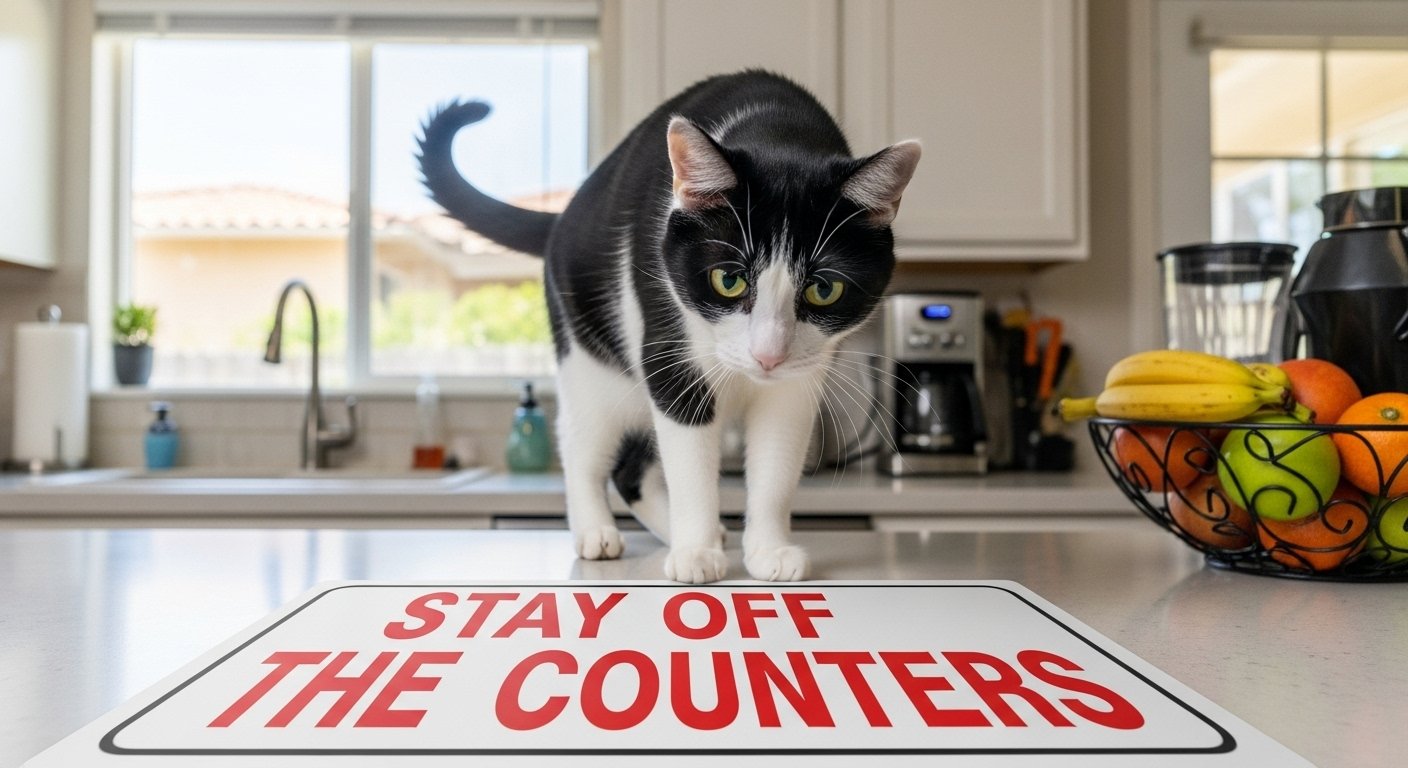
- Cats often jump on counters out of natural curiosity, seeking food, warmth, or high vantage points, but training can help redirect this behavior.
- Research suggests positive reinforcement, like rewarding alternative spots, is more effective and less stressful than punishment-based methods.
- Simple deterrents such as sticky tape or aluminum foil may work for some cats, though they aren’t always a long-term solution.
- Providing engaging alternatives, like cat trees or perches, seems likely to satisfy your cat’s instincts while keeping counters clear.
- Consistency from all household members is key, as mixed signals can confuse your cat and prolong the issue.
Why Do Cats Jump on Counters?
Cats are natural athletes with strong hind legs and flexible spines that make jumping effortless— they can leap up to six to eight times their height. Common reasons include hunting for food crumbs, enjoying warm sunny spots, or seeking running water from faucets. Experts note that boredom or lack of stimulation can also drive this habit, so addressing the root cause is essential for successful training.
Quick Steps to Start Training
- Clear the counters: Remove food, crumbs, and appealing items to make the area less tempting.
- Offer alternatives: Set up a tall cat tree or window perch nearby and encourage use with treats.
- Use positive cues: When your cat jumps down, say “off” and reward with praise or a treat to build good habits.
- Try gentle deterrents: If needed, apply double-sided tape to counter edges for a temporary sticky surprise.
- Play daily: Engage your cat in play to burn energy and reduce boredom-driven jumps.
Common Tips from Cat Owners
Many find that combining environmental changes with rewards works best. For instance, a cat water fountain can divert interest from the sink. Avoid yelling or spraying water, as it may cause fear without teaching the desired behavior. If your cat persists, consult a vet to rule out underlying issues like anxiety.
Cats jumping on kitchen counters is a common frustration for pet owners, but with patience and the right strategies, it’s possible to train your feline friend to respect those boundaries. This comprehensive guide draws from expert advice across veterinary sites, animal behavior resources, and real-world tips to help you create a counter-free zone. We’ll explore the science behind why cats do this, proven training methods, potential pitfalls, and holistic options for long-term success. Whether you’re dealing with a curious kitten or a stubborn adult cat, these insights aim to foster a harmonious home without resorting to harsh tactics.
Understanding Your Cat’s Behavior
Cats aren’t jumping on counters to annoy you—they’re following instincts honed over thousands of years. As natural climbers and hunters, felines seek elevated spots for safety, observation, and warmth. Their anatomy supports this: longer hind legs for powerful leaps, flexible spines for controlled landings, and sensitive whiskers to gauge distances. Common triggers include:
- Food and scents: Even tiny crumbs can attract a cat’s keen sense of smell.
- Warmth and views: Sunny counters provide cozy spots with a bird’s-eye view.
- Water attraction: Running faucets mimic fresh streams, appealing to their preference for moving water.
- Boredom or stress: Understimulated cats may explore counters for entertainment.
Recognizing these motivations is crucial. Punishing a cat for natural behavior can lead to fear, aggression, or litter box avoidance, as noted by animal welfare experts. Instead, focus on redirection to build trust and encourage voluntary compliance.
Effective Training Methods: A Balanced Approach
Training should prioritize positive reinforcement, where you reward desired behaviors, over aversion techniques that scare or discomfort your cat. Here’s a breakdown of strategies, categorized for clarity:
Positive Reinforcement Techniques
This humane method teaches cats through rewards, making it more sustainable. Start with clicker training: Use a small device that makes a “click” sound to mark good behavior, followed by a treat.
- Step-by-step clicker setup: Charge the clicker by clicking and immediately giving a treat several times a day until your cat associates the sound with rewards. Then, guide your cat to alternative spots like a cat tree using a target stick (a wand or pointer). Click and treat when they follow or perch there.
- Redirect and reward: When your cat approaches the counter, gently redirect to a perch and praise lavishly. Sites like Purina emphasize this builds habits without fear.
- Stationing during activities: During meal prep, reward your cat for staying on a designated mat or tree. Consistency is vital—ensure all family members follow the same rules to avoid confusion.
For furniture or counters, repeat placement on approved areas with treats, ignoring floor placements to reinforce preferences.
Environmental Modifications
Make counters unappealing while enhancing other areas:
- Keep it clean: Wipe surfaces thoroughly and store food away to eliminate rewards.
- Alternative elevations: Install cat towers, shelves, or window hammocks near windows for views. Add toys or treats to make them irresistible.
- Water solutions: Invest in a cat fountain for fresh, flowing water away from the sink.
- Block access: Use baby gates or stacked boxes in narrow kitchens to physically prevent jumps.
These changes address root causes, reducing the need for constant supervision.
Gentle Deterrents (Use Sparingly)
If positive methods need a boost, try these non-harmful options, but phase them out as habits form:
- Texture barriers: Apply double-sided tape or flipped sticky mats to edges—cats dislike the feel on their paws.
- Noise makers: Place aluminum foil, cookie sheets, or lightweight lids that clatter when disturbed.
- Scent repellents: Use pet-safe citrus sprays or orange peels, as many cats avoid strong smells.
- Motion-activated devices: Air puff canisters startle without harm, but monitor for stress.
Experts warn against over-relying on deterrents, as they can cause anxiety if overused. Always combine with positives.
Holistic and Natural Supports
For anxious cats, consider calming aids like CBD treats or oils, which interact with the endocannabinoid system to promote relaxation. Always consult a vet before introducing supplements. Engaging toys, puzzle feeders, and daily play sessions (at least 15-20 minutes) also reduce stress-driven jumping.
Step-by-Step Training Plan
- Assess and prepare (Week 1): Observe why your cat jumps and clear counters. Set up alternatives like a cat tree.
- Introduce rewards (Weeks 1-2): Use clicker training to teach “off” cues. Reward 5-10 times daily for using perches.
- Implement deterrents if needed (Weeks 2-3): Add tape or foil temporarily while reinforcing alternatives.
- Build routines (Ongoing): Play before meals to tire your cat. Confine during cooking if necessary.
- Monitor and adjust (Month 1+): Remove deterrents gradually. If no improvement, seek professional help.
Common Mistakes and Troubleshooting
- Inconsistency: Allowing occasional counter time undoes progress—be firm.
- Punishment pitfalls: Yelling or water sprays may make cats sneaky or fearful.
- Ignoring boredom: Without stimulation, cats revert to old habits. Rotate toys weekly.
- Health checks: Persistent jumping could signal issues like arthritis or hunger; vet visits are recommended.
If training stalls, professional behaviorists can tailor plans.
Pros and Cons of Popular Methods
| Method | Pros | Cons | Best For |
|---|---|---|---|
| Clicker Training | Builds trust, long-term results | Requires time and consistency | Motivated owners with patient cats |
| Sticky Tape/Aluminum Foil | Quick setup, inexpensive | Temporary, may stress some cats | Short-term deterrence |
| Cat Trees/Perches | Satisfies instincts, enriching | Space-consuming | Homes with room for cat furniture |
| Scent Sprays | Natural, easy to apply | Not all cats respond, reapplication needed | Mild cases with scent-sensitive cats |
| Motion Air Sprays | Automated, effective for persistent cats | Can cause fear if overused | Busy households needing hands-off help |
This table highlights how combining methods often yields the best outcomes.
In summary, training your cat to stay off counters involves understanding their needs, providing alternatives, and using rewards to guide behavior. With dedication, most cats adapt within weeks to months, leading to a cleaner, safer kitchen. Remember, every cat is unique—patience and empathy go a long way.