
Quick Overview
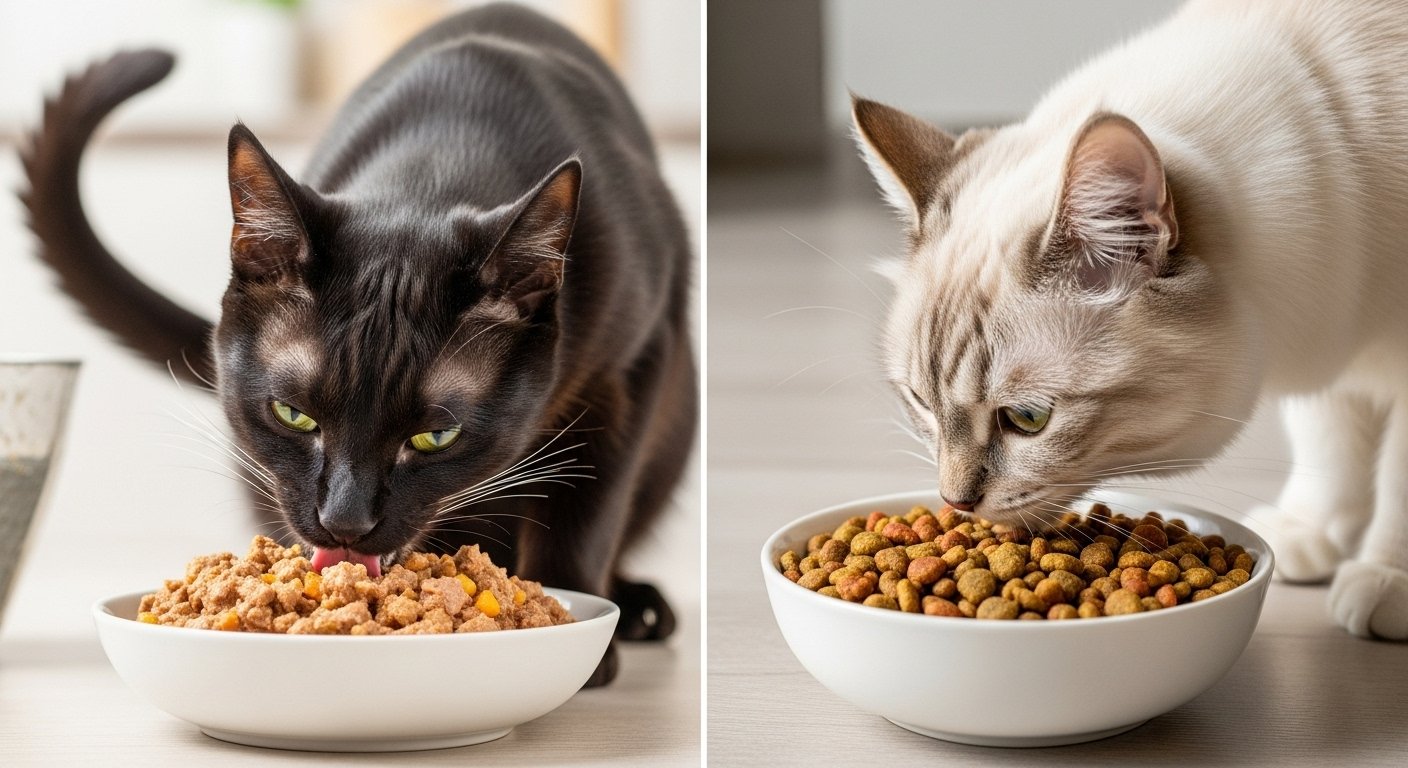
Choosing between wet and dry cat food can feel overwhelming, but it boils down to your cat’s health needs and your lifestyle. Wet food, often in cans or pouches, mimics a cat’s natural prey diet with high moisture (around 70-80%) and protein from animal sources. Dry food, or kibble, is processed for longevity, with lower moisture (6-12%) but higher carbohydrates. Both can be nutritionally complete if AAFCO-approved, but wet tends to be more species-appropriate for obligate carnivores like cats.
Key Pros and Cons at a Glance
Wet Cat Food Pros: Enhances hydration, higher animal protein, fewer carbs, great for picky eaters or cats with dental issues.
Wet Cons: More expensive, shorter shelf life once opened (refrigerate and use within 72 hours).
Dry Cat Food Pros: Affordable, convenient for free-feeding, long shelf life, potentially aids in tartar control with specialized formulas.
Dry Cons: Lower water content may lead to dehydration, higher carbs and plant-based proteins that aren’t ideal for cats.
Our Recommendation
If hydration and premium nutrition are priorities—especially for indoor cats or those prone to urinary problems—opt for mostly wet food. For budget-conscious owners or multi-cat households, dry food works well, but supplement with wet meals or added water. Mixing both can help manage weight, boost palatability, and ensure comprehensive benefits. Monitor your cat’s weight and health, and adjust based on vet input.
As cat owners, we all want the best for our furry companions, and feeding choices play a pivotal role in their long-term health and happiness. This in-depth exploration dives into the wet vs. dry cat food debate, drawing from veterinary insights, nutritional science, and recent 2025 updates on pet nutrition trends. We’ll break down the science behind each type, compare their compositions, examine health impacts, and provide practical tips to help you decide. Whether you’re a new cat parent or reevaluating your pet’s diet, this guide aims to equip you with evidence-based knowledge.
Understanding Feline Nutrition Basics
Cats are obligate carnivores, meaning their bodies are designed to thrive on a diet high in animal-based proteins, moderate fats, and minimal carbohydrates—much like their wild ancestors who hunted prey. They have no biological need for carbs, as they derive energy primarily from proteins and fats, and they require essential nutrients like taurine, which is abundant in meat. Hydration is another critical factor; cats evolved in arid environments and often don’t drink enough water voluntarily, making dietary moisture vital to prevent issues like urinary tract infections or kidney disease.
Commercial cat foods, whether wet or dry, must meet standards set by the Association of American Feed Control Officials (AAFCO) to be labeled “complete and balanced” for specific life stages (kitten, adult, senior, or all stages). However, the processing and ingredients differ significantly between formats, influencing digestibility, palatability, and overall health outcomes. Recent 2025 vet guides emphasize personalized nutrition, factoring in age, weight, activity level, and health conditions like diabetes or obesity.
Deep Dive into Wet Cat Food
Wet cat food, available in cans, pouches, or trays, typically boasts a moisture content of 70-80%, making it a hydration powerhouse. This high water level helps cats achieve 30-50% more total fluid intake compared to dry-only diets, even if they drink from a bowl. Nutritionally, wet foods often contain higher levels of animal proteins (e.g., chicken, fish, beef) and fats, with lower carbohydrates—aligning closely with a cat’s natural prey diet of mice or birds, which are about 70% water. For instance, many wet formulas provide up to three times the protein cats need, supporting muscle maintenance, immune function, and energy.
Pros extend beyond nutrition: The soft textures and strong aromas make wet food highly palatable, ideal for picky eaters, seniors with dental problems, or kittens transitioning from milk. It’s also energy-dense in a smaller volume, helping with portion control to prevent obesity. On the flip side, wet food is pricier due to its water weight and packaging—expect to pay more per calorie. Storage is a hassle; unopened cans last years, but opened portions spoil quickly if left out (discard after 20-30 minutes) and must be refrigerated, ideally used within 72 hours to avoid bacterial growth. 2025 updates from Forbes highlight wet foods like Smalls for their fresh, human-grade ingredients that prioritize urinary and kidney health.
Deep Dive into Dry Cat Food
Dry cat food, or kibble, is extruded under high heat and pressure, resulting in a crunchy texture with only 6-12% moisture. This processing makes starches more digestible but often incorporates more plant-based ingredients like grains or veggies for binding, leading to higher carb content (up to 40% in some formulas) and potentially lower-quality proteins. While still AAFCO-compliant, dry food’s protein is frequently plant-sourced, which isn’t as bioavailable as animal protein for cats. Calorically dense, a small amount packs a punch, but this can lead to overeating if free-fed.
Convenience is dry food’s strong suit: It’s affordable, has a long shelf life (up to a year unopened, six weeks opened if stored properly), and can be left out all day without spoiling—perfect for busy owners or automatic feeders. Some vets note that specialized dry diets with a Veterinary Oral Health Council (VOHC) seal can help reduce tartar buildup, though general kibble doesn’t “clean” teeth as effectively as brushing or dental treats. Drawbacks include dehydration risks, as cats on dry-only diets may have insufficient water intake, contributing to chronic issues like cystitis or crystals. It’s also tougher for cats with gum disease or missing teeth to chew. Recent Reddit discussions in 2025 echo concerns about dry food’s role in long-term health, with users favoring wet for cats with specific needs.
Nutrition Comparison Table
To visualize the showdown, here’s a side-by-side breakdown based on average values from veterinary sources:
| Aspect | Wet Cat Food | Dry Cat Food |
|---|---|---|
| Moisture Content | 70-80% | 6-12% |
| Protein | Higher (often 40-50% dry matter, mostly animal-based) | Lower (30-40% dry matter, mix of animal/plant) |
| Carbohydrates | Lower (5-10%) | Higher (20-40%) |
| Fat | Moderate to high | Moderate |
| Caloric Density | Lower (more volume needed) | Higher (less volume for same calories) |
| Shelf Life (Opened) | 72 hours refrigerated | Up to 6 weeks in cool, dry place |
| Cost per Serving | Higher | Lower |
| Best For | Hydration, urinary health, picky eaters | Convenience, budget, dental support (specialized) |
Data averaged from sources like PetMD and Cats.com.
Health Implications and Expert Insights
The type of food impacts various health aspects. Wet food’s moisture supports kidney function and dilutes urine, reducing the risk of crystals, stones, or infections—crucial since studies show dry-fed cats have 30-50% lower water intake. It’s often recommended for diabetic cats due to lower carbs, helping stabilize blood sugar. Conversely, dry food’s crunch may aid mild dental hygiene, but experts like Dr. JoAnna Pendergrass emphasize it’s no substitute for brushing; kibble often crumbles without scraping teeth effectively.
Obesity is a common concern: Free-feeding dry food correlates with weight gain, as cats lack portion control instincts. Wet food promotes satiety with its volume. For seniors or those with chronic kidney disease (CKD), wet is preferred to ease workload on organs. 2025 NBC Select updates highlight vet-recommended brands like Hill’s Prescription Diet for targeted health support. Experts agree: “Wet cat food provides extra water and protein, so it’s beneficial to feed it daily if possible,” per Cats.com. However, some informed vets avoid recommending dry-only due to processing and health risks.
Practical Feeding Tips and Transitions
Start by calculating your cat’s daily calories via a vet—adults need about 20-30 calories per pound, adjusted for activity. For wet food, divide meals into 2-3 servings; add warm water if needed for extra hydration. Dry food suits grazing, but measure portions to avoid overfeeding. Mixing? Try 50/50 or wet in the evening for variety—Chewy’s 2025 guide notes this boosts water intake, aids weight management, and enhances flavor.
Transition gradually over 7-10 days to prevent digestive upset: Mix increasing amounts of the new food. Always provide fresh water, and for urinary health, add 2 tablespoons of water per wet meal. Avoid home-cooked diets without vet guidance, as they risk nutrient deficiencies like taurine shortage, leading to heart issues. For kittens, prioritize growth formulas with DHA for brain development, feeding 3 times daily.
The Winner Revealed: Wet Takes the Crown, But…
In this nutrition showdown, wet cat food emerges as the winner for superior alignment with feline biology—offering better hydration, higher-quality proteins, and fewer unnecessary carbs. However, it’s not a knockout; dry food wins on practicality and affordability, and a combo often reigns supreme for balanced benefits. Ultimately, the “best” depends on your cat—consult your vet to tailor the diet.
Key Citations: