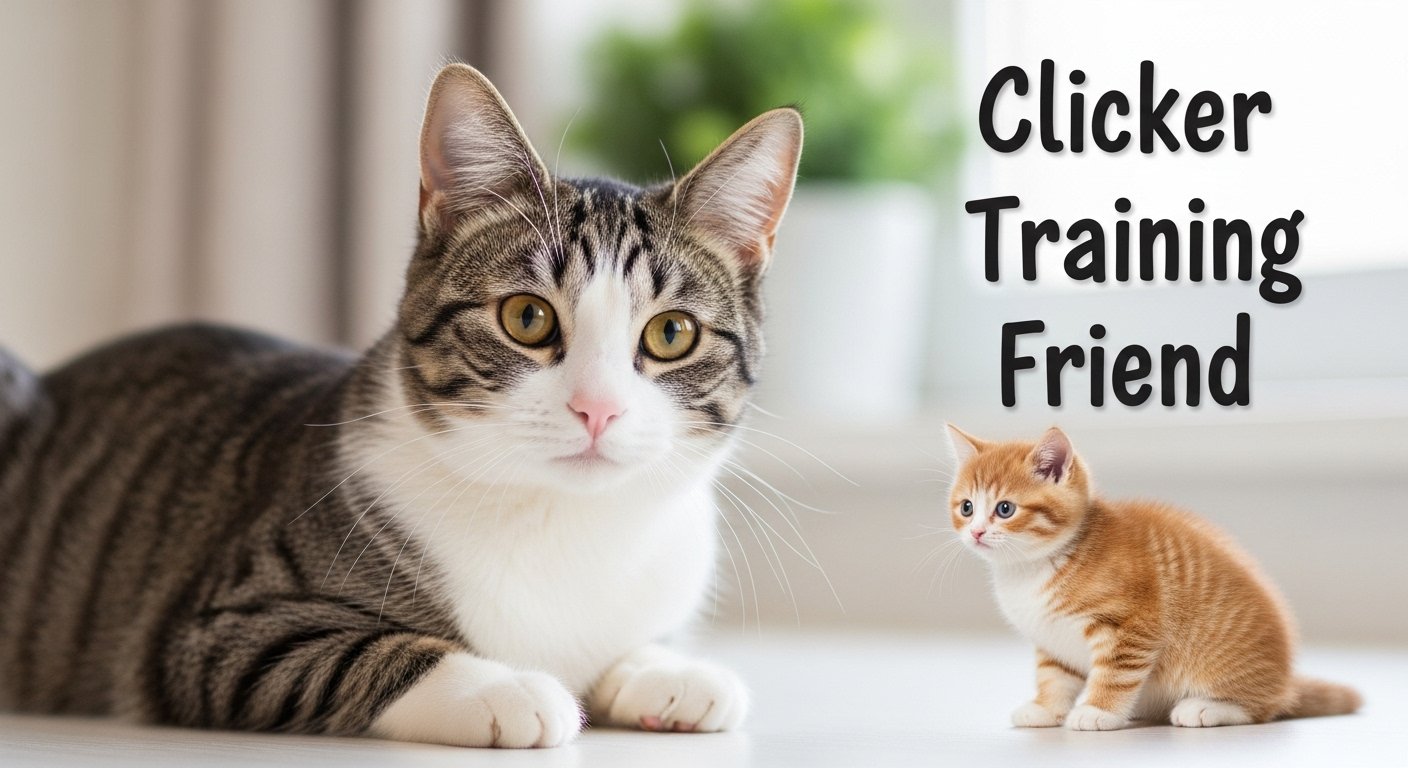
Clicker training is a positive reinforcement method that uses a small device to make a “click” sound, marking desired behaviors, followed by a treat. It seems effective for teaching cats tricks, correcting behaviors, and strengthening bonds, though results can vary by cat’s age, temperament, and motivation.
Key Benefits
- Enhances mental stimulation and reduces boredom.
- Builds trust and communication between you and your cat.
- Can address unwanted habits like scratching by rewarding alternatives.
10 Essential Tips (Quick Overview)
- Select Tools Wisely: Choose a quiet clicker and high-value treats.
- Charge the Clicker: Associate the sound with rewards.
- Keep Sessions Brief: Limit to 5-15 minutes to maintain interest.
- Start Simple: Begin with easy behaviors like sitting.
- Time Clicks Precisely: Mark the exact moment of good behavior.
- Use Shaping Techniques: Build complex tricks step-by-step.
- Incorporate Cues: Add verbal commands and hand signals.
- Stay Patient and Consistent: Practice daily without frustration.
- Reinforce Positively: Ignore bad behaviors; reward good ones.
- End Positively: Always finish on a success to keep it fun.
For more details, explore resources like Cat School or Karen Pryor’s Clicker Training.
10 Essential Tips for Clicker Training Your Feline Friend
Clicker training, a method rooted in positive reinforcement, has gained popularity among cat owners for its gentle approach to teaching behaviors and tricks. Unlike traditional training that might rely on punishment, this technique uses a distinct “click” sound to precisely mark a desired action, immediately followed by a reward—typically a treat—to encourage repetition. Research and expert guides suggest it’s particularly effective for cats, who are often seen as independent but can thrive with mental stimulation and bonding activities. Benefits include reduced anxiety, improved obedience, and even practical skills like leash walking or accepting grooming. While not all cats respond identically—factors like age, breed, and food motivation play a role—consistent application can yield impressive results.
Whether you’re dealing with a playful kitten or an older cat, clicker training fosters a positive relationship. It’s adaptable for various goals, from basic commands to advanced tricks, and can help redirect unwanted behaviors like counter surfing by reinforcing alternatives. In this detailed guide, we’ll explore 10 essential tips, drawing from expert sources, to help you get started. Remember, patience is key, as cats learn at their own pace.
Tip 1: Choose the Right Clicker and High-Value Treats
Begin with the basics: select a clicker that’s not too loud to avoid startling your cat. If your feline friend shows fear, muffle it initially or opt for a softer alternative like a pen click. Pair it with treats your cat adores—think freeze-dried chicken, tuna flakes, or small kibble pieces—to maximize motivation. Experts recommend testing various options, as preferences vary; reserve the best for challenging tasks. Avoid overfeeding by limiting treats to 10% of daily calories and adjusting meals accordingly. This foundation ensures your cat associates training with positivity from the start.
Tip 2: Charge the Clicker to Build Association
“Charging” means teaching your cat that the click predicts a treat. Simply click and immediately reward 10-20 times in a quiet space until your cat looks expectant after the sound. This step is crucial, as it turns the click into a precise marker for good behavior. For skittish cats, start from a distance and gradually close in. Once charged, the clicker becomes a powerful tool for communication, enhancing training efficiency.
Tip 3: Keep Training Sessions Short and Frequent
Cats have short attention spans, so limit sessions to 5-15 minutes, ending before disinterest sets in. Multiple brief practices daily are more effective than long ones, fitting easily into routines. This prevents frustration and keeps your cat engaged. Schedule in low-distraction environments, gradually adding challenges as skills improve. Consistency in timing builds anticipation and better retention.
Tip 4: Start with Simple Behaviors to Build Confidence
Begin with easy wins like “sit” or target touching (nose to finger or stick). Lure with a treat over the head for sitting, clicking the moment their bottom hits the ground. This boosts confidence and teaches the process. For kittens, prioritize socialization first; older cats may need more patience but can learn equally well. Simple starts pave the way for tricks like high-fives or spins.
Tip 5: Time Your Clicks Precisely for Clarity
The click must occur exactly when the desired behavior happens—not after—to clearly communicate. Follow with a treat within 1-2 seconds. Poor timing can confuse your cat, so practice alone if needed. This precision is why clickers outperform verbal praise alone. Accurate marking accelerates learning and reduces errors.
Tip 6: Use Shaping to Gradually Build Complex Tricks
Shaping involves rewarding incremental steps toward a goal, like breaking “jump” into small height increases. Click for partial successes, raising criteria as proficiency grows. This patient method suits cats’ independent nature. For leash training, start indoors with slack leads before outdoors. Shaping ensures steady progress without overwhelm.
Tip 7: Incorporate Verbal Cues and Hand Signals
Once a behavior is reliable, add a cue like “sit” just before it occurs, clicking and rewarding. Hand signals enhance reliability in noisy settings. Only cue when ready to reinforce; ignore un-cued performances to strengthen association. This evolves training from spontaneous to on-command.
Tip 8: Be Patient, Consistent, and Avoid Frustration
Training takes time—days for basics, weeks for advanced—so celebrate small wins. Daily practice in calm spaces is vital. If progress stalls, review timing or motivation; never scold, as it erodes trust. For non-food-motivated cats, try toys or adjust feeding schedules. Patience yields a happier, more responsive cat.
Tip 9: Address Unwanted Behaviors with Positive Alternatives
Instead of punishment, identify triggers and teach replacements—like scratching posts over furniture. Click and reward the alternative to shift habits. For counter surfing, train “off” commands positively. This humane approach prevents stress and builds better behaviors.
Tip 10: Keep It Fun and End Sessions on a High Note
Always conclude with success to maintain enthusiasm. Mix in play or praise alongside treats. For multiple cats, train separately to avoid competition. Fun sessions strengthen your bond and encourage ongoing learning.
Summary Table of Tips and Tools
| Tip Number | Essential Tip | Key Tools/Techniques | Potential Challenges & Solutions |
|---|---|---|---|
| 1 | Choose the Right Clicker and High-Value Treats | Soft clicker, freeze-dried treats | Fear of sound: Muffle or use alternative; Low motivation: Test treats |
| 2 | Charge the Clicker to Build Association | Repeated click-treat pairing | Slow association: Increase repetitions in quiet space |
| 3 | Keep Training Sessions Short and Frequent | 5-15 min sessions, daily routine | Loss of interest: End early, add variety |
| 4 | Start with Simple Behaviors to Build Confidence | Sit, target touch | No progress: Use luring with treats |
| 5 | Time Your Clicks Precisely for Clarity | Exact-moment clicking | Poor timing: Practice with observer |
| 6 | Use Shaping to Gradually Build Complex Tricks | Incremental rewards | Stagnation: Break into smaller steps |
| 7 | Incorporate Verbal Cues and Hand Signals | Add cues post-mastery | Cue confusion: Reinforce only on cue |
| 8 | Be Patient, Consistent, and Avoid Frustration | Daily practice, no scolding | Frustration: Take breaks, reassess |
| 9 | Address Unwanted Behaviors with Positive Alternatives | Reward replacements | Persistence of bad habits: Prevent access, reinforce alternatives |
| 10 | Keep It Fun and End Sessions on a High Note | Positive endings, mix rewards | Boredom: Vary tricks and rewards |
This table summarizes the tips, adapted from various expert guides.
In conclusion, clicker training offers a rewarding way to engage with your cat, supported by principles of operant conditioning. With these tips, you’ll likely see improvements in behavior and bonding, though individual results may vary based on consistent application.
Key Citations:
- Ultimate Guide to Cat Training – OutdoorBengal
- Clicker Training Cats: All Your Questions Answered – Cat School
- Everything You Need to Know About Clicker Training Your Cat
- Kitten Training – Using Clickers – Hill’s Pet Nutrition
- Cat Clicker Training: Tips, Tricks & Best Practices – Tractive
- Fifteen Tips for Getting Started with the Clicker